Key points
- Lagree is not Pilates: its creator Sebastien Lagree is emphatic about that distinction.
- The Megaformer is a patented machine designed for constant muscle tension and higher intensity than a classical reformer.
- Expect a harder cardiovascular hit than reformer Pilates; transitions keep tension on muscles between exercises.
- Not the ideal starting point for beginners: reformer Pilates or mat is the better foundation first.
What is the Lagree method?
Lagree is a branded, licensed workout created by Sebastien Lagree and performed on his own line of patented machines, the best known being the Megaformer. Lagree Fitness describes it as high-intensity, low-impact strength and endurance training: slow, controlled movements under constant spring tension, fast transitions between exercises, and a class that typically runs about 50 minutes.
The brand is blunt about what it isn't. On its Lagree vs Pilates page, Lagree Fitness states the method uses bodybuilding training techniques "not inherent to Pilates" and runs on its own principles of form, range, tempo, tension, and transitions rather than the classical Pilates principles. Take them at their word. This isn't a yoga-style lineage anyone can teach; in how it's sold, it sits closer to F45 than to Pilates. The method, the machines, and the name are all licensed, which means the only place you can do genuine Lagree is a studio paying Lagree Fitness for the rights.
What is the Megaformer?
The Megaformer is the machine. Lagree Fitness dates it to 2010 and has iterated it through a string of models since (M1 through M5 and several variants). It carries an adjustable spring system under the carriage, plus handlebars, stability bars, and angled platforms that give a wide range of hand and foot positions. The springs keep resistance on through every movement, which is the engine of the method, and the company says the design is protected by a large patent portfolio.
Lagree Fitness also likes to say the Megaformer was "originally inspired by the reformer" while the reformer has "remained unchanged" for a century. The first half is useful history. The second half is marketing; Pilates equipment makers have kept refining their machines too. What's true and worth keeping is this: the Megaformer is a genuinely different piece of equipment from a reformer, built for a different workout, and the two aren't interchangeable.
How is Lagree different from reformer Pilates?
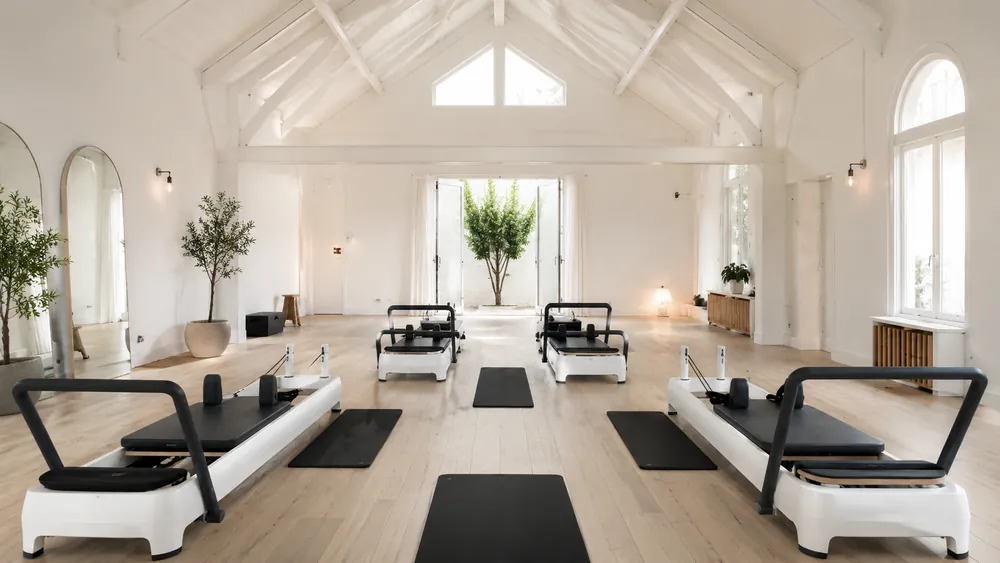
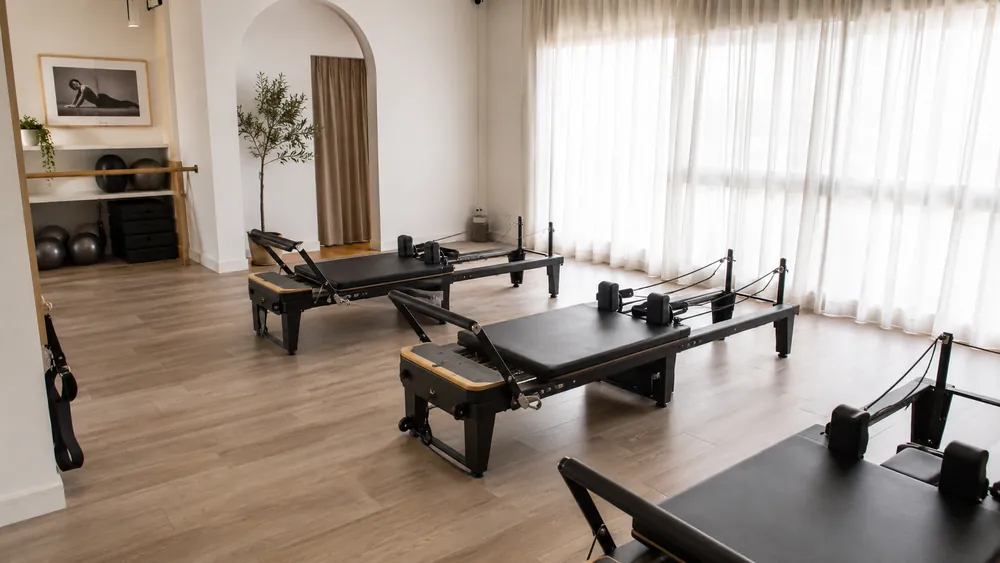
A classical reformer Pilates class runs at a slower, controlled pace focused on precision, alignment, and core control, and the reformer's springs can assist a movement as well as resist it, which is part of why physiotherapists use reformers in rehab. Lagree is built to do the opposite of assist. The format keeps you under constant tension, holds you in positions long enough to fatigue the muscle, and is openly designed to make you shake.
There's also a depth difference that matters more than the marketing. Pilates is a whole tradition: mat work, reformer, Cadillac, chair, and barrel, with a deep repertoire and a professional infrastructure behind it. In Australia that infrastructure is real and local. AUSactive publishes a Pilates best-practice guideline for the sector, and the Pilates Association Australia registers instructors and accredits training. Lagree sits outside all of that, by its own insistence. It's one proprietary system on one family of machines, licensed from one company in the United States.
What does Lagree actually look like in Australia?
Thin on the ground, and that's the single most useful thing to know before you go looking for a class. We could not confirm any studios currently operating in Australia under a genuine Lagree Fitness licence; across the more than 4,000 studios listed on Studio Finder, the boutique boom clearly went a different way. Australia built its high-intensity habit on the reformer itself.
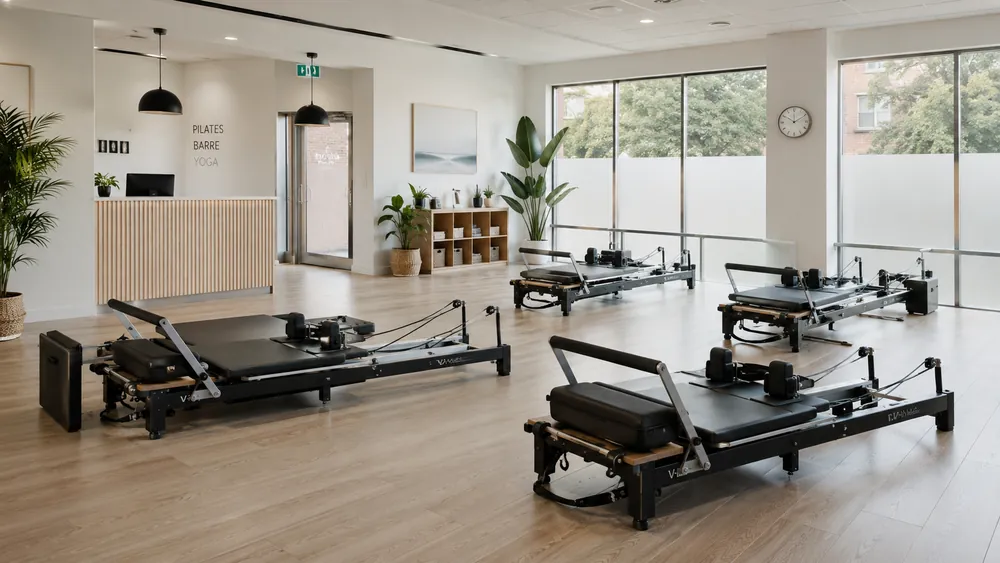
The local template is the dynamic reformer class. KX Pilates, founded in Melbourne in 2010 (the same year the Megaformer launched), grew a 50-minute high-intensity reformer format into a national franchise, and a wave of studios now run some version of that formula. STRONG Pilates went further and hybridised the bed with a rower. These classes chase the same burn Lagree sells, with constant tension and minimal rest, but they run on reformer-style equipment and market themselves as Pilates, which by Lagree's own definition makes them not Lagree.
So when an Australian timetable says "Megaformer-style", "Lagree-inspired", or just "dynamic reformer", read it literally. It usually means a hard reformer class, not a licensed Lagree studio with actual Megaformers. If the real thing matters to you, two questions settle it: is the machine a Megaformer, and is the studio licensed by Lagree Fitness? The company's own site lists licensed locations, and a licensed studio will say so prominently, because they pay for the right to. Either way, you can compare high-intensity reformer studios near you on Studio Finder.
Is Lagree harder than reformer Pilates?
In the moment, yes. Constant spring tension, standing work on a moving carriage, and transitions with no rest are engineered to fatigue muscle and lift your heart rate beyond what a controlled classical class asks of you. Lagree Fitness markets the method as more intense than Pilates, and for once the marketing and the experience line up. If the question is which class leaves you sorer on Thursday, it's Lagree.
Classical reformer work exposes weak technique fast: with no tempo to hide behind, every movement has to be precise. We won't put a calorie figure on either format; if you're weighing up intensity across the broader formats, our reformer vs mat Pilates guide covers how to think about it without junk numbers.
What does it cost in Australia?
Price the local version first, because that's what you'll most likely book. Casual high-intensity reformer classes sit in the standard Australian reformer band, roughly $35 to $60 in 2026, with inner-city studios at the top. Two-week unlimited intro offers, typically $45 to $80, are common and remain the cheapest way to find out whether you actually enjoy training at this intensity three days in a row. The full pricing picture (packs, memberships, and the traps in each) is in our Pilates cost guide.
For licensed Lagree classes specifically, we're not going to quote a range we can't back; there aren't enough published Australian price points to do it honestly. Imported patented machines and licence fees have to be recovered somewhere, so don't expect the bottom of the reformer band. Check the studio's own price list and treat any figure quoted second-hand with suspicion.
Which should you choose?
For most people in Australia the real choice is high-intensity dynamic reformer versus classical reformer, because those are the two things actually on the timetable near you.
If you want the burn (a class that feels like training, leaves you sore, and gets your heart rate up), book the best dynamic reformer studio in your area and spend the money you saved on more classes. That's our view, plainly: unless the Lagree brand itself matters to you, the local version covers most of what the method sells, with far more choice on timetable and price.
If the strict method does matter to you (the Megaformer, the licensed programming, the specific Lagree cueing), verify the studio through Lagree Fitness's own locator and expect to travel for it.
And if your goal is technique, control, or coming back from an injury, that's classical reformer territory, not Lagree. The springs that assist a movement, the slower pace, and the rehab lineage are the point. Route any injury decision through a physiotherapist rather than a timetable; our Pilates for lower back pain guide covers the physio-led side.
This guide is general information only and is not medical advice. See your GP or an allied health professional for advice about your own situation.
Megaformer and Lagree Explained: common questions
- Is the Megaformer the same as a reformer?
No. The Megaformer is a separate, patented machine made by Lagree Fitness, with a different shape, more handles and platforms, and a spring system built for the Lagree method. A reformer is the classical Pilates machine. The two aren't interchangeable, and a studio running reformers hard is not running Lagree.
- Is Lagree actually Pilates?
No, and that's Lagree Fitness's own position. On its Lagree vs Pilates page the brand states the method uses bodybuilding-style techniques rather than Pilates principles. In Australia, Pilates also has its own professional infrastructure (AUSactive guidelines, Pilates Association Australia registration) that Lagree sits outside. If a timetable calls a class "Lagree Pilates", someone is blurring a line both sides say exists.
- Is KX Pilates the same as Lagree?
No. KX Pilates is an Australian franchise running 50-minute high-intensity classes on reformer beds, and it markets the format as dynamic reformer Pilates. Lagree runs on Megaformers and insists it isn't Pilates at all. The intensity pitch is similar, which is why people confuse them, but the machine, the method, and the licensing are different.
- Who created Lagree and the Megaformer?
Sebastien Lagree created both. Per Lagree Fitness, the Megaformer dates to 2010 and has been through multiple model generations since.
- Where can I do Lagree in Australia?
Genuine Lagree runs only at studios licensed by Lagree Fitness, so check the company's own studio locator for current Australian locations. Most local classes advertising a Megaformer-style burn are dynamic reformer classes, not licensed Lagree. Search studios on Studio Finder to compare the high-intensity reformer options near you.
- Do I need experience before a Lagree class?
Not necessarily, but the intensity is real, so tell the instructor it's your first class and ask about a beginner-friendly session. If you have an injury or a health condition, check with a physiotherapist or your GP before starting a high-intensity program.
Ready to find a studio?
Compare pilates studios across Australia. Filter by location, read real reviews, and enquire direct.