Key points
- For back pain or rehab, lean toward clinical or physio-led Pilates: the 2015 Cochrane review found it probably more effective than minimal intervention, with no conclusive evidence it beats other exercise.
- For flexibility, hip tightness from desk work, or a mental break, yoga tends to get you there faster, particularly vinyasa or yin.
- If your only goal is to move for an hour, three times a week, either one works. The studio and instructor matter more than the style.
- Reformer Pilates costs $35–$60 casual; yoga and mat Pilates run $20–$35. Both offer 2-week unlimited intro offers around $45–$80, so start there before committing to a membership.
- Most experienced practitioners end up doing both: 2 reformer classes a week for strength, 1 yoga class for flexibility and decompression.
The bottom line
If you sit at a desk with a sore lower back: choose Pilates, specifically clinical or boutique reformer classes, not a large chain. If you want to shift hip and shoulder tightness or you need something that also calms you down: choose yoga.
For anything clinical: lower back pain, injury recovery, post-surgical rehab, get a physio's view before booking either.
| Pilates | Yoga | |
|---|---|---|
| Strength | Strong: spring resistance on the reformer builds real muscle in core, glutes, and stabilisers | Moderate: isometric holds in warriors and planks build strength, but no progressive overload |
| Flexibility | Moderate: Pilates improves flexibility but doesn't prioritise end-range stretching | Strong: deep hip openers, backbends, and forward folds work full range of motion |
| Breath work | Present: breath coordinates with movement, but it's technique-led, not the focus | Central: pranayama is a practice in its own right; the breath sets the pace of vinyasa flows |
| Back-pain evidence | Better supported: 2015 Cochrane review (10 trials, 510 participants) found Pilates probably more effective than minimal intervention for chronic low back pain | Reasonable: separate reviews of yoga for back pain have found a small benefit, roughly comparable to other exercise, though less precisely documented than the Pilates figures above |
| Cost (casual) | $35 to $60 reformer; $20 to $35 mat | $20 to $35 for most styles |
What Pilates does that yoga doesn't
Pilates trains controlled, resisted movement with the deep core doing the stabilising work. It's built around precise movement against spring resistance, cueing from the transverse abdominis and pelvic floor outward, and biased toward holding the spine stable rather than bending it through full range.
Joseph Pilates developed the method in the early 20th century. He was interned as a German national in Britain during World War I, and it was during that internment that he began refining the minimal-equipment system he later called "Contrology", as set out on the Joseph Pilates entry on Wikipedia. He emigrated to the United States in the mid-1920s, opened a New York studio with his wife Clara, and built a following in the city's dance and performing-arts world. That background, half clinic and half rehab, still comes through in how it feels to do.
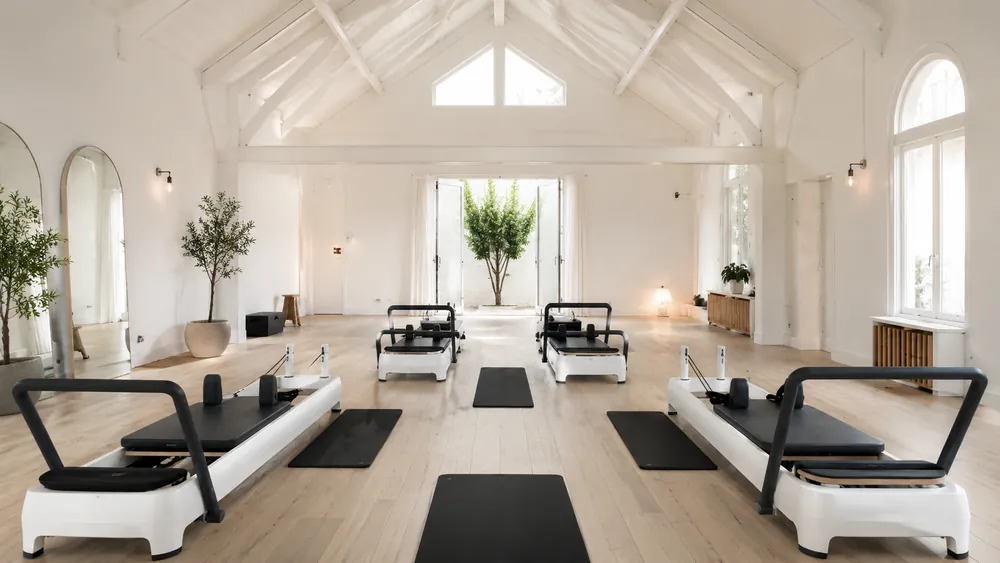
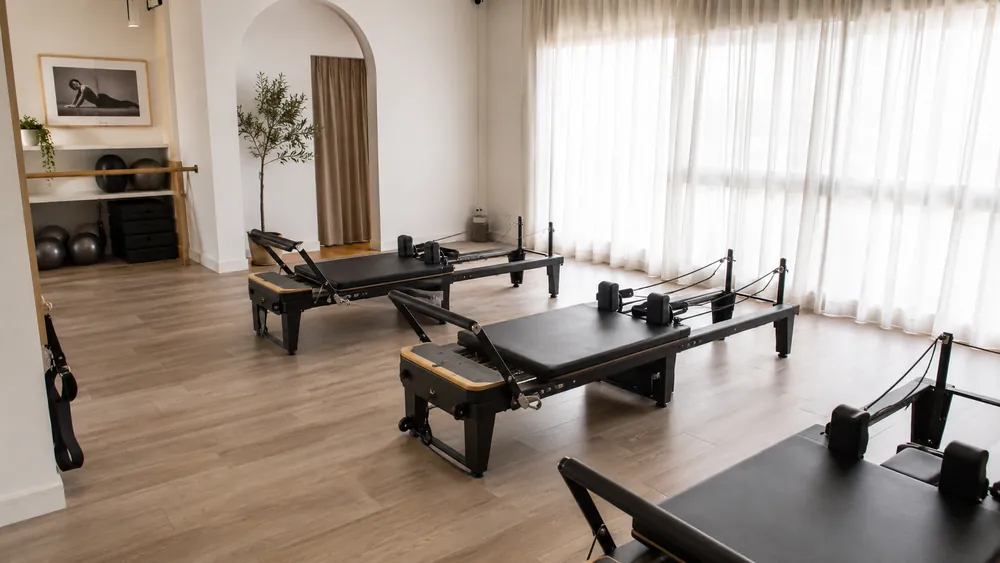
The clearest difference is the equipment. Reformer Pilates uses a sliding carriage with springs that load movements you can't replicate on a yoga mat. Springs assist when you're weak and challenge when you're strong, so the same machine can run a gentle session for a recovering back or a strength session for someone experienced, without swapping any equipment. Cadillacs, Wunda chairs, and Towers extend the same idea. Yoga has no equivalent piece of equipment.
Pilates also cues from the core out. Almost every move starts with finding your transverse abdominis and pelvic floor, then layers the visible work on top, which is why people often say Pilates feels more like physiotherapy than fitness in the first few weeks. Yoga trains the core too, but as a by-product of poses rather than the explicit instruction.
And where yoga moves the spine through its full range (forward folds, backbends, twists), Pilates keeps it in neutral and trains the muscles that hold it there. If you sit at a desk all day with a tight, achy lower back, the Pilates bias is probably more useful in your first 8 to 12 weeks.
There's also a real body of clinical evidence for Pilates as a rehab tool. The 2015 Cochrane review on Pilates for low back pain pooled 10 trials and 510 participants and found Pilates probably more effective than minimal intervention for pain and disability (low-to-moderate quality evidence), with no conclusive evidence it beats other forms of exercise. Physiotherapists in Australia widely use Pilates-derived exercise in rehab, often called "clinical Pilates", a term the profession itself coined (see the APA's Defining Pilates to make it clinical). The evidence base for yoga and back pain is smaller and less precisely documented here: reviews have found a small benefit, roughly comparable to other exercise, which is part of why the rehab lean here goes to clinical Pilates.
What yoga does that Pilates doesn't
Yoga puts breath, range of motion, and a contemplative element at the centre in a way Pilates doesn't. It's also older and broader. Most modern Australian studio yoga descends from hatha yoga, with branches like vinyasa (flowing), yin (long-held passive stretches), restorative (supported, slow), and hot or Bikram (heated room). Each emphasises different things.
Breath as the centre of the practice. Yoga teaches pranayama (breath control) as a tool in its own right, not just a way to stay oxygenated through hard work. The breath sets the pace of vinyasa flows, anchors long holds, and is taught as a way to influence the nervous system. The Australian government health portal healthdirect notes that yoga's breathing and mindfulness techniques may help you feel calmer and more focused, and can form part of treatment for conditions like anxiety and depression.
Wider ranges of motion. Yoga is more aggressive about taking joints through full range. Deep hip openers, full backbends, full forward folds, shoulder openers. If your goal is to touch your toes again or shift the tightness in your hips from sitting all day, yoga tends to get you there faster than Pilates, which deliberately avoids loading joints at end range.
A philosophical and contemplative layer. Most yoga classes include some meditation, intention-setting, chanting, or savasana (the lying-down rest at the end). The level varies wildly. A heated power class might give you a 90-second savasana; a yin or restorative class is half meditation by structure. Pilates almost universally skips this. If you want a movement practice that also gives you a mental break, yoga has it built in. If the meditation-adjacent elements put you off, Pilates is the cleaner choice.
Lower barrier to entry at home. A yoga mat costs about $30 and you can practise anywhere. Mat Pilates is similar. But reformer Pilates, the format most boutique Australian studios specialise in, needs the equipment, which means a studio. If you travel a lot or want a daily home practice, yoga adapts more easily.
What both practices do
Both build muscular strength, especially in the core, glutes, and shoulders. Both improve flexibility (yoga more so, but Pilates contributes). Both improve body awareness and proprioception in ways that carry over to better posture and fewer injuries in other sports. Both tend to reduce stress and help sleep when you practise regularly. And both work fine as your main movement practice if you don't want to lift weights or run.
If your only goal is "move my body for an hour, three times a week", either one gets you there.
How to pick based on what you want
You want visible strength and tone. Pilates wins, particularly reformer. The spring resistance lets you load movements progressively in a way mat-only practice struggles to match. With 2 to 3 sessions a week, most people notice deeper-core and posture changes within about 6 to 8 weeks, though that's typical experience rather than a guaranteed timeline.
You want flexibility, stress reduction, or better sleep. Yoga, particularly vinyasa or yin. The longer holds and breath work do something Pilates doesn't aim for, and if you sit at a desk and feel tight through the hips or shoulders, this is the faster route.
You're managing lower back pain or recovering from injury. Lean Pilates, with a strong preference for clinical or physio-led classes over fitness-marketed reformer chains. The Cochrane evidence and the way physios use clinical Pilates both point that way. Look for studios that mention rehab, clinical Pilates, or physiotherapist instruction. For anything active or recent, talk to a physio or your GP first.
You want all three at once. Do both; most experienced practitioners end up there anyway. A common Australian pattern is 2 reformer classes a week for strength and 1 yoga class for flexibility and decompression. Multi-discipline studios that run both under one roof make this easier and often cover both with a single membership.
You can pick both
Most experienced practitioners end up doing both. A common Australian pattern is 2 reformer classes a week for strength and 1 yoga class for flexibility and decompression. Multi-discipline studios that run both under one roof often cover both with a single membership.
What does Pilates and yoga cost in Australia?
Prices are similar, not identical. Treat these as typical 2026 ranges that vary by studio and city, not fixed rates.
Casual yoga or mat Pilates drop-ins run roughly $20 to $35 a class, with community and chain studios at the lower end and premium boutiques at the top. Casual reformer Pilates runs about $35 to $60, with inner-city boutiques and small-format studios at the top of that.
Intro offers mirror each other. Both formats commonly run 2-week unlimited deals for $45 to $80, which is the cleanest way to test a studio without committing.
Memberships diverge. Yoga unlimited memberships tend to sit around $180 to $280 a month. Reformer Pilates unlimited memberships usually run $200 to $350, reflecting smaller class sizes, equipment upkeep, and generally higher instructor pay for comprehensively trained teachers. On a membership, both work out cheaper per class than casual rates if you go three-plus times a week. Below that, intro packs and 10-class packs (which usually save roughly 15 to 25% versus casual) are better value.
For more on reformer pricing specifically, see our reformer Pilates guide.
| Option | Yoga or mat Pilates | Reformer Pilates |
|---|---|---|
| Casual drop-in | $20 to $35 | $35 to $60 |
| 2-week unlimited intro | $45 to $80 | $45 to $80 |
| Unlimited membership (per month) | $180 to $280 | $200 to $350 |
Typical 2026 ranges that vary by studio and city, not fixed rates. Class packs usually save roughly 15 to 25 percent versus casual.
Instructor credentials in each
Instructor quality matters more than the practice you pick, so it's worth knowing the two peak bodies.
For Pilates, the Pilates Association Australia is the peak body and registers instructors who've completed comprehensive training. Comprehensive courses are nationally accredited Diploma or Advanced Diploma qualifications covering the full apparatus (mat, reformer, Cadillac, chair, barrel), which you can confirm against the PAA's recognised education list. A shorter Certificate IV in Pilates (the entry-level qualification taught at fitness colleges, with current courses listed on training.gov.au) is a different thing. Both can produce good teachers. The gap in scope matters most for rehab work.
For yoga, Yoga Australia is the peak body. Its Registered Teacher standard sets a minimum of 350 hours of training for Level 1, and 500 hours plus five years of teaching for Level 2. The 200-hour certification you'll see on overseas retreat trainings (the international Yoga Alliance RYT-200) isn't required to teach in Australia and sits below the Yoga Australia Level 1 hour count. If you want to know whether a specific qualification meets Yoga Australia's standard, check their current course registration guidelines rather than assuming.
Neither registration is mandatory to teach in Australia, which is part of why studio quality varies so much. A studio that publishes its instructors' credentials on the website is giving you a useful filter, whichever practice you pick.
How to try both before committing
Take an intro offer at one studio of each. Two weeks unlimited at a Pilates studio, then two weeks at a yoga studio. By the end of four weeks you'll know which one your body responds to, which schedule fits your week, and which culture suits you.
The pattern most multi-format practitioners settle into: pick the one you liked more, build a habit over 2 to 3 months, then add the other as a complement. Trying to do both from week one usually means going to each less than three times a week, which is below where a habit reliably sticks.
If you can only afford one membership, pick the studio you'd happily walk into on a Monday morning when you don't feel like it. That predicts whether you'll keep going better than any list of benefits.
If nerves are the sticking point rather than the style, the first-class nerves guide covers walking in. Ready to compare studios? Search for Pilates and yoga studios near you on Studio Finder.
Pilates vs Yoga: common questions
- Is Pilates harder than yoga?
Neither is harder in any meaningful sense. Both have beginner-friendly classes and both have advanced classes that leave you sore for three days. What differs is the kind of effort: Pilates leans toward focused, controlled muscular work; yoga leans toward sustained holds, breathing under load, and longer ranges of motion.
- Can I do both at the same time?
Yes, and a lot of people do. They're complementary: Pilates builds the strength and stability, yoga builds the flexibility and decompression. Two Pilates and one yoga a week, or any similar split, is common and effective.
- Which one is better for losing weight?
Neither is built for weight loss. Both burn some calories, but if fat loss is your main goal you'd be better adding cardio or strength training to whichever you enjoy. The body-composition benefit comes from long-term consistency and the habits that tend to come with it, not from what you burn in a single class.
- I have lower back pain. Which should I start with?
Lean toward clinical or physio-led Pilates. The 2015 Cochrane review supports Pilates over minimal intervention for low back pain, and physios commonly use clinical Pilates in rehab. Be cautious with heated yoga, fast vinyasa, and large chain reformer classes until you've worked with a clinical instructor. Talk to a physio or your GP about your specific situation first.
- I'm pregnant. Can I do either?
Both, with modifications and an instructor trained for pregnancy. Look specifically for prenatal Pilates or prenatal yoga, which adjust for the changes in your body and avoid contraindicated positions. Talk to your obstetrician or midwife before starting. Don't take a regular class and try to modify it yourself as a beginner.
- I'm put off by the chanting and spiritual side of yoga. Should I just do Pilates?
That's a reasonable preference. Yoga studios vary wildly here. Power, hot, and many vinyasa classes have minimal spiritual content; classical hatha, kundalini, and traditional ashtanga lean into it. If you want the physical benefits without the contemplative layer, look for power, hot, or vinyasa classes at fitness-leaning studios. Pilates is the cleaner choice if you want none of it.
Ready to find a studio?
Compare pilates studios across Australia. Filter by location, read real reviews, and enquire direct.