Key points
- Mat is cheaper, portable, and can be done at home. Reformer needs a studio machine.
- Springs assist some movements and resist others, which is why reformer suits both rehab and strength work.
- A capped reformer class of 8–12 usually gives more individual attention than a larger mat class.
- Neither is inherently better: the right one depends on your goal, budget, and how you like to learn.
What they share
Both reformer and mat Pilates are built on the same method: controlled movement, precise breathing, and work that originates from the deep core muscles. The principles Joseph Pilates developed in the 1940s sit underneath both formats.
healthdirect, Australia's national health service, notes that Pilates teaches body awareness, good posture, and easy, graceful movement, and lists core strength, balance, and flexibility among its benefits. Those outcomes apply to both the mat and the reformer.
Reformer vs mat: the key differences
The reformer's spring resistance, capped 8 to 12 class size, and close instructor attention are what the extra $15 to $25 per class buys. Mat trades those for a lower price and the option to practise at home.
| Format | Typical casual cost (2026) |
|---|---|
| Mat Pilates | $20–$35 |
| Reformer Pilates | $35–$60 |
Class packs shave roughly 15 to 25% off either casual rate. Ranges vary by studio and city.
| Reformer | Mat | |
|---|---|---|
| Cost per class (casual) | Typically $35–$60 | Typically $20–$35 |
| Class size | Usually 8–12 (capped by machines) | Often larger: up to 20+ |
| Resistance | Adjustable spring resistance | Bodyweight only |
| Can do at home | ||
| Progression | Spring load, position, speed | Lever length, position changes |
| Best for | Tactile feedback, loaded resistance, close attention | Fundamentals, home practice, budget-conscious |
What the reformer adds
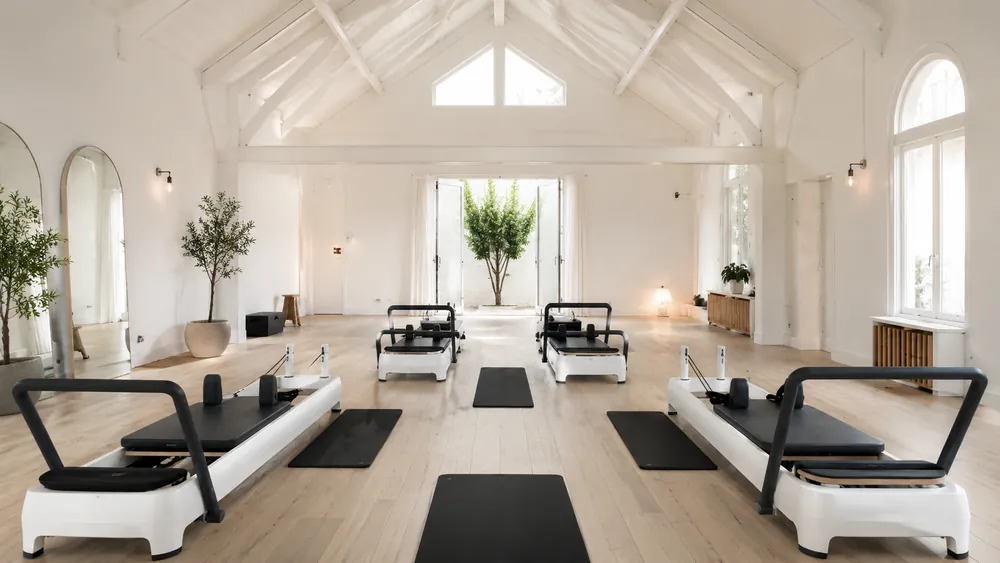
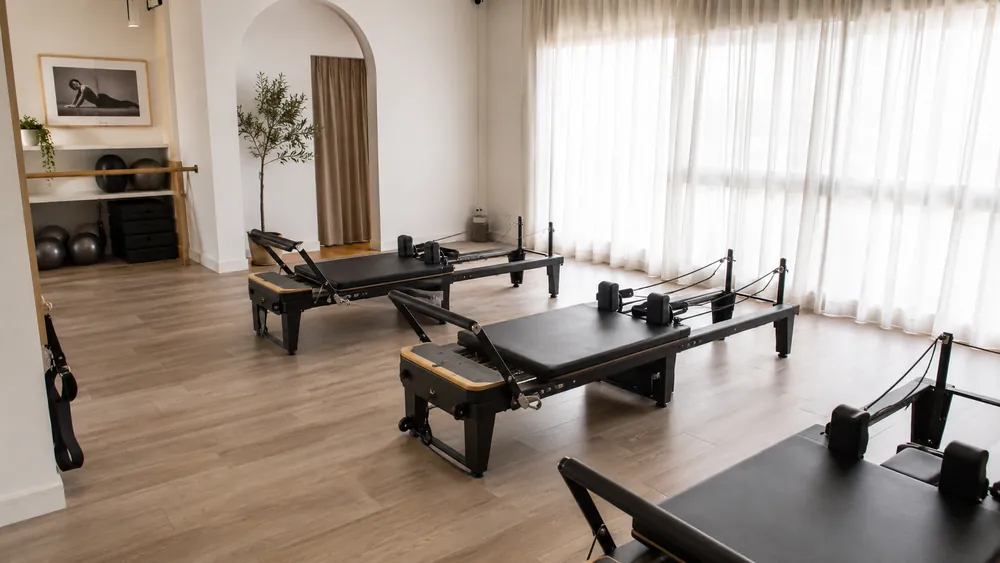
The reformer's springs do something a mat can't: they can either assist a movement that would be too difficult on the mat, or resist it to add load. That range is what lets one machine carry a beginner through gentle range-of-motion work and an experienced practitioner through serious strength sequences.
The carriage also gives you tactile feedback. When your alignment drifts, the carriage shifts in a way you can feel immediately, which speeds up the learning of correct movement patterns for many beginners. And boutique reformer studios typically cap class sizes at 8 to 12, so the instructor can watch each person and correct in real time.
The reformer is also the format most associated with the clinical and rehab side of Pilates. healthdirect notes that Pilates may help you recover after an injury by strengthening muscles and improving how your body moves, and that if you are recovering from an injury you should tell your instructor so they can adjust the exercises.
What mat adds
Mat Pilates demands something the reformer can assist away: you have to control every movement purely with your own muscles. There's no spring taking the edge off a transition, no carriage providing tactile feedback. It is a common view among instructors that this makes the mat the more demanding teacher of technique, precisely because nothing on the floor does any of the work for you.
It's also more portable and significantly cheaper. A mat class typically costs $20 to $35 casual, compared to $35 to $60 for reformer, and class packs shave roughly 15 to 25% off either rate. Our Pilates cost guide breaks down how packs, memberships, and intro offers compare if you want to work out the cheapest option for how often you train. You can also practise mat at home with nothing but a mat and a video, which makes it the format most people can sustain long term in terms of frequency and cost.
Joseph Pilates' original 34-exercise system was designed for the mat. The foundational movements of the method are learned on the floor, and in the classical lineage the mat is treated as where the real work happens.
Which is harder?
Neither is categorically harder. They're hard in different ways.
Reformer can feel harder at first because of the coordination required on an unfamiliar machine. Once you've got the hang of the machine, the springs can actually make some moves easier than they'd be on the mat. Then, when the instructor loads the springs to resist your movement, it's harder again.
Mat looks simpler and often isn't. Without any spring support, the exercises that work on a mat demand more from your core because there's nothing to compensate. A well-taught mat class at the intermediate level can be extremely demanding.
For a beginner, neither is the obvious choice on difficulty grounds alone.
Which should you start with?
Both work for most healthy beginners.
Choose reformer if: you want hands-on instructor attention from day one, you learn better when you can feel feedback from equipment, you have a specific goal like injury rehab or fast strength progression, or you simply want to try the format most Australian boutique studios specialise in.
Choose mat if: you're on a tighter budget, you want to practise at home between studio sessions, you want to understand the foundational movement before adding machine complexity, or you find the idea of an unfamiliar machine stressful.
Many people who start on one format add the other within a few months.
If you're ready to find a class, browse Pilates studios near you or search by suburb and style.
This guide is general information only and is not medical advice. See your GP or an allied health professional for advice about your own situation.
Reformer vs Mat Pilates: common questions
- Is reformer Pilates better than mat?
Neither is better overall. Reformer adds spring resistance, tactile feedback, and usually smaller class sizes. Mat is cheaper, portable, and teaches control without mechanical assistance. The better one is whichever you'll keep attending and that fits your goals and budget.
- Can beginners do reformer Pilates?
Yes. Most studios run beginner or foundations reformer classes, and the instructor gives you a machine briefing before the first class. The learning curve is the coordination of a new apparatus, not the physical demand, and it flattens quickly.
- Is mat Pilates easier than reformer?
Not at the intermediate level. Without springs to assist you, mat relies entirely on your own control. A well-taught mat class can be harder than a beginner reformer class. They're hard in different ways.
- How much more does reformer Pilates cost than mat?
Casual reformer classes typically run $35 to $60 in Australia, compared to $20 to $35 for mat, as 2026 ranges that vary by studio and city. Class packs save around 15 to 25% compared to casual pricing. Our Pilates cost guide breaks down packs, memberships, and intro offers in full.
- Can you do mat Pilates at home?
Yes. Mat Pilates needs only a mat and a clear patch of floor, so it's the format best suited to home practice. The trade-off is no instructor watching your form. Our guide on Pilates at home vs studio covers what you gain and give up.
Ready to find a studio?
Compare pilates studios across Australia. Filter by location, read real reviews, and enquire direct.