Key points
- The reformer is a spring-loaded carriage: adjustable resistance, not a fixed weight.
- Class sizes are typically capped at 8 to 12, so the instructor can watch your form.
- Most studios run intro offers (2 weeks unlimited, often $45 to $80), the cheapest honest way to try.
- If you have a back injury or health condition, see a physio before booking.
What is a reformer?
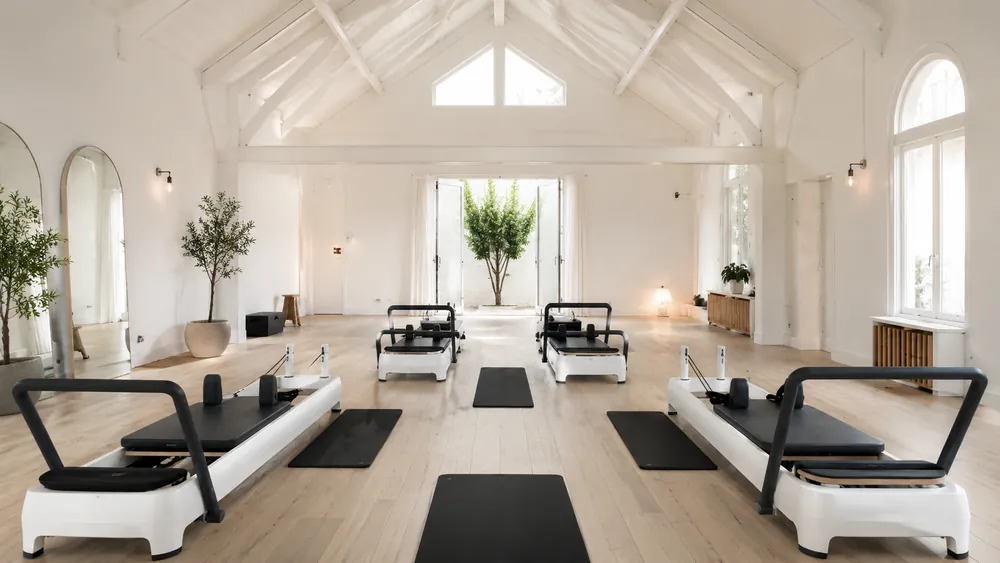
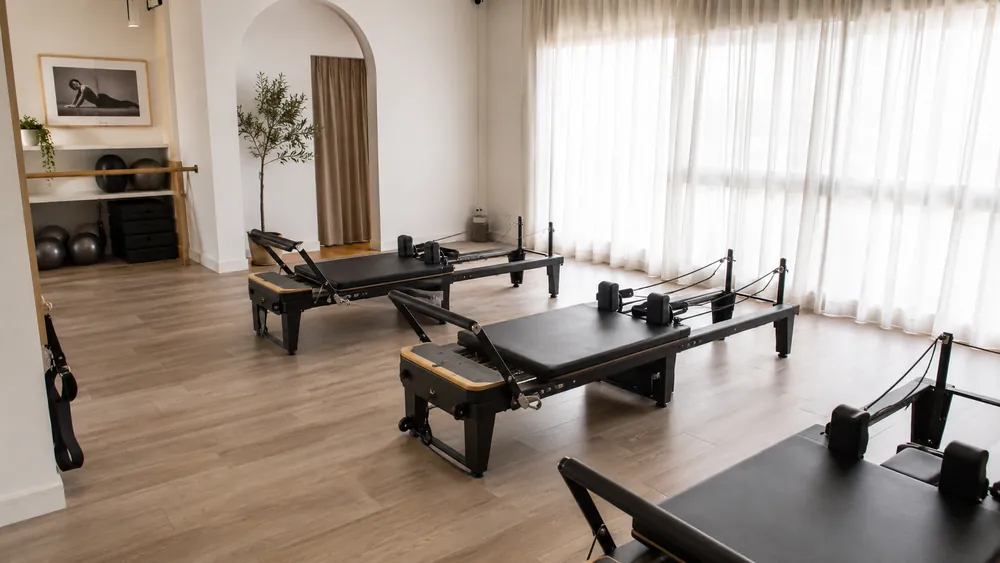
The reformer is a bed-sized frame with a carriage that slides back and forth on rails. Springs connect the carriage to the frame and provide adjustable resistance. You push or pull the carriage using a foot bar, straps, or your own body weight. The instructor sets the spring load to match your level.
It looks elaborate. In practice, after a session or two the machine becomes unremarkable and the work becomes the focus.
What happens in a class
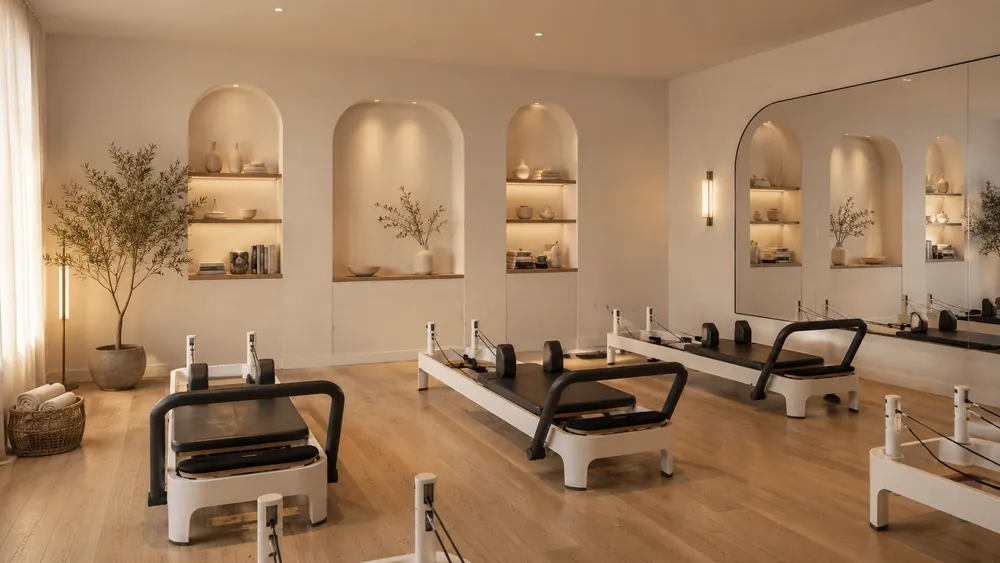
A standard 50-minute reformer class in Australia typically runs through footwork, core work on the carriage, leg and arm sequences using the straps, and a cool-down. The instructor calls cues, moves between machines, and adjusts your spring load or position as needed. Most boutique studios cap classes at 8 to 12 reformers so the teacher can actually see each person.
Your first class will include a brief setup walkthrough. You won't know the movements yet, and you don't need to. Following along, getting the rough shape right, and asking the teacher if something feels wrong is the whole job in session one. For a minute-by-minute walkthrough of that first session, see the first reformer class guide.
Reformer vs mat Pilates
Both are Pilates. The apparatus is the difference.
<table> <thead> <tr> <th>Factor</th> <th>Reformer</th> <th>Mat</th> </tr> </thead> <tbody> <tr> <td>Cost per class</td> <td>Typically $35–$60 casual</td> <td>Typically $20–$35 casual</td> </tr> <tr> <td>Class size</td> <td>Usually 8–12 (capped by machines)</td> <td>Can be larger: up to 20+</td> </tr> <tr> <td>Equipment needed</td> <td>Studio with reformers</td> <td>Mat only, can do at home</td> </tr> <tr> <td>Resistance</td> <td>Spring-loaded, adjustable</td> <td>Bodyweight only</td> </tr> <tr> <td>Progression path</td> <td>Springs, positions, speed</td> <td>Lever length, position changes</td> </tr> <tr> <td>Best for</td> <td>Tactile feedback, supervised loading</td> <td>Fundamentals, home practice, budget</td> </tr> </tbody> </table>Many people start on mat to learn the foundations and add reformer once they want more resistance. Others go reformer-first and find it easier to feel the correct muscle engagement with the spring feedback. Neither order is wrong. The mat Pilates guide covers the mat side in more depth.
What it costs in Australia
Casual reformer classes in Australia typically run $35 to $60 a class. Class packs of 5 or 10 usually bring the per-class rate down by roughly 15 to 25%. Unlimited reformer memberships commonly sit around $200 to $350 a month.
The cheapest honest way to try a new studio is the intro offer, usually two weeks of unlimited classes for around $45 to $80. It gives you enough time to try a few different teachers and class times before committing.
Prices vary by studio and city. Always check directly.
How to choose a studio
Before you book, a few things are worth checking.
Class caps. A studio that limits reformer classes to 8 to 12 machines gives your instructor room to actually watch you. A class of 20 on 20 machines is a different experience.
Beginner pathway. Look for a studio that runs a dedicated beginner or foundations series rather than dropping new clients into mixed-level classes.
Instructor qualifications. The Pilates Association Australia (PAA) keeps a directory of registered instructors. You can search it at pilates.org.au.
Intro offer terms. Check whether the offer auto-converts to a membership at the end or simply lapses. A good studio lets it lapse and asks you what you'd like to do.
For the full checklist, the how to choose a Pilates studio guide covers the ten questions worth asking. Ready to book? Search for a reformer studio near you on Studio Finder.
Reformer Pilates: common questions
- Do I need experience to try reformer Pilates?
No. Most studios run beginner or introductory classes specifically for people who've never used the machine. The instructor will walk you through the setup before class starts.
- Is reformer Pilates good for back pain?
Reformer Pilates is sometimes used alongside physiotherapy for back conditions because it trains the deep stabilising muscles that support the spine. It is not a substitute for professional assessment. If you have back pain, see a physiotherapist or your GP before booking a class, and tell your instructor so they can adjust the exercises for you. This is general information, not medical advice.
- How is reformer Pilates different from yoga?
Reformer Pilates uses spring-resistance apparatus and focuses on controlled strength and stability work. Yoga is mat-based and emphasises flexibility, breath, and often a spiritual tradition. Both improve core strength and body awareness, but the methods and equipment are different.
- How often should I do reformer Pilates?
Two to three sessions a week is a common starting point for beginners who want to build strength and control. Once a week tends to maintain rather than progress. For more detail, see the how often should you do Pilates guide.
Ready to find a studio?
Compare pilates studios across Australia. Filter by location, read real reviews, and enquire direct.