What the Cochrane review concluded
The most-cited evidence summary in this space is the 2015 Cochrane review on Pilates for low back pain, led by Yamato and colleagues. Cochrane reviews are the recognised gold standard for systematic reviews of clinical evidence. This one pooled 10 studies and 510 participants, all adults with non-specific chronic low back pain.
The conclusions, in the review's own framing:
- Pilates is probably more effective than minimal intervention (no exercise, education only) for reducing pain and improving disability and function in the short and intermediate term. The evidence quality is rated low to moderate.
- There is no conclusive evidence that Pilates is superior to other forms of exercise. The review found Pilates "probably not more effective than other exercises" for pain and disability, and for function at intermediate follow-up other exercises actually edged ahead. In plain terms: Pilates works, but yoga, general physiotherapy exercise, or strength training may work equally well for many people.
- The trials reported minor or no adverse events for the interventions studied.
A more recent 2023 systematic review and meta-analysis pooling 19 randomised controlled trials (1,108 patients) reached a compatible conclusion: Pilates has positive efficacy for pain relief and for improving functional disorders in chronic low back pain, with less clear effect on quality of life. The broad finding has stayed stable as newer trials appear.
What the evidence does not say: that Pilates cures back pain, that it's the only thing that works, that it suits every type of back pain, or that it produces faster results than other interventions. Be cautious of any studio or instructor that implies otherwise.
How Pilates works for back pain (the mechanism)
The plausible mechanisms are well established. Most chronic non-specific low back pain involves some mix of weak deep core stabilisers (transverse abdominis, multifidus, pelvic floor), poor motor control of those muscles when they're called on, and compensatory tension in the surface back muscles trying to pick up the slack. Reformer Pilates targets these patterns directly.
The spring resistance can be loaded progressively without putting compressive load through the spine, which is hard to replicate with body weight alone or with weights that travel along the spine's axis. The supine and side-lying positions used in most reformer exercises let the spine stay neutral while the rest of the body works hard. The cueing keeps pulling your attention back to deep core engagement, which over time rebuilds the motor control most chronic-pain patients have lost. And the instructor watches your form, correcting the compensatory patterns (over-gripping the back, holding breath, tilting the pelvis) that keep pain going in everyday movement.
This is why the practice tends to help even when the specific exercises don't seem to "target" the sore spot. The work is on the underlying movement system, not the symptom site. The Pilates Association Australia summarises the back-pain research here if you want the practitioner's-eye view.
What kind of Pilates is right for back pain
Not all Pilates is the same, and the difference matters when you're managing pain.
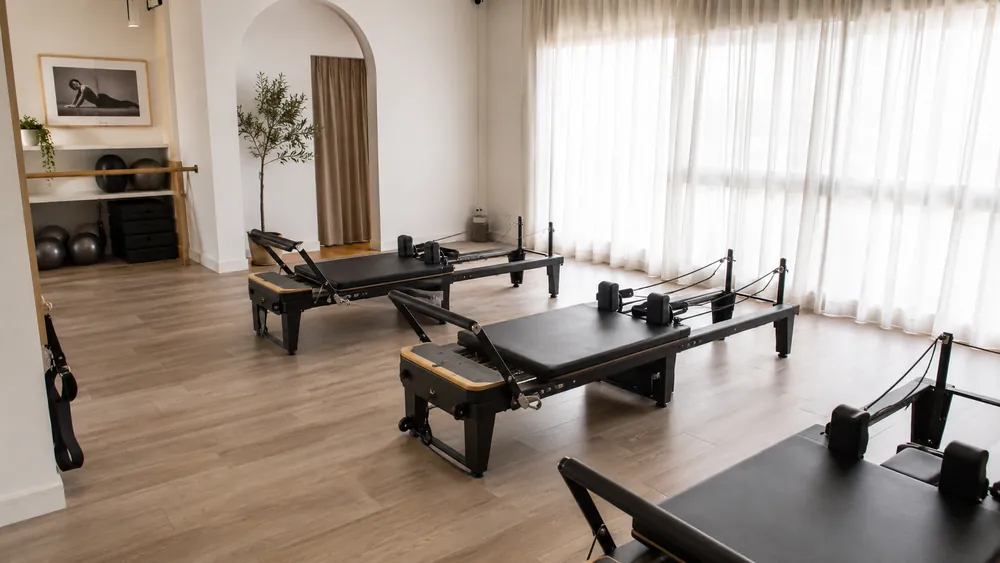
Clinical or physio-led Pilates is the safest starting point. The instructor is a registered physiotherapist (or works under one), and you'll usually have an initial one-on-one assessment before joining group classes. Class sizes are small, often one-on-one or 4 to 6 people, and programs are individualised. The cost is higher (commonly $80 to $150 for one-on-one, less for small groups) but the personalisation reduces the risk of aggravation. Look for studios that explicitly use "clinical Pilates" or "physiotherapy Pilates," or ask whether their instructors have rehab training.
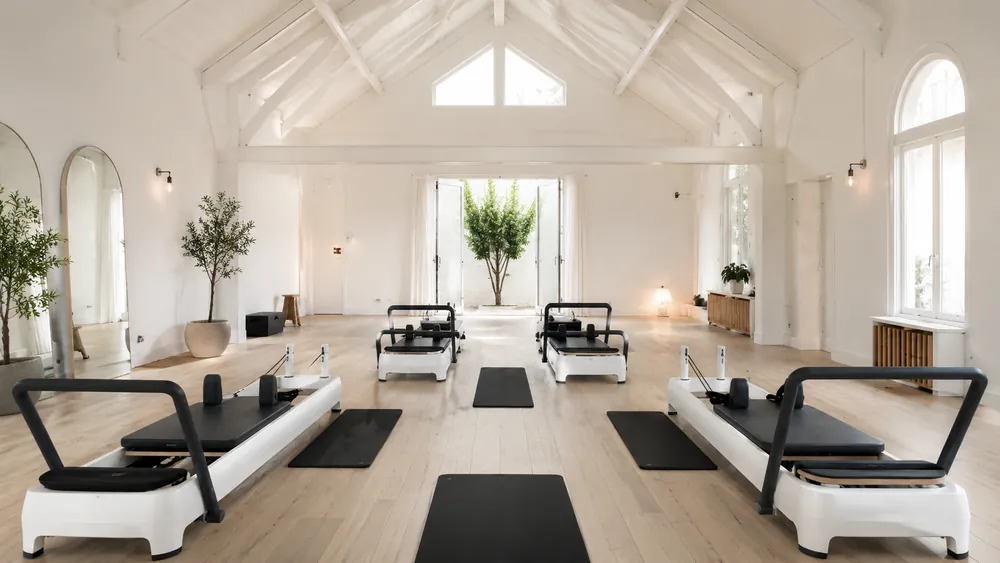
Comprehensive-trained Pilates studios (classical or comprehensively trained instructors) are the next tier. Boutique reformer classes typically cap around 8 to 12 reformers, so the instructor can still watch and correct. Instructors will work with back-pain modifications if you tell them. Casual reformer classes across Australia tend to run $35 to $60, though this varies by studio and city. Best for non-acute chronic pain that a physio has already cleared.
Chain reformer studios run larger classes with a more fitness-oriented format. They can suit non-acute, well-controlled back pain in people already familiar with the format. They are not a good starting point for someone managing pain for the first time. At that scale the instructor can't reliably watch and correct everyone's form in real time, and the pace tends to be too fast for safe rehab work.
Mat Pilates without equipment is less ideal for back-pain rehab in the early stages, because you lose the spring assistance. It becomes appropriate later, once you've built foundational strength.
To find a physiotherapist near you, the Australian Physiotherapy Association runs the Find a Physio directory. Many physios offer clinical Pilates as part of their practice; you can ask when you book. The Pilates Association Australia lists registered instructors and member studios.
When to see a physio first (do not skip this section)
Pilates suits many but not all kinds of back pain. The following situations need an assessment by a physiotherapist, GP, or other qualified clinician before you start any movement program, Pilates included:
- Pain that radiates down one or both legs, particularly below the knee.
- Pins and needles, numbness, or weakness in the legs or feet.
- Loss of bladder or bowel control (this is a medical emergency; go to a GP or hospital immediately).
- Sudden severe back pain after a fall, lift, or impact.
- Back pain with unexplained fever, weight loss, or night sweats.
- Back pain that consistently wakes you from sleep, particularly if it's worse lying down than standing.
- Recent spinal surgery (within 6 to 12 months) without explicit clearance from your surgeon.
- Diagnosed disc herniation, spinal stenosis, spondylolisthesis, or osteoporosis without a treating clinician's exercise plan.
- Pregnancy beyond the first trimester (this needs prenatal-specific Pilates, not regular classes).
The Australian government health portal healthdirect sets out the warning signs that mean back pain is more than muscular and warrants medical assessment.
If your pain is the typical desk-worker dull ache, with no leg symptoms, no neurological signs, no acute injury, and none of the red-flag features above, you can usually start a clinical Pilates program safely. When in doubt, a single physio assessment before you sign up at any studio is the cheapest insurance you'll buy this year.
What to expect from the first 6 to 12 weeks
These are typical patterns reported by people with non-specific chronic low back pain doing clinical or comprehensive-trained Pilates at 2 to 3 sessions a week. They're a guide, not a promise. Everyone's different, and your physio's read on your specific case beats any general timeline.
Weeks 1 to 2. You'll feel your deep core working in ways you haven't before, and you may feel new soreness in the abdominals, glutes, and hips. The pain itself probably hasn't changed yet. Some people notice a slight increase in back soreness over the first few sessions as the surrounding muscles adapt, which usually fades by class 4 or 5. If pain is meaningfully worse rather than just different, tell the instructor before the next session and consider a physio check.
Weeks 3 to 6. Many people start to notice fewer or shorter pain episodes. The intensity of bad days tends to drop. You'll start to recognise the postural habits that aggravate your pain (slouched sitting, prolonged standing) and correct them on instinct.
Weeks 6 to 12. Functional improvements often compound. Activities that were limited (long sitting, lifting, getting in and out of the car) can become easier, and the pain often becomes more predictable and less alarming. Many people describe shifting from "managing pain" to "having occasional pain."
Months 3 to 6. The trajectory usually continues but the rate of change slows, and the practice becomes maintenance rather than rehab. Most people who stick with it report their back pain settling into a small, occasional issue rather than a daily one.
A meaningful minority of people don't respond much to Pilates and need a different approach (physiotherapy with manual therapy, a different exercise modality, or in some cases further medical investigation). If you've done 12 weeks of consistent practice without any reduction in pain or function, that's a signal to revisit the diagnosis with a physio.
Red flags during a Pilates class
Stop the exercise and tell the instructor if any of these happen during class:
- Sharp, sudden, or shooting pain (different from muscle fatigue or a stretch sensation).
- Pain that radiates down one or both legs.
- Pins and needles, numbness, or sudden weakness.
- Dizziness, nausea, or feeling faint.
A good instructor will modify the exercise immediately, may stop your participation for the rest of the class, and will recommend you see a physio if the pain doesn't settle within a few hours.
The instructor's job is your safety in the room. Your job is honest communication. If something feels wrong, say so the moment it happens. Don't push through.
How to find the right studio for back-pain rehab
Five practical questions to ask before booking:
- Do you offer clinical Pilates, or do you have instructors with rehab or physiotherapy training?
- What's your class-size cap for beginner or rehab-friendly classes?
- Will the instructor know about my back pain before I arrive, and what assessment do you do for new clients with injury history?
- Do you take referrals from physiotherapists, and can you communicate with my physio if needed?
- What's your policy if I need to scale back or stop mid-class because of pain?
Studios that handle back-pain clients well will have ready answers for all five. Studios that hesitate, deflect, or imply "it'll be fine" are not the right starting point for active rehab. For the wider studio-selection checklist, see our guide to choosing a Pilates studio.
When Pilates is the wrong answer
A few honest scenarios where Pilates may not be your best option:
Pain driven mainly by a structural issue (severe disc herniation, advanced osteoarthritis, spinal stenosis with neurological symptoms). Here Pilates may help as part of a broader plan, but it isn't a standalone solution. Pain that already responds well to something else you're doing; if swimming, walking, or strength training keeps your pain manageable and you enjoy it, the marginal benefit of adding Pilates may be small. Acute injury within the past 4 to 6 weeks, where the early phase usually needs physiotherapy first and Pilates comes later. And significant fear-avoidance patterns, where people who've become afraid of all movement sometimes need a slower, more guided introduction (physio-led individual sessions rather than group reformer classes) before they can engage with Pilates safely.
Pilates is a strong option for many cases of chronic low back pain. It is not the only option, and it is not always the right starting one. A physio consultation before you sign up will tell you which category you fall into.
Pilates for Lower Back Pain: common questions
- Will Pilates fix my herniated disc?
Pilates may help with the symptoms and the underlying movement patterns that contributed to the disc problem, but it doesn't physically heal disc tissue. If you have a diagnosed disc herniation, work with a physiotherapist on an individualised program; clinical Pilates may be part of that program once you're past the acute phase. Don't start at a chain reformer studio without clearance from your treating clinician.
- Is reformer or mat better for back pain?
For active rehab in the first 8 to 12 weeks, reformer is usually preferred because the spring resistance lets you load the deep stabilisers without compressing the spine. Mat work tends to become appropriate later, as you build foundational strength.
- Can I do Pilates if I'm taking pain medication?
Generally yes, but tell the instructor before class. Pain medication can mask warning signals during exercise, so the instructor needs to know to watch for compensatory patterns you might not feel. Check with your prescribing GP or pharmacist if you're unsure.
- How does Pilates compare to physiotherapy for back pain?
They're complementary, not competing. Physiotherapy provides assessment, manual therapy, and individualised exercise prescription. Pilates is one form of exercise that physios commonly prescribe. The strongest results usually come from doing both: physio for assessment and acute-phase treatment, Pilates for ongoing strength and motor-control work once you're stable.
- What about yoga for back pain?
Yoga also has reasonable evidence for chronic low back pain, particularly Iyengar-style and certain therapeutic formats. The mechanism is different (more flexibility, less direct deep-core loading) but outcomes can be comparable. Some people respond better to one than the other. There's no rule that you have to pick.
- How often should I go for back-pain results?
Most people need 2 to 3 sessions a week over 6 to 12 weeks to notice meaningful change. One session a week sits below the threshold where most people see real improvement.
- Will I need to keep doing Pilates forever?
Many people who get strong relief from Pilates find they can drop to 1 to 2 maintenance sessions a week after 6 to 12 months. Some keep going at 2 to 3 because they like it, not because they need to. Stopping entirely after the pain resolves is possible, but a lot of people find the pain returns within months without ongoing maintenance, particularly if the lifestyle factors (desk work, posture, stress) haven't changed.
Ready to find a studio?
Compare pilates studios across Australia. Filter by location, read real reviews, and enquire direct.