Key points
- Cardio reformer is a group fitness class on a reformer machine, not classical Pilates: the priority is cardiovascular output and muscular endurance, not deep core technique or form correction.
- KX Pilates (founded Melbourne 2010 by Aaron Smith) is the largest chain brand; VAURA and Bodylove run the same format. All use the same model: large room, instructor on a mic, branded class names.
- Chain reformer suits people wanting a fun, sweaty group workout or those already trained who want a cardio day on the reformer. It suits beginners or injury-rehab clients less, because class sizes prevent individual correction.
- Boutique studios cap classes at 8–12, employ PAA-registered or comprehensively trained instructors, and run level-based timetables. This is the right choice for beginners, injury rehab, or serious technique work.
- Marketing claims to push back on: "lose 20kg in 3 months", "tone in 30 days", "faster results than traditional Pilates". No clinical evidence supports any of these for any chain format.
What "cardio Pilates" is
Cardio Pilates is a reformer-based group fitness class built around intensity rather than precision. Chain reformer studios developed and popularised the format through the 2010s.
- A reformer-based class, usually 45 to 50 minutes.
- High-intensity intervals, with spring resistance turned down or off for cardio sections.
- Louder music than a comprehensive Pilates class, often current pop or workout playlists.
- Larger class sizes than a boutique studio, with one instructor cueing from the front.
- More emphasis on sweat, heart rate, and muscular fatigue than on form correction.
- Branded class names rather than level-based ones.
KX Pilates was founded in Melbourne in February 2010 by Aaron Smith, who built it into Australia's largest Pilates franchise, as covered by SmartCompany. It was one of the first studios to scale this model nationally and is now the most recognised brand in the category. KX positions its product as a fast-paced, fitness-led reformer workout, not a classical Pilates practice, and the format works fine on those terms.
Other operators run a similar model. VAURA is the clearest example of the corporate churn in this space: it was Vive Active until F45 Training acquired the business in late 2021 and rebranded it VAURA. Bodylove and various smaller chains and independents run the cardio-reformer model too. The specifics differ; the model is recognisable.
How cardio Pilates differs from comprehensive Pilates
This is a naming distinction, not a value judgment.
Comprehensive Pilates is built around precise, controlled movement, breath integration, deep core engagement, and progression through a defined repertoire, usually in small classes where the instructor can correct you individually. The Pilates Association Australia is the peak body for that comprehensive training in Australia, and registers instructors who've completed nationally accredited Diploma or Advanced Diploma courses covering the full apparatus. You can confirm what counts as comprehensive on the PAA's recognised education list.
Cardio Pilates is built around the opposite priorities: intensity, group energy, and cardiovascular conditioning at a faster pace. Most chain reformer instructors hold a Certificate IV in Pilates (the entry-level qualification, with current courses listed on training.gov.au), and some chains train instructors in-house against their own class format. The two qualification tracks are covered in detail in our guide to becoming a Pilates instructor in Australia. Both can produce good teachers within their format. The training scope is what differs.
Chain reformer vs boutique: at a glance
Here's how the two models compare on the things that actually matter when you're choosing between them.
| Dimension | Chain reformer (KX, VAURA, Bodylove) | Boutique/comprehensive studio |
|---|---|---|
| Primary goal | Cardiovascular fitness, muscular endurance, sweat | Core strength, technique, mobility, posture, and fitness as a by-product |
| Class size | Large room: typically 15–25+ reformers with one instructor on a mic | Capped at 8–12 reformers; instructor can walk the room and correct |
| Instructor training | Certificate IV in Pilates or chain in-house training | PAA-registered, Diploma/Advanced Diploma; may also be physio-trained |
| Timetable labelling | Branded class names (KX Signature, etc.) rather than levels | Level-based (Beginner, Intermediate, Advanced) or focus-based |
| Best for | Fitness-style group workout; experienced practitioners adding cardio | Beginners, injury rehab, serious technique work, clinical populations |
| Pricing (casual, 2026 typical) | $30–$45 | $35–$60 |
| What you give up | Individual form correction; deep stabiliser focus; rehab suitability | Cardio intensity; large community feel; chain's location network |
What you get from a chain reformer class
The format delivers what it's designed for. A typical KX or similar class will:
- Get your heart rate into a moderate-to-high cardio zone for much of the class.
- Build endurance in the legs, glutes, and core through repetition.
- Improve cardiovascular fitness if you go consistently.
- Produce visible muscular fatigue and post-class soreness.
- Run on a slick, predictable timetable with frequent classes and easy app booking.
For someone who wants a fitness-style group workout on a reformer, that's exactly the product, and the chain model is good at delivering it consistently across locations.
What you don't get
The trade-offs are just as real. A typical chain reformer class will not:
- Correct your form individually the way a small-class boutique can. In a large room with one instructor, the cueing comes from the front and corrections are general.
- Teach the foundational core cues to the depth needed for rehab work or serious technique progression.
- Adapt easily to injuries or pre-existing conditions. The pace is quick and modifications are usually verbal rather than hands-on.
- Build deep stabiliser strength at the rate comprehensive Pilates does. The faster pace and lighter-spring cardio sections trade depth for intensity.
- Provide a sustainable rehabilitation pathway for chronic back pain, hip issues, or post-injury return to movement. For that, see a physio or a clinical Pilates program.
These are group fitness classes on a reformer, not rehab Pilates, so match your choice to which of those you actually want.
When chain reformer is the right choice
The format genuinely fits some people.
You want a group fitness class and you like the reformer. The most common reason, and a legitimate one. You get a fun, sweaty, predictable workout in a venue you enjoy. If your alternative is a gym group-fitness class or boutique HIIT, chain reformer is at least as good a use of an hour.
You're already a regular Pilates practitioner and you want a different intensity. Some experienced people use a boutique studio for technique and a chain reformer for cardio days. The two complement each other well if you've got the foundations to hold good form at speed.
You're price-sensitive and the chain has competitive deals. Chain pricing is often lower than boutique, particularly on memberships. The value calculation varies by city and brand, so it's worth comparing.
When chain reformer is the wrong choice
For others, a comprehensive boutique studio is the better call.
You're brand new to Pilates and want to learn the format properly. The first 8 to 12 weeks of any movement practice are when foundations get built, or don't. A big class with one instructor won't teach you the core cues, breath patterns, or alignment you need to progress. A smaller boutique class will, even at a higher price per class.
You have a meaningful injury history, particularly back, knee, hip, or shoulder. The pace and class size mean the instructor can't reliably watch and modify for you in real time. Fine for a healthy beginner, not ideal for a body that needs careful loading. Start at a comprehensive studio or a clinical Pilates program, and check with a physio first.
You want the outcomes Pilates is best known for: posture change, deep core strength, rehab support. Those need the slower, technique-focused format. Cardio Pilates trades them for fitness outcomes. You can get fit on a chain reformer; you're less likely to get the postural change classical practitioners talk about. If that's you, our guide to choosing a Pilates studio covers how to shortlist the boutique end.
How to spot a chain reformer studio versus a comprehensive boutique
You can usually tell which model you're walking into before the first class.
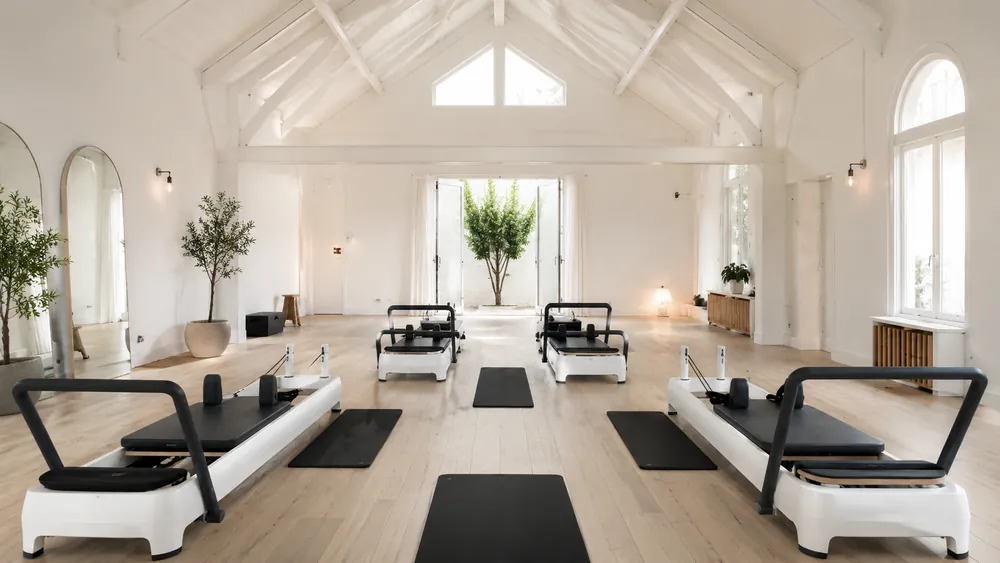
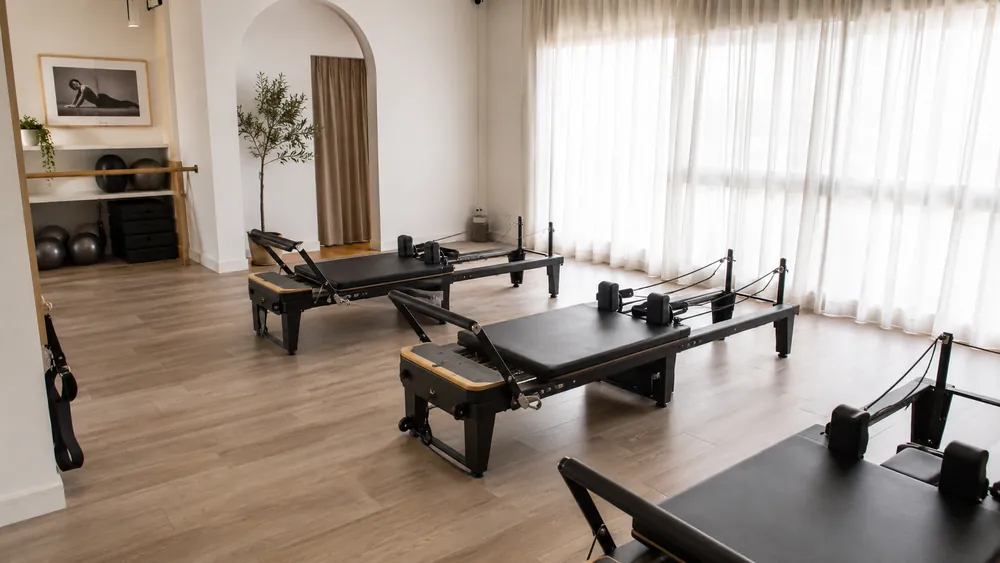
Room size and reformer count. A comprehensive boutique typically runs a small, relatively quiet room with detailed teaching. A chain runs a larger, more atmospheric room with louder music and dimmer lighting, and many more machines.
Class names and timetable. Boutiques name classes by level (Beginner, Intermediate, Advanced) or focus (Mat, Reformer, Tower). Chains use branded class names. The branded naming is the giveaway.
Instructor credentials on the website. Boutiques usually publish instructor bios with comprehensive certification details. Chains usually don't; instructors rotate locations and the format is the brand, not the individual.
Pricing transparency. Boutiques usually publish casual rates, class packs, and memberships. Chains tend to lead with memberships and bury casual rates. Watch for auto-renewing memberships and read the cancellation terms.
The feel in the room. Walk in and look. Quiet, focused, technical points to comprehensive. Loud, atmospheric, group-fitness energy points to chain.
One more check worth doing for any studio: whether it's registered with AUSactive on its business directory. Registration is voluntary, but it's a useful baseline signal of professional accountability. Most established chains are registered at the business level even if not every instructor is individually listed.
The marketing claims worth pushing back on
A few claims recur across chain reformer marketing and deserve a closer look.
"Lose 20kg in 3 months." No group fitness format reliably produces 20kg of loss in three months. That requires a substantial calorie deficit, and Pilates of any kind isn't a fast fat-loss tool. Diet drives that result; the class is the supporting habit.
"Tone in 30 days." "Toning" isn't a real biological process. Muscles get bigger, smaller, or stay the same. Visible "tone" combines muscle development with lower body fat, both of which take longer than 30 days regardless of format. Our Pilates results timeline covers what realistic change looks like week by week.
"Pilates that gets results faster than traditional Pilates." No clinical evidence supports this for any chain. Faster cardio output, sure. Faster gains in the deep stabilisers Pilates is known for, no.
Be sceptical without being cynical. The format works for what it does. The marketing just oversells which results it produces.
What does chain reformer cost in Australia?
Chain reformer pricing is generally in line with or slightly below comprehensive boutique pricing. Treat these as typical 2026 ranges that vary by city and brand, not fixed rates.
- Casual class: roughly $30 to $45
- 10-class pack: cheaper per class than casual
- Unlimited monthly membership: roughly $200 to $300
Many chains run aggressive intro offers (a cheap first class, a discounted first week, a free class on referral). These are designed to get you in before the membership conversation. Read the cancellation terms before signing; auto-renewing direct debits with a 30-day notice period are common.
KX Pilates and Cardio Pilates: common questions
- Is KX Pilates "real" Pilates?
Depends what you mean. KX is a legitimate, scaled, well-run Australian chain delivering consistent group fitness on a reformer. It isn't comprehensive, classically trained Pilates, and KX says as much, selling itself as a fitness-led reformer workout. If you want comprehensive Pilates, look for boutique studios with PAA-registered instructors. If you want a fun cardio-style reformer class, KX delivers what it sells.
- Is chain reformer dangerous?
Generally no, for healthy adults without injury history. The risk rises when people with pre-existing conditions, recent injuries, or significant deconditioning try to keep up with the pace in a large class, because the instructor can't watch everyone closely. If you have an injury history, start at a smaller comprehensive studio, then add chain reformer later if you want the cardio format. Check with a physio if you're unsure.
- Will I see results from chain reformer as a beginner?
Yes, fitness results: better cardio capacity, more muscular endurance, some visible firming. You're less likely to see the deep postural and core-stability changes boutique-trained practitioners talk about. The format is aimed at fitness, so that's what it gives you.
- How do I choose between KX, VAURA, Bodylove, and the other chains?
Try the intro offer at each. The chains compete on price, location, vibe, and instructor energy more than on format substance. Pick the one nearest your home or work, with class times that suit your week. Location is the strongest predictor of whether you'll keep showing up.
- I tried a KX-style class and didn't like it. Should I write off Pilates?
No. If chain reformer didn't work for you, try a comprehensive boutique studio. The two are different enough that disliking one tells you almost nothing about whether you'll like the other. Plenty of people who hate the chain experience love a small, technique-focused boutique, and the reverse happens too.
- Are chain reformer instructors trained?
Yes, to a different standard than comprehensive boutique instructors. Most hold a Certificate IV in Pilates or chain-specific in-house training. Some are also separately PAA-registered or hold other credentials. Comprehensive PAA instructors have completed a full Diploma or Advanced Diploma. Good teaching exists in both settings; what differs is how far the training goes.
Ready to find a studio?
Compare pilates studios across Australia. Filter by location, read real reviews, and enquire direct.