Key points
- For most healthy beginners, a small well-run group class is the sensible and cheaper starting point.
- Privates earn their cost in specific situations: injury, surgery recovery, pregnancy, or fast technique progress.
- A duet (two clients, one instructor) is often the best value-per-attention deal: ask if the studio offers them.
- Some studios require a private assessment before new clients join group reformer classes, a legitimate safety step.
What's the difference between private and group Pilates?
A private is one client, one instructor, for a full session. A duet is two clients sharing one instructor. A group class runs anywhere from a handful of people up to twenty-plus, depending on the studio. The smaller the ratio, the more individual attention and correction you get, and the more it costs per session.
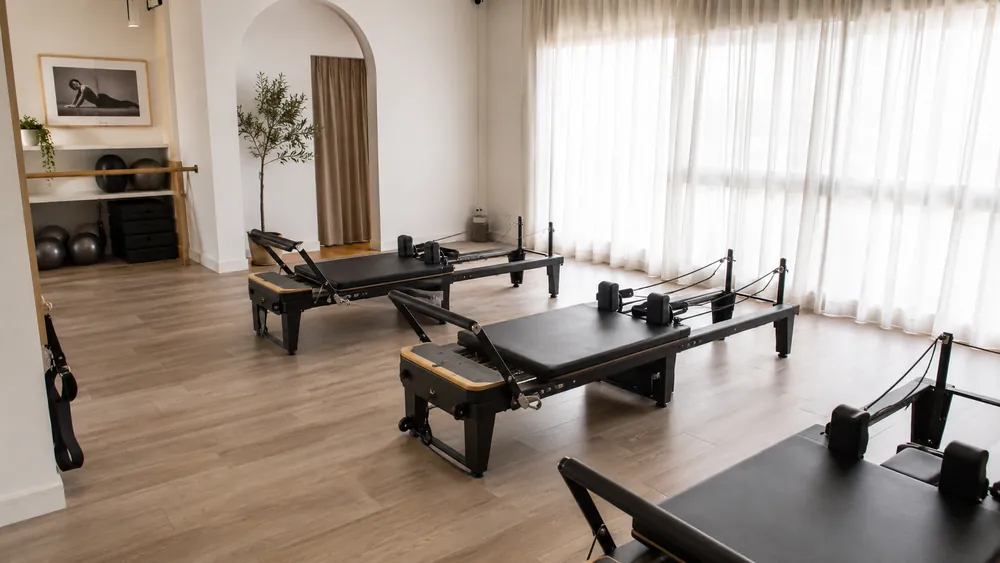
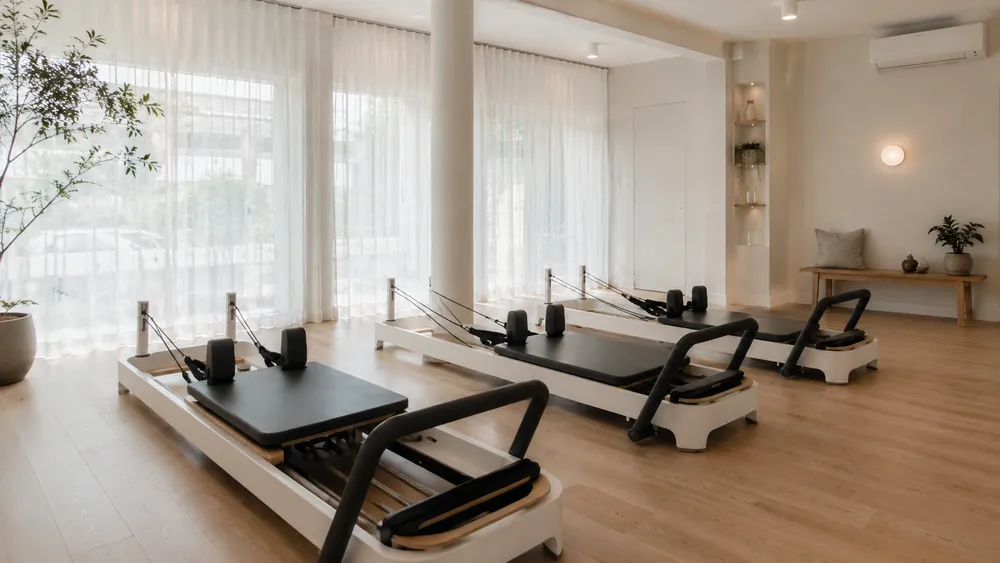
In a private, the whole session is built around your body, your goals, and whatever you're working around that day. In a group, you follow a set sequence the teacher leads, with corrections shared across the room. Both can be done on a reformer or on the mat. The reformer Pilates guide explains the machine itself, and the mat Pilates guide covers the floor-based format, so this page focuses on the private-versus-group decision rather than the equipment.
One thing worth setting straight early: a private isn't automatically "better." It's more attention. A confident, injury-free beginner in a capped class of ten with a good teacher is often learning perfectly well, and paying a lot less for it.
Format comparison at a glance
All figures are typical 2026 Australian ranges that vary by studio, city, and instructor level.
| Format | Ratio | Cost | Best for |
|---|---|---|---|
| Group (reformer) | 1 instructor : 8–12 clients | $35–$60 casual; packs save ~15–25% | Healthy beginners, ongoing fitness, budget-conscious |
| Group (mat) | 1 instructor : up to 20+ | $20–$35 casual | Foundations, home practice, lowest cost |
| Duet | 1 instructor : 2 clients | Between private and group: ask studio | Two friends/partners at similar levels; more attention without full private cost |
| Private | 1 instructor : 1 client | Higher than any group rate: ask studio directly | Injury, surgery recovery, pregnancy, fast technique progress |
When is group Pilates the right choice?
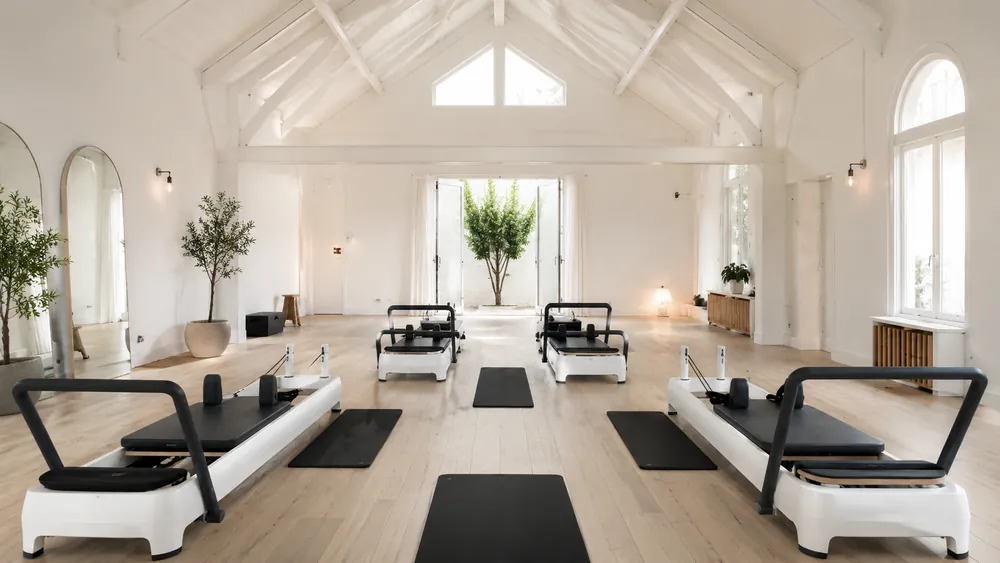
Group is the right choice for most healthy beginners and most people training for general strength, tone, and fitness. It's cheaper per session, the energy of a class keeps a lot of people consistent, and a good studio caps boutique reformer classes at 8 to 12 so the teacher can still correct you in real time. If you can learn comfortably in that setting, you're getting most of the benefit at a fraction of the private cost.
Group suits you if you're starting from general good health, you respond well to following a led sequence, and you want to build a sustainable habit without a big per-session outlay. healthdirect's guidance for starting safely is to learn the basics with a qualified instructor and to tell that instructor if you're a beginner so they can give you extra support during the class. A good studio also runs a dedicated beginner series before dropping you into mixed-level groups, which closes a lot of the gap between group and private for a newcomer.
Where group falls short is attention. In a class of twenty, the teacher physically can't watch every body every minute. If you need hands-on correction, have something specific to work around, or learn slowly and want it watched closely, a pure group setting may not give you enough.
When is a private or duet worth the cost?
A private earns its higher cost when you need the teacher's full attention, and there are a few clear situations where that's true. If you're recovering from an injury or surgery, pregnant, managing a health condition, or you want to progress technique quickly and precisely, one-on-one time is where that happens. healthdirect notes that beginners or people with an injury may need a one-on-one session so an instructor can assess them properly before joining a class.
Some studios build this in as a requirement. They'll ask new clients, especially anyone with a complex injury history, to do a private assessment or a short series of privates before joining group reformer classes. That's often a legitimate safety step, not just an upsell, though it's fair to ask which it is and why.
A duet is the middle option people forget. Two clients with one instructor splits the cost while keeping the ratio small, so you get far more attention than a group for less than a full private. If you've got a friend or partner at a similar level, a duet can be the best value-per-attention deal in the building. Ask the studio whether they run them.
Private and group Pilates: the cost trade-off
Group is the cheaper tier, full stop, and the gap is large. Across Australia in 2026, casual group reformer classes typically run $35 to $60 and casual mat classes $20 to $35, with class packs of 5 or 10 usually saving roughly 15 to 25% per class and unlimited reformer memberships sitting around $200 to $350 a month. These are typical ranges that vary by studio and city. Our Pilates cost guide breaks down every group tier in detail.
Private sessions cost more per session than any group class, and the range is wide enough that a single national figure would mislead you. Privates are priced per studio and per instructor, with senior and clinically trained teachers charging more, so the only reliable number is the one the studio quotes you. Ask directly, and ask whether a duet brings the per-person cost down. Many studios also sell private packs at a lower per-session rate than casual privates, so ask about those too.
The honest way to think about the trade-off: you're buying attention, and attention is expensive. Pay for it where it changes the outcome (a safe start around an injury, faster technique progress, a condition that needs adapting) and skip it where a good group class would have taught you the same thing for a third of the price.
How to choose: a quick decision guide
Work through these in order. They'll usually point you to the right starting format.
- Are you managing an injury, recent surgery, pregnancy, or a health condition? Talk to a physiotherapist or a clinical Pilates provider first, then likely start with privates. (More on this below.)
- Are you a healthy beginner with no specific issue? A beginner group series is almost always the right and cheaper start.
- Do you learn slowly or want close, hands-on correction? Consider a few privates up front, then move to group once you've got the basics.
- Do you have a friend at a similar level and want attention without the full private price? Ask about a duet.
- On a tight budget but want some individual attention? A short private series to learn safely, then group for ongoing volume, is the most cost-effective hybrid most studios offer.
A pattern works for a lot of people: two or three privates to learn spring settings, safe transitions, and the core repertoire, then group classes for everything after that. You pay for attention exactly where it matters most (the start) and switch to the cheaper tier once you can hold your own.
When you're ready to compare studios, class formats and prices near you, browse Studio Finder's Pilates listings or search by suburb.
A note on injury, rehab and clinical Pilates
If you're dealing with pain, a recent injury, surgery recovery, or a diagnosed condition, the first conversation isn't with a studio, it's with a qualified health professional. See your GP or a physiotherapist about whether Pilates suits your situation and what to avoid. healthdirect advises telling your instructor if you're recovering from an injury so they can adjust the exercises, and to stop and ask for guidance if you feel any pain.
"Clinical Pilates" usually means Pilates delivered or overseen by a physiotherapist or in a rehab-focused setting, and it's a different proposition from a general studio class. If your goal is rehabilitation rather than general fitness, that's the direction to look. The Pilates Association Australia keeps a directory you can use to find a registered studio or instructor, and their guidance on choosing a studio or training organisation is a sensible starting point for checking qualifications. This page is general information, not medical advice; for anything to do with an injury or condition, your physiotherapist or GP is the right call.
Private vs Group Pilates: common questions
- Is private Pilates better than group classes?
Not automatically. A private gives you the instructor's full attention, which is worth paying for if you're working around an injury, pregnant, managing a condition, or want fast, precise technique progress. For a healthy beginner, a small well-staffed group class teaches the same fundamentals for far less. "Better" depends entirely on what you need.
- Should beginners start with private or group Pilates?
Most healthy beginners can start in a group, ideally a dedicated beginner series where the teacher gives newcomers extra support. healthdirect notes beginners or people with an injury may need a one-on-one assessment first. A common hybrid is a few privates to learn the basics safely, then moving into group classes.
- How much more do private Pilates sessions cost than group?
Privates cost more per session than any group class, and the range is wide enough that no single national figure is reliable. Group casual reformer typically runs $35 to $60 and mat $20 to $35, varying by studio and city. Privates are priced per studio and instructor, so ask the studio directly and ask whether a duet lowers the per-person cost.
- What is a duet Pilates session?
A duet is two clients sharing one instructor. It splits the cost of a private while keeping the ratio small, so you get much more attention than a group class for less than a full one-on-one. If you have a friend or partner at a similar level, it's often the best value-per-attention option a studio offers. Ask whether they run them.
- Is Pilates good for injury or back pain?
Pilates is often used alongside care for issues like lower back pain, and healthdirect notes it may help recovery by improving posture and strengthening muscles. It is not a substitute for medical treatment. If you have an injury, recent surgery, or a diagnosed condition, see a physiotherapist or your GP first, and consider clinical Pilates delivered or overseen by a physiotherapist.
Ready to find a studio?
Compare pilates studios across Australia. Filter by location, read real reviews, and enquire direct.