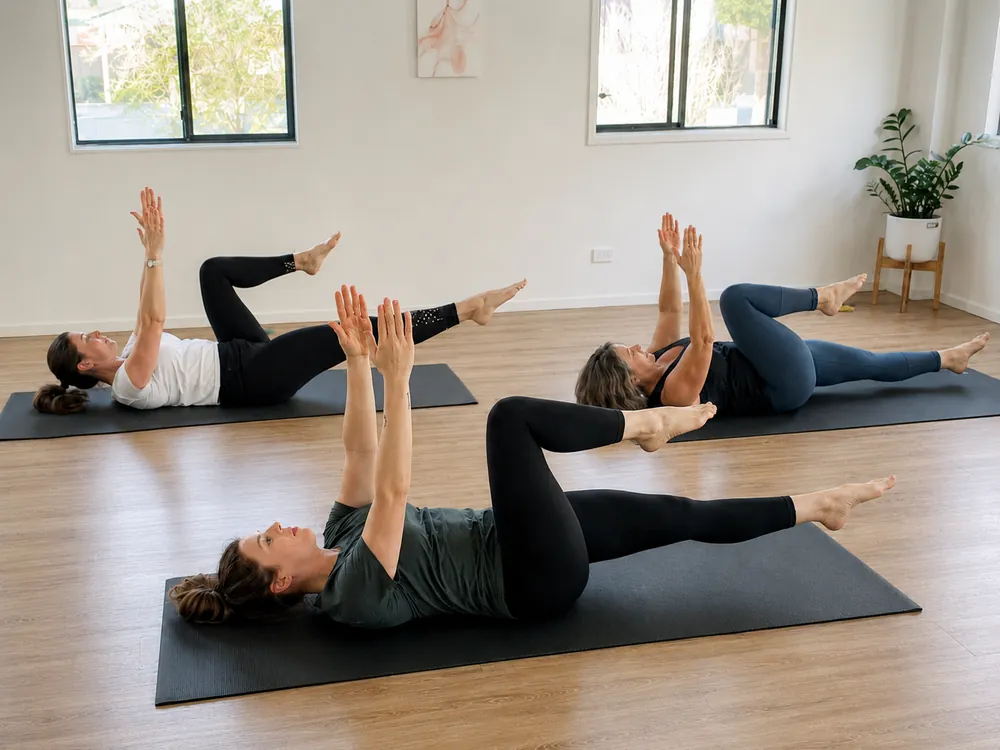
Key points
- Mat Pilates uses only your bodyweight and a mat: no machines, no equipment required.
- It can be done at home or in a studio; class drop-ins are typically cheaper than reformer.
- The foundational exercises are the same ones Joseph Pilates published in 1945 and still taught today.
- Without a machine's spring feedback, form matters more, and a qualified instructor spots things a video cannot.
What mat Pilates actually involves
A mat class runs through a sequence of floor-based exercises that target the core, back, hips, and legs. The original 34-exercise sequence Joseph Pilates set out in Return to Life Through Contrology is still the backbone of classical mat teaching. Contemporary studios may vary the order or add exercises, but the fundamentals are the same: controlled movement, precise breathing, core engagement.
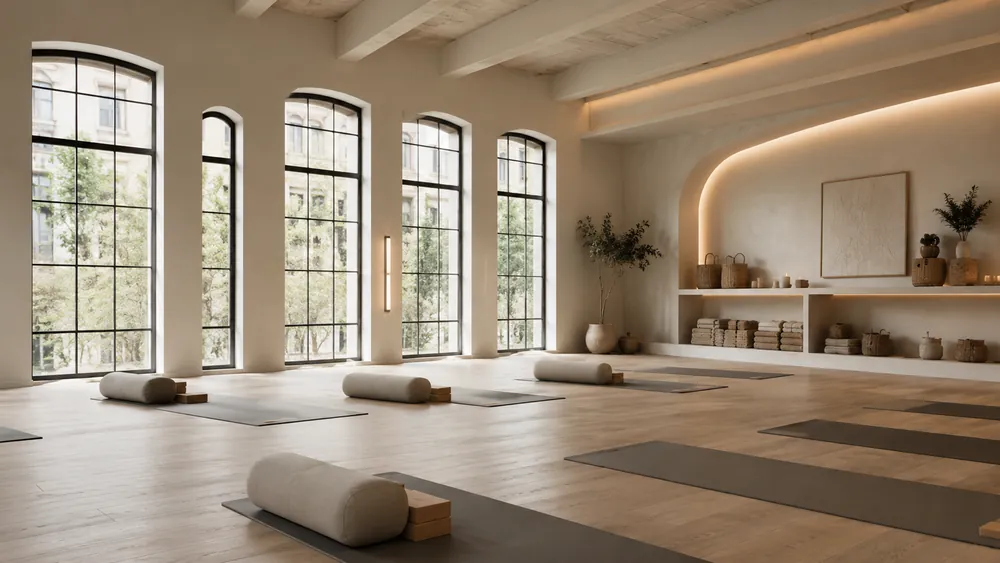
Most exercises are done lying, sitting, or kneeling. There's no equipment beyond the mat, though some classes add small props: resistance bands, soft balls, or magic circles. These are optional tools, not requirements.
The pace is typically slow and deliberate, and the challenge lies in control rather than cardio fitness.
Mat vs reformer Pilates
The same principles, different apparatus. Here's how they compare on the factors that matter most for a beginner.
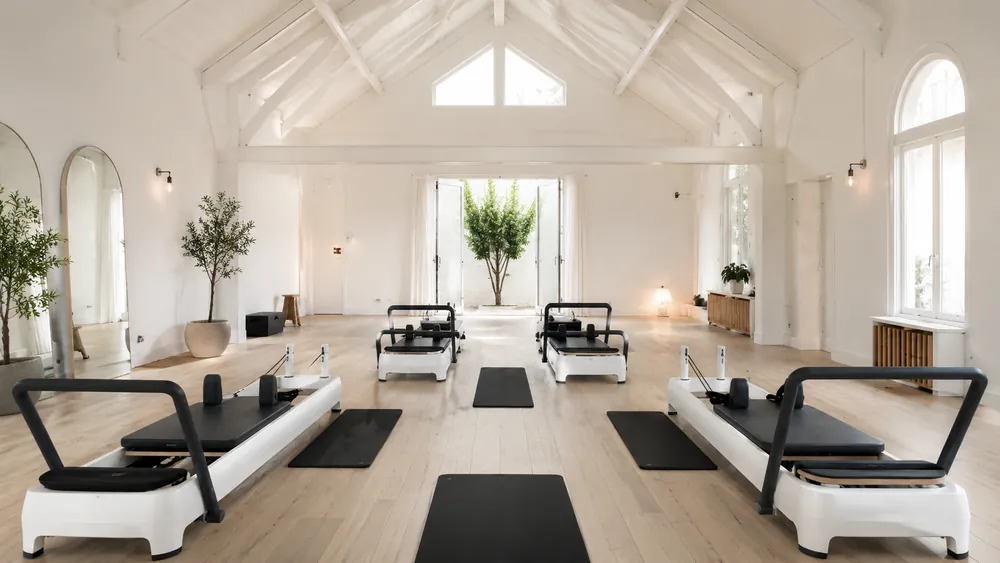
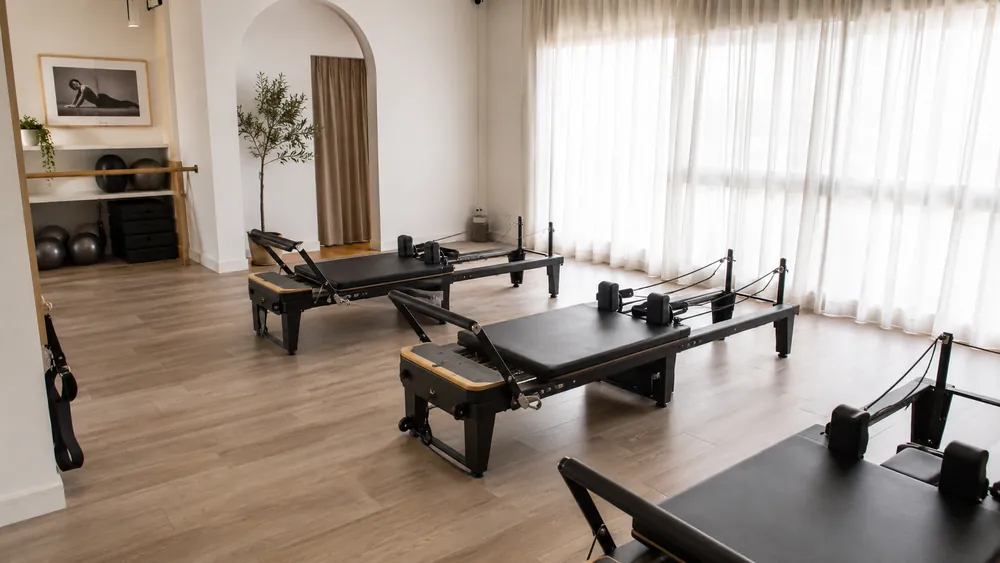
<table> <thead> <tr> <th>Factor</th> <th>Mat Pilates</th> <th>Reformer Pilates</th> </tr> </thead> <tbody> <tr> <td>Cost per class</td> <td>Typically $20–$35 casual</td> <td>Typically $35–$60 casual</td> </tr> <tr> <td>Equipment</td> <td>Mat only</td> <td>Reformer machine (studio only)</td> </tr> <tr> <td>Can do at home</td> <td>Yes</td> <td>No (without buying a machine)</td> </tr> <tr> <td>Spring/resistance feedback</td> <td>None, bodyweight only</td> <td>Adjustable spring resistance</td> </tr> <tr> <td>Instructor correction</td> <td>Useful; no machine to compensate</td> <td>Useful; machine gives some feedback</td> </tr> <tr> <td>Best for</td> <td>Fundamentals, home practice, budget</td> <td>Loaded resistance, tactile feedback</td> </tr> </tbody> </table>Neither is better overall. Many people do both: mat for home practice or lower-cost volume, reformer for the loaded work and closer instructor attention. The reformer Pilates guide covers that side in detail.
Can you do mat Pilates at home?
Yes, and it's one of the better exercise formats for home practice precisely because it needs so little. A mat on a clear patch of floor and a class video covers the basics. Many people start mat Pilates this way.
The trade-off is form. A video cannot see you. Without someone watching, a beginner can practise a movement slightly wrong for weeks without realising. Most people who do mat Pilates at home benefit from occasional studio classes as a form check, even if they don't go regularly. The can you do Pilates at home vs studio guide covers this trade-off in more detail.
What a mat class costs in Australia
Casual mat Pilates classes in Australia typically run $20 to $35. Class packs of 5 or 10 save around 15 to 25% compared to casual pricing. Unlimited memberships that include mat classes sit lower than reformer-only memberships and often run around $150 to $250 a month.
Mat classes are also among the most likely to offer community, council, or donation-based options if budget is tight. Prices vary by studio and city, so check directly.
Ready to try a class? Search for a Pilates studio near you on Studio Finder.
Mat Pilates: common questions
- Is mat Pilates easier than reformer Pilates?
Not necessarily. Mat Pilates looks simpler because there's no machine, but without the spring feedback, every movement relies purely on your own control. A well-taught mat class can be very demanding. Reformer can assist some movements that would be too hard on the mat, which is part of why some beginners find the machine easier to start with. The honest answer is that they're hard in different ways.
- Do I need any equipment to start mat Pilates?
Just a mat. Optional small props like resistance bands, a soft ball, or a magic circle appear in some classes, but a studio will supply them. If you practise at home, a yoga mat works fine to start.
- How often should I do mat Pilates to see results?
Two to three sessions a week is a common starting point for building strength and control. One session a week tends to maintain rather than progress. Consistency over weeks matters more than intensity in any single session.
- Can mat Pilates help with back pain?
Pilates is often used alongside physiotherapy for back conditions because it trains the deep muscles that stabilise the spine. It is not a substitute for professional assessment. If you have back pain, see a physiotherapist or your GP before starting, and tell your instructor so they can adapt the class for you. This is general information, not medical advice.
Ready to find a studio?
Compare pilates studios across Australia. Filter by location, read real reviews, and enquire direct.