Key points
- Nobody is watching you. Everyone in the room is too busy managing their own form, breath, and count.
- Arrive ten minutes early and tell the instructor you're new. That single sentence changes how the whole class goes.
- Take the easier modification when it's offered. Taking the mod is not a failure; it's the point.
- Intro offers (typically $45 to $80 for two weeks unlimited) are the cheapest way to test a studio before committing to anything.
The fears that stop most beginners (and why they're overblown)
Most first-timer dread comes down to the same few fears: that you're too unfit to start, that you'll look foolish, and that walking in alone is socially awkward. None of them survive the first fifteen minutes of an actual beginner class.
Start with the fitness fear. Beginners talk themselves out of class convinced their baseline is too low to even begin. People who've been sedentary for a year or two often arrive at the door already half-defeated, sure they're about to humiliate themselves on a reformer they've only seen on TikTok. Plus-sized practitioners sometimes wait months telling themselves they should lose weight first, which misses the point that the work itself is what builds the strength. Reformer beginner classes start with you lying on your back, breathing, learning what footwork feels like on one spring. Yoga beginner classes start cross-legged on a mat. Barre beginner classes start with the simplest pliés and a wall to hold. Nothing in the first fifteen minutes assumes any base fitness at all.
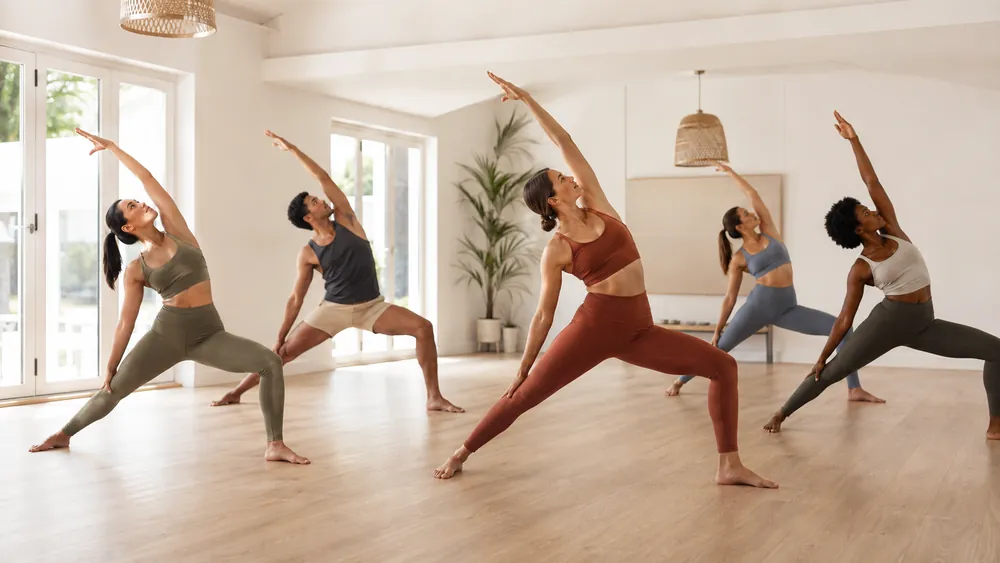
Then there's looking foolish. New students fixate on how they compare to the person next to them, convinced everyone else is flowing while they flail. Nobody is watching. Everyone in that room is dealing with their own sweat, their own form, their own count, and their own private monologue about whether they can survive the second set. The veterans are the least judgmental people there, precisely because they remember being you four years ago on the same equipment.
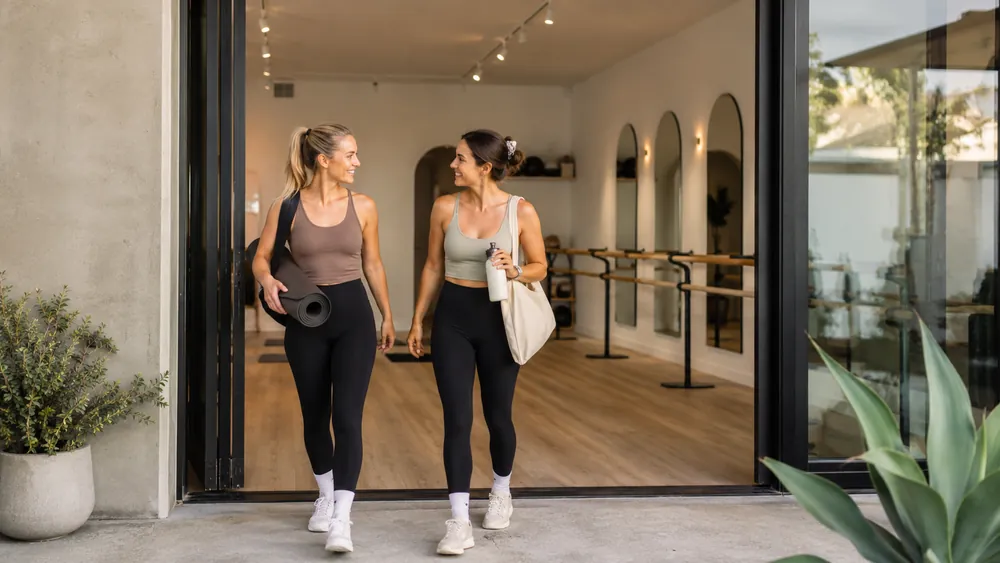
The third one is social. Walking into a small boutique where the regulars all know each other can feel like crashing a private party. The fix is small and specific: arrive ten minutes early, find the instructor (not the front desk), and say you're new and a bit nervous. That single sentence changes the whole class. They'll set up your reformer or mat, watch your form, and quietly hand you the easier modification when everyone else scales up. Skip the sixty-second conversation and you're on your own.
What an instructor will (and won't) do for a beginner
A good Australian studio runs an explicit beginner pathway, and a good instructor works the room rather than teaching from the front. That's the single biggest difference between a first class you'll come back to and one that leaves you thinking "what just happened?"
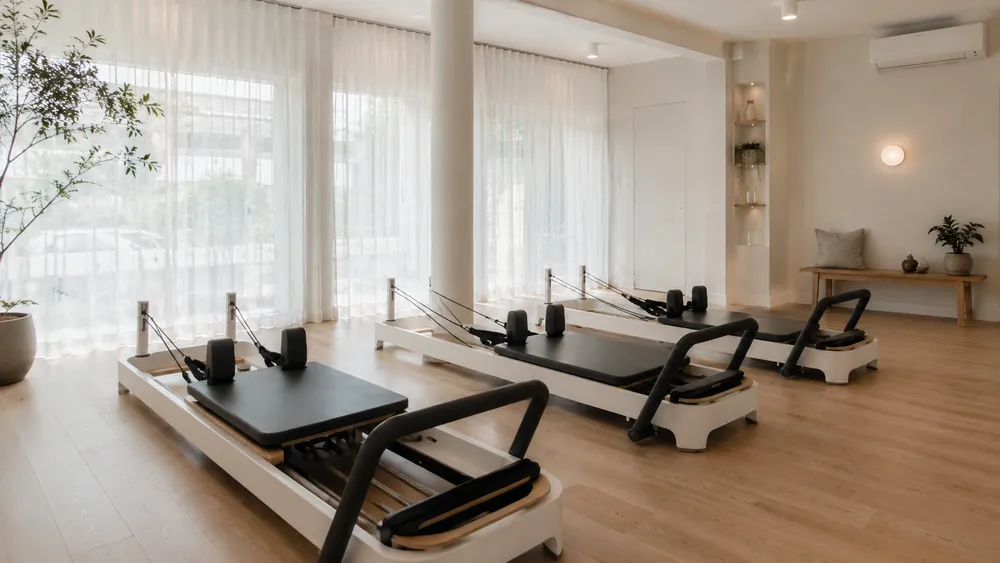
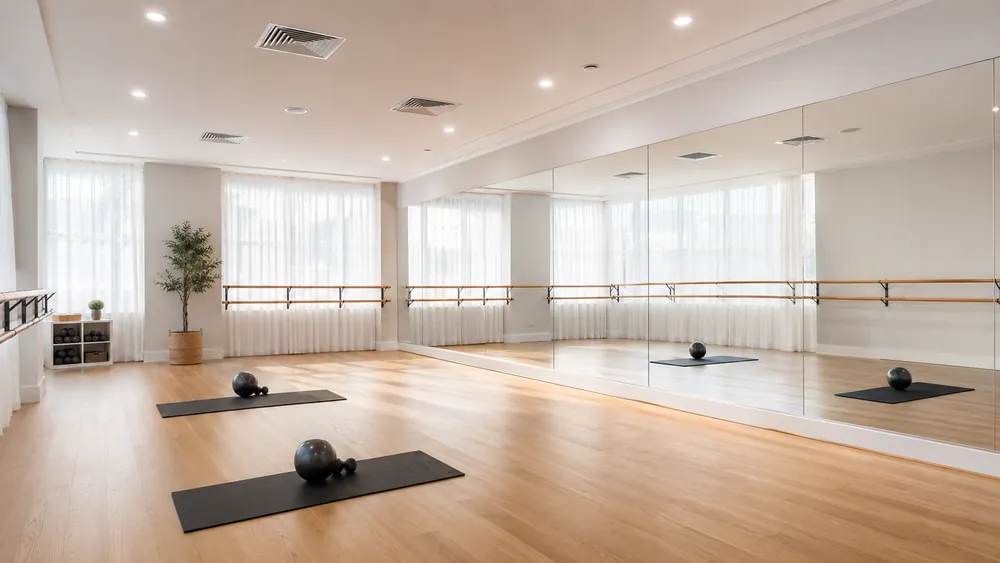
Pilates studios that take beginners seriously cap entry-level classes at 8 to 12 reformers so the instructor can correct your alignment in real time, rather than running 20-plus and cueing from the front. Yoga studios that handle beginners well run dedicated foundations or "soft start" classes where the pace is slower and the cueing assumes you've never heard of a downward dog. Barre studios run a Barre Basics or similar before dropping you into the signature class.
What you should expect from any decent instructor in that first class:
- They ask about injuries before you start. If they don't, notice that.
- They show you how the equipment works. On a reformer, that means how to set spring tension safely, where the headrest goes, where your feet go on the bar, and how to get on and off the carriage without launching yourself across the room.
- They watch your form actively. They walk the room. They give you a hands-on adjustment (with consent) or a verbal cue.
- They offer modifications without singling you out. A good instructor says "if your hamstrings are tight, here's the version that works," not "Sarah, do the easier one."
What a good instructor doesn't do is run on autopilot, teach from the front, or speed through transitions because they're behind schedule. If your first class feels like that, the studio isn't a good fit. Try another. You're not short of options: AUSactive, the recognised peak body for the sector, reports a membership of around 15,000 professionals and roughly 3,500 fitness, yoga, and Pilates businesses in its 2022-23 Annual Report (the figure has shifted slightly since, so treat it as the order of magnitude, not a live count). The point stands. You don't have to settle for the first studio you walk into.
The bodily-function thing nobody warns you about
In a quiet yoga or stretch class, your body will do things. You'll yawn. You might pass gas during a deep hip opener. Your stomach might gurgle in savasana. None of it signals an injury, and the social catastrophe your first-class brain is bracing for doesn't happen.
Amanda Zdanowicz, who runs Soho Yoga in North Brisbane, wrote a blog post on yoga etiquette that addresses this head-on. On accidental wind in class: "Let's be frank, we've all done a bottom burp in class." Her framing is that this is the body behaving naturally as movement gets things flowing, and that suppressing it is worse than letting it happen. On yawning, she tells students to "yawn to your heart's content," because the yawn is the parasympathetic nervous system responding to slowing down, which is part of the practice working. The instructor knows. The veterans know. The people next to you know it'll happen to them too. Move on.
What to wear, what to bring, what to do with your shoes
Five things trip up first-timers, and none of them need to.
- Wear fitted activewear. Loose t-shirts ride up when you're upside down on a reformer or in downward dog. Loose shorts are worse. Tight is comfortable here, even if it's not your usual aesthetic.
- Grippy socks for Pilates and barre. Most boutique studios require them. Some sell them at the front desk for around $15 to $25 if you forget. Yoga is barefoot.
- Bring a water bottle. Heated yoga and reformer can both leave you genuinely depleted.
- Leave your phone out of the studio room. Lockers are standard. The instructor will appreciate it, the people next to you will appreciate it, and you'll get more out of the class.
- Shoes off at the door. Almost universal in Australian boutique studios. Look for the shoe rack on the way in.
If you've booked an intro offer (most Australian studios run a 2-week unlimited deal, typically $45 to $80, which is the cleanest way to test a studio without committing to a membership), arrive fifteen minutes early for the very first class. Five of those minutes are paperwork, five are setup, five are the conversation with the instructor where you say you're nervous.
Checklist
- Wear fitted activewear; loose tops ride up on a reformer or in downward dog.
- Bring grippy socks for Pilates and barre; yoga is barefoot. Studios sell a pair for around $15 to $25 if you forget.
- Bring a water bottle; heated yoga and reformer can leave you depleted.
- Leave your phone out of the studio room; lockers are standard.
- Shoes off at the door; look for the shoe rack on the way in.
- Arrive fifteen minutes early for your first class: five minutes paperwork, five minutes setup, five minutes to tell the instructor you're nervous.
When to scale back, and when to push through
Beginners often confuse normal first-class soreness with injury. They feel different, and it's worth knowing which is which.
Normal: muscle soreness 24 to 48 hours after class, particularly in the deep abdominals, glutes, and lats for Pilates, the hips and shoulders for yoga, the seat and inner thighs for barre. This is delayed onset muscle soreness, and it fades over a few days and gets meaningfully smaller by your fourth or fifth class.
Worth checking: sharp pain during a movement, joint pain (especially knees and lower back), pins and needles, dizziness, or any pain that gets worse rather than better in the days after class. The Australian government health service healthdirect advises stopping if you feel any pain and asking your instructor for guidance, and notes that beginners or anyone with an injury may be better off starting with a one-on-one session so an instructor can assess them properly. If you're working through an existing injury or condition, look for a studio that runs physiotherapist-led or rehab-focused classes. The Pilates Association Australia runs a find-a-studio-or-instructor tool you can use to track one down.
For the lead-up anxiety (the night-before kind, the morning-of kind, the in-the-car-park kind), Beyond Blue has practical resources for managing situational anxiety. The class itself is one of the better ways to interrupt that loop. Yoga and Pilates both use breathing and mindfulness techniques that, per healthdirect, may help you feel calmer and more relaxed, which is part of why they hook people who started for one reason and stayed for another.
When to check in with a professional
Sharp pain during a movement, joint pain, pins and needles, dizziness, or pain that gets worse in the days after class is worth checking. healthdirect advises stopping if you feel any pain and asking your instructor for guidance. If you're working through an injury or condition, look for a physiotherapist-led studio, and for anything significant talk to your GP or a physiotherapist first. For the lead-up anxiety, Beyond Blue has practical resources for managing situational anxiety.
Why the studio you pick matters more than the class style
Most beginners obsess over which style to start with: reformer or mat, vinyasa or hatha, classical or sculpt. The honest answer is that the studio matters more than the style. A great instructor running a basic mat Pilates class will give you a better introduction than a mediocre instructor running a high-end reformer one.
Three things to look for when picking your first studio.
Real beginner pathways. A studio with a dedicated beginners' series (usually 2 to 3 classes, sometimes called Foundations, Intro, or Basics) is taking new clients seriously. Studios that drop everyone into the same mixed-level class are not.
Reasonable class sizes. Boutique studios cap reformer classes at 8 to 12 so the instructor can teach. Chains often run more and lean on cueing from the front. Both have their place, but for your first month, smaller is better.
Instructor credentials worth caring about. For Pilates, look for mentions of comprehensive certification or the Pilates Association Australia. For yoga, look for Yoga Australia registration; per their registration guidelines, a full Registered Level 1 Teacher has completed more than 350 hours of training. These aren't infallible signals, but they beat the absence of any signal.
If a studio's website doesn't list any of this, that's information too.
One last thing about the first ten minutes
Most beginners overestimate how hard the class will be and underestimate how much the instructor will help.
Arrive early. Tell the instructor you're new. Take the easier modification when offered. Drink water afterwards. Decide whether the studio's vibe was right. If yes, book the next one before you talk yourself out of it.
For the format-specific detail, the first reformer Pilates class guide, the first yoga class guide, and the first barre class guide walk through each one in turn. If you're still deciding between Pilates styles, the reformer Pilates guide and the mat Pilates guide go deeper.
Ready to find your first class? Search for a studio near you on Studio Finder.
The one sentence that changes the class
Arrive ten minutes early, find the instructor rather than the front desk, and say you're new and a bit nervous. They'll set up your reformer or mat, watch your form, and quietly hand you the easier modification when everyone else scales up.
First Pilates, Yoga or Barre Class: common questions
- Is it weird to go to my first class alone?
No, and most beginners do exactly this. Studios are used to first-timers walking in solo. Telling the instructor you're new at the start of class makes the whole thing easier and changes how they cue you for the next hour.
- What if I can't keep up?
Take the modification when offered, take the next one if you need it, or stop and breathe. Nobody is watching. A good instructor expects you to scale and will offer alternatives without singling you out. If your first class felt impossibly fast and the instructor didn't seem to notice, the studio is the problem, not you.
- Should I do an intro offer or pay-as-you-go?
For a first studio, intro offers (typically 2 weeks unlimited for $45 to $80 across Australia) are the cheapest way to figure out if the studio fits. Casual classes run roughly $20 to $35 for mat Pilates or yoga, $25 to $40 for barre, and $35 to $60 for reformer, and they add up fast. Memberships only make sense after you've decided you'll go three or more times a week.
- What if I have an injury or chronic pain?
Look for studios that run physiotherapist-led or clinical Pilates classes, or yoga studios with instructors trained in therapeutic yoga. Email or call before you book to confirm the instructor is comfortable working with your specific issue. The Pilates Association Australia find-a-studio tool is a starting point. For anything significant, talk to your GP or a physiotherapist first.
- Is it true that "nobody is watching me"?
Almost literally. Everyone else is tracking their own form, breath, count, and internal monologue. The instructor is the only person actively watching you, and that's because their job is to keep you safe and progressing.
Ready to find a studio?
Compare pilates studios across Australia. Filter by location, read real reviews, and enquire direct.