Key points
- Reformer Pilates is resistance training: springs load your muscles against external force.
- Pilates builds strength and muscular endurance, especially in the deep core; it's less effective for maximum muscle size.
- For raw hypertrophy, heavy progressive loading (weights) wins, since reformer springs have a lower ceiling.
- A 2022 systematic review found Pilates comparable to other exercise for strength on low-certainty evidence.
Does Pilates build muscle? The short answer
Pilates builds strength and endurance, especially in the deep core, and reformer Pilates qualifies as resistance training. What it's less suited to is maximum muscle growth, because the load ceiling is lower than free weights. So "does it build muscle" splits into two questions: can it make you stronger and more toned (yes), and is it the fastest route to bigger muscles (usually no).
The evidence here is more modest than either fans or critics tend to claim. A 2022 systematic review by Pinto and colleagues, published in Heliyon, pooled eleven studies comparing Pilates against other forms of exercise and found very low to low certainty evidence of no significant difference between Pilates and other exercise modalities for dynamic, isometric, and resistance strength. Read that carefully. It does not say Pilates fails to build strength. It says that in the studies available, Pilates came out roughly level with other exercise for these strength measures, and that the quality of that evidence is limited. So the honest framing is that Pilates can build strength, the research backing the exact size of that effect is thin, and nobody should be quoting it as a clear winner or loser against weights.
Is reformer Pilates resistance training?
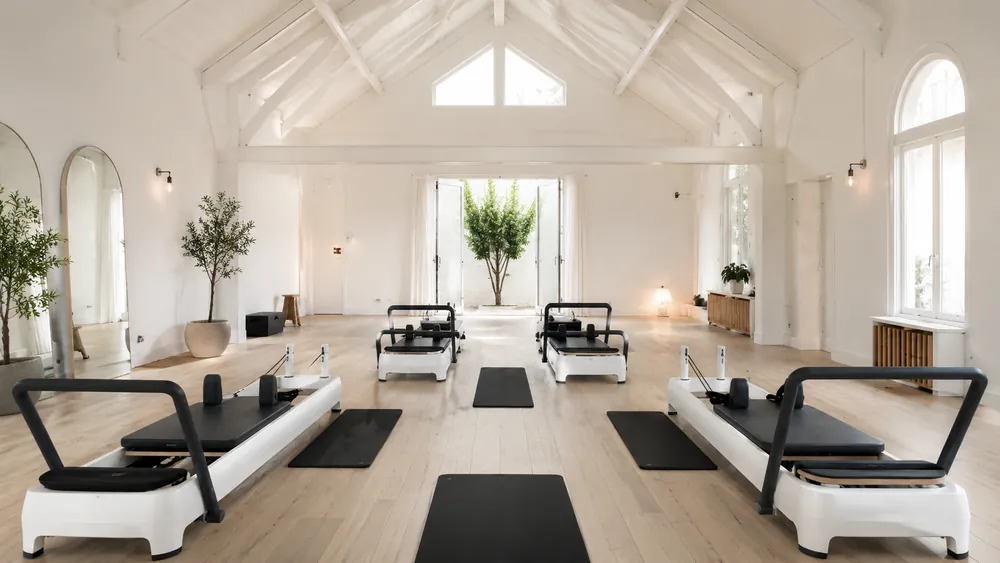
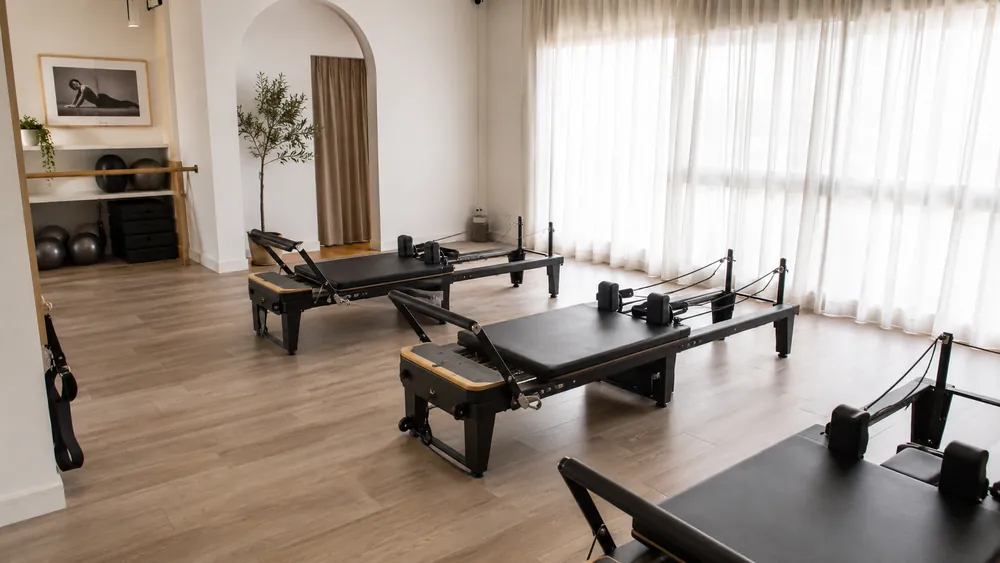
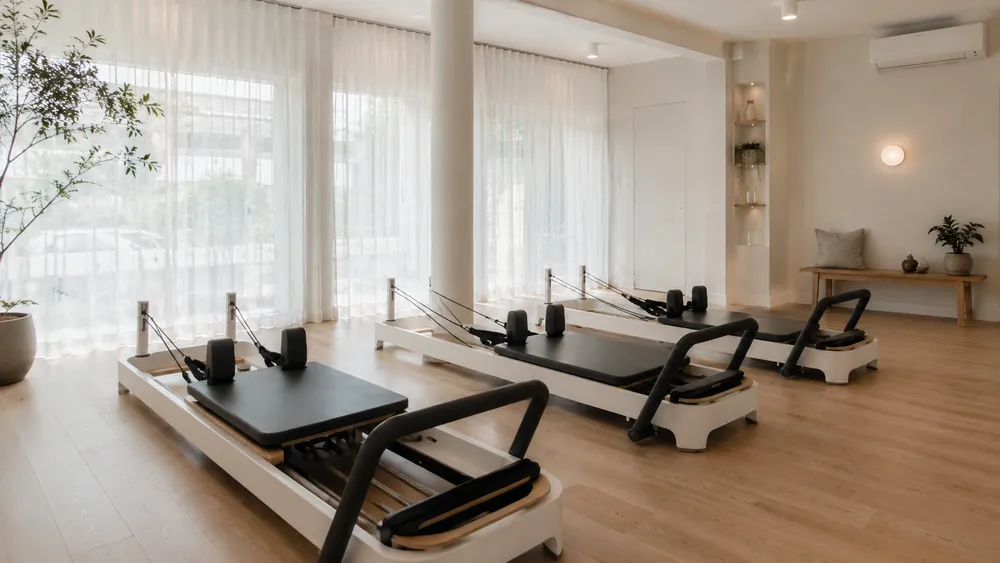
Yes, by definition. Resistance training means working your muscles against an external load, and the reformer's springs are that load. healthdirect, Australia's national health service, describes the reformer as a frame with "a moving platform, springs and an adjustable foot bar" where "these parts add resistance to your workout," per its yoga and Pilates page. Pulling and pushing the carriage against spring tension is resistance work, the same principle as a cable machine.
It also counts toward the muscle-strengthening side of the national exercise guidelines. Australia's physical activity guidelines for adults aged 18 to 64 recommend muscle-strengthening activities on at least two days each week, listing examples like push-ups, squats, and lifting weights. Reformer Pilates, loading your muscles against springs, fits that category. You can legitimately count a couple of reformer sessions a week toward your muscle-strengthening days.
The catch is in how the resistance behaves. Springs give variable resistance, lighter at the start of the range and heavier as they stretch, which is different from the fixed load of a dumbbell. That's part of what makes the reformer useful for rehab and control work. It also means the absolute load tops out lower than a barbell, which matters for the next question. We cover how the machine works and how to pick a studio in our reformer Pilates guide.
Pilates vs weights for building muscle
For maximum muscle size, weights win, and the reason is progressive overload. Building bigger muscles (hypertrophy) depends on steadily increasing the load you put through them over weeks and months. A barbell lets you add five kilos and then five more, more or less indefinitely. A reformer's springs have a ceiling, so once you can handle the heaviest spring setting on a given exercise, you've largely run out of ways to keep loading that muscle harder.
That's the structural difference, and it's why a powerlifter and a Pilates regular end up with different bodies. Heavy, progressively loaded training drives size in a way spring resistance and body weight can't match at the top end. If your single goal is to get visibly bigger, the gym has the better tool for the job.
But "build muscle" and "get strong and capable" aren't the same goal, and that's where the comparison gets more even. The Pinto review found Pilates roughly level with other exercise for strength outcomes, albeit on low-certainty evidence. Pilates also trains things heavy lifting often neglects: deep core stability, control through a full range, and the small stabilisers around your joints and spine. A lot of people who lift weights actually add Pilates for exactly this, to shore up the control and stability that heavy compound lifts don't directly train. We go deeper on the trade-offs in our guide on Pilates vs gym strength training.
The realistic verdict: for raw size, weights. For strength with control, stability, and joint-friendly loading, Pilates holds its own.
| Goal | Better tool | Why |
|---|---|---|
| Maximum muscle size (hypertrophy) | Weights (gym) | Heavy progressive loading drives size; reformer springs have a lower ceiling |
| Core strength and deep stabilisers | Pilates | Method specifically trains transversus abdominis and spinal stabilisers that compound lifts miss |
| Muscular endurance | Pilates (or both) | Higher-rep, sustained-load work in Pilates builds endurance capacity |
| Joint-friendly strength | Pilates (especially rehab) | Variable spring resistance and controlled range suit injury recovery |
| Overall strength (comparable to other exercise) | Either | 2022 Pinto review found no significant difference on low-certainty evidence |
| Control, posture, stability | Pilates | Slow precision work trains patterns heavy lifting doesn't directly address |
What Pilates is genuinely good at
The deep core is where Pilates earns its reputation. The method is built around the muscles deep in your trunk, the ones wrapping your spine and lower abdomen, and it trains them to switch on and stay on while you move. healthdirect lists improved "core strength," balance, flexibility, and posture among Pilates' benefits, and notes the exercises "make your core muscles stronger, which may improve your balance." That deep stabiliser work is harder to target with conventional weights, where bigger surface muscles tend to take over.
Alongside that deep-core work sits the control and precision the method is known for. Pilates trains you to move slowly and accurately through a full range, which builds strength you can actually use rather than just strength you can demonstrate under a bar. That carries over into everyday movement, posture, and how steady you feel.
There's also a real advantage in how gently it loads a joint. Because spring resistance is variable and lower-impact than free weights, the reformer can load a muscle without hammering the joint the way heavy weights sometimes do. This is part of why physiotherapists use reformer Pilates in rehabilitation settings, where the goal is to strengthen around an injury without overloading it. healthdirect notes Pilates "may help you recover after an injury" by strengthening muscles and improving how your body moves, and that you should tell your instructor about any injury so they can adjust. If you're working back from something specific, route that decision through a physiotherapist rather than picking a class off a timetable.
Muscular endurance rounds it out. Pilates classes tend to run higher repetitions at moderate load, which builds the muscle's capacity to keep working rather than its peak force. That's useful, and it's a different adaptation from heavy low-rep lifting.
Will Pilates make my muscles bigger or more "toned"?
Pilates is more likely to build strength, endurance, and definition than noticeable size, and "toned" mostly describes that combination. The toned look people associate with Pilates comes from building and strengthening muscle while the surrounding body composition changes, rather than from adding large amounts of muscle mass. There's no separate "long, lean muscle" that Pilates grows and weights don't; that's a marketing idea, not a physiological one. Muscle gets stronger and can grow, and how visible it is depends heavily on your overall body composition, which is driven more by diet and total activity than by any single class type.
Worth being clear and cautious here: how anyone's body changes is individual, and no class type guarantees a particular result or appearance. The Pinto review's low-certainty findings are a fair reminder that the precise effects of Pilates on strength and shape are not as nailed-down as confident before-and-after marketing suggests. If body-composition change is your main aim, total training and nutrition matter more than the choice between Pilates and weights, and that's a conversation for a GP, dietitian, or accredited exercise professional rather than a guide.
What you can reasonably expect from consistent Pilates is more core strength, better control and posture, improved muscular endurance, and over time more definition, particularly through the trunk. When that tends to show up, and the usual caveats on individual variation, we cover in our Pilates results timeline guide.
How to get the most muscle benefit from Pilates
Pick reformer over mat if strength is your priority, go consistently, and don't expect spring resistance to replace heavy lifting if size is the goal.
Reformer loads your muscles more directly than mat work, because the springs add resistance you can dial up. Mat Pilates is body-weight work, genuinely demanding for control and endurance, but it tops out lower for pure strength loading. If building strength is the main thing you want, the reformer is the better pick of the two, and our reformer vs mat comparison lays out the rest of the trade-offs. For frequency, the muscle-strengthening guidelines point to at least two days a week, and two to three Pilates sessions weekly is a sensible target for building strength while leaving room to recover. As a rough 2026 guide that varies by studio and city, a casual reformer class tends to run $35 to $60, so a few sessions a week usually makes an unlimited membership (commonly $200 to $350 a month for reformer) worth pricing up.
The honest add-on: if your goal is maximum size, pair Pilates with progressive resistance training rather than expecting Pilates to do that job alone. Plenty of people lift for size and do Pilates for the core control, stability, and joint-friendly work the gym doesn't directly train. Our deeper dive on building core strength with Pilates covers the part Pilates does best.
For anything involving an injury, a health condition, or a specific body-composition goal, check with your GP or an allied health professional before you start, and tell your instructor so they can adjust the work.
If you want to try it, browse reformer Pilates studios near you and look for one that runs a beginners' or foundations series first.
This guide is general information only and is not medical advice. See your GP or an allied health professional for advice about your own situation.
Does Pilates Build Muscle? An Honest Look: common questions
- Does reformer Pilates build muscle?
Reformer Pilates is resistance training, since the springs load your muscles, so it builds strength and muscular endurance. It's less suited to maximum muscle size than heavy weights, because the spring load tops out lower than a loaded barbell and offers less scope for progressive overload. For strength, control, and a toned trunk, reformer Pilates works well; for getting visibly bigger, weights are the better tool.
- Is Pilates as good as weightlifting for strength?
A 2022 systematic review by Pinto and colleagues in Heliyon found very low to low certainty evidence of no significant difference between Pilates and other exercise for dynamic, isometric, and resistance strength. So Pilates can build comparable strength on those measures, though the evidence quality is limited. For maximum muscle size specifically, weights still have the edge through heavy progressive loading.
- What muscles does Pilates work the most?
Pilates targets the deep core most directly, the stabilising muscles around your trunk, spine, and lower abdomen. healthdirect notes it strengthens core muscles, which can improve balance and posture. It also works the smaller stabilisers around your joints, which heavy compound lifts often miss. That deep stabiliser focus is one of the things Pilates does better than conventional weight training.
- Will Pilates make me bulky?
It's unlikely to add large amounts of muscle size, because the spring and body-weight loading sits below what heavy progressive lifting uses to drive growth. Pilates tends to build strength, endurance, and definition rather than bulk. How your body changes is individual and driven more by overall training and nutrition than by any single class, so no class type guarantees a particular look.
- Can I build muscle with mat Pilates, or do I need the reformer?
Mat Pilates builds strength and endurance through body-weight and small-prop work, and it's genuinely demanding for control. But it tops out lower for direct muscle loading than the reformer, whose springs let you add resistance. If building strength is your priority, the reformer is the stronger pick. Many people do both, using mat for control and reformer for the loaded work.
- Should I do Pilates or go to the gym?
It depends on the goal. For maximum muscle size, the gym's heavy progressive loading wins. For core strength, control, posture, muscular endurance, and joint-friendly loading, Pilates is well suited, and plenty of people do both. Our guide on Pilates vs gym strength training compares them in detail. For a specific fitness goal, an accredited exercise professional can help you choose.
Ready to find a studio?
Compare pilates studios across Australia. Filter by location, read real reviews, and enquire direct.