Key points
- You don't need to know these poses before your first class. The teacher demonstrates every one on the day.
- Knowing the names takes the edge off feeling lost. That's the whole reason to skim this list.
- Child's pose is your safety pose, take it any time you want a break, no permission needed.
- If something hurts, come out of the shape and tell the teacher. A pose should never cause joint or sharp pain.
Do you need to know yoga poses before your first class?
No. The most useful thing to know before a first class is that you do not have to know anything. The teacher demonstrates every pose, names it, and walks the room offering options for different bodies. Nobody expects a beginner to recognise a Sanskrit name or fall straight into a shape.
So why learn the names at all? Because feeling lost is the thing that puts people off, and a few familiar words take the edge off that. When the teacher says "downward dog" or "child's pose" and you already have a rough picture, the class stops feeling like a foreign language. That is the whole reason this page exists. Treat it as a glossary you can skim, not a test to pass.
A practical note on the two languages. Many Australian studios cue in plain English, some use the Sanskrit names, and plenty mix both. The pose is the same either way. Knowing that "Tadasana" and "mountain pose" point at the identical thing means you are never thrown by which one the teacher reaches for.
The 12 beginner yoga poses you will actually meet
These are the foundational poses that turn up in most beginner and general classes. The Sanskrit follows the usual pattern: a descriptor plus asana, which means seat or posture.
| Pose (English) | Sanskrit | What it's for | Simple cue | |---|---|---|---| | Mountain pose | Tadasana | Blueprint for all standing poses. Standing tall and still, feet grounded, arms by your sides. | Stand feet hip-width apart, lengthen through the crown of your head, let shoulders soften down. | | Downward-facing dog | Adho Mukha Svanasana | Common rest and transition shape. An upside-down V with hands and feet on the floor, hips lifting up and back. | Press evenly through your hands, let heels reach toward the floor without forcing them. Bent knees are fine. | | Child's pose | Balasana | Your safety pose. A kneeling rest with hips back toward heels and forehead toward the mat. | Take it any time you want a break, no permission needed. A good teacher will tell you the same. | | Cat-cow | Marjaryasana-Bitilasana | Gentle warm-up for the spine. Two linked shapes on hands and knees, alternately rounding and opening. | Let your breath lead: round as you exhale, open as you inhale. | | Cobra | Bhujangasana | A gentle backbend lying on your front, lifting chest off the floor. | Keep the lift small and led by your back, not by pushing hard through your arms. Stop before any pinch in the lower back. | | Warrior I | Virabhadrasana I | Leg strength and stability. A standing lunge, hips facing forward, arms reaching up. | Point your front knee over your ankle, not past your toes. Only sink as low as feels steady. | | Warrior II | Virabhadrasana II | Hip and shoulder opener. Wide lunge, arms stretched front and back, gaze over the front hand. | Keep your front knee tracking toward your middle toes. Relax shoulders down away from your ears. | | Triangle | Trikonasana | A wide-legged side stretch, one hand reaching down, the other reaching up. | Use a block under your lower hand rather than straining to reach the floor. Reaching the floor is not the goal. | | Tree pose | Vrksasana | Standing balance on one leg. The other foot rests against your ankle, calf, or inner thigh. | Never the side of the knee. Fix your eyes on one still point to steady the balance. Toes can still touch the floor if you wobble. | | Bridge | Setu Bandha Sarvangasana | Gentle backbend lying on your back, knees bent, hips lifting. | Press through your feet to lift. Keep knees pointing forward rather than splaying out. | | Seated forward fold | Paschimottanasana | Hamstring and back stretch. Sitting with legs out front, folding gently forward. | Bend your knees as much as you like and lead with your chest rather than rounding to grab your feet. | | Corpse pose | Savasana | Deliberate rest to close the class. Lying flat on your back, eyes closed, doing nothing. | Let the floor take your full weight. Resist the urge to leave early, this is part of the practice. |
| Pose | Sanskrit | What it is for |
|---|---|---|
| Mountain pose | Tadasana | The blueprint for all standing poses: standing tall and still, feet grounded. |
| Downward-facing dog | Adho Mukha Svanasana | A common rest and transition shape, an upside-down V with hips lifting up and back. |
| Child’s pose | Balasana | Your safety pose: a kneeling rest you can take any time you want a break. |
| Cat-cow | Marjaryasana-Bitilasana | A gentle warm-up for the spine, alternately rounding and opening on hands and knees. |
| Cobra | Bhujangasana | A gentle backbend lying on your front, lifting the chest off the floor. |
| Warrior I | Virabhadrasana I | Leg strength and stability: a standing lunge with hips facing forward, arms reaching up. |
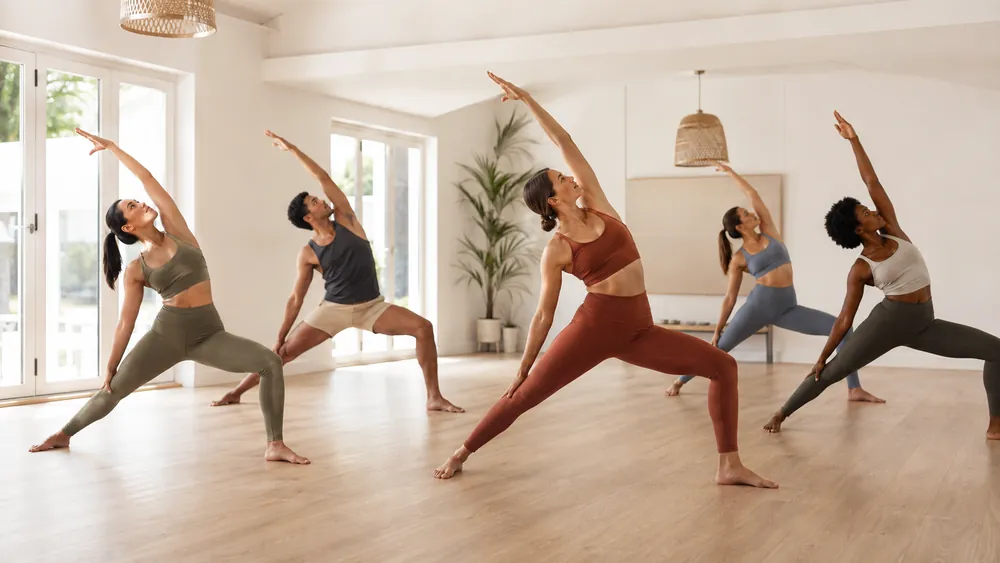
| Warrior II | Virabhadrasana II | A hip and shoulder opener: a wide lunge with arms stretched front and back. |
| Triangle | Trikonasana | A wide-legged side stretch, one hand reaching down and the other up. |
| Tree pose | Vrksasana | A standing balance on one leg, the other foot resting against ankle, calf, or inner thigh. |
| Bridge | Setu Bandha Sarvangasana | A gentle backbend lying on your back, knees bent, hips lifting. |
| Seated forward fold | Paschimottanasana | A hamstring and back stretch, folding gently forward over legs out front. |
| Corpse pose | Savasana | Deliberate rest to close the class, lying flat on your back doing nothing. |
You do not need to learn any of these before you turn up. A good teacher shows you everything on the day.
How to use these names without overthinking it
Skim, don't memorise. The point of the list above is recognition, not recall. If you walk in already half-knowing what "warrior II" or "child's pose" looks like, the class feels far less disorienting, and that is the whole job done.
When you are actually in the room, watch the teacher more than you chase the name. The demonstration tells you everything the Sanskrit cannot. If you fall behind, child's pose is always available, and dropping into it for a breath or two is normal, not a failure. Plenty of experienced people in the room are doing it too.
One more thing that helps beginners more than knowing pose names: turning up to a class with a teacher who can watch and adjust you, rather than learning off a video at home. Australia's healthdirect, the national health service, advises that if you are new, or have an injury or a health condition, it is best to go to a class with a qualified instructor who can adjust the moves. If you are still choosing between styles, the guide to choosing a yoga style lays out which classes suit beginners, and the first yoga class guide covers the practical side of turning up.
Skim, do not memorise
The point of the list is recognition, not recall. In the room, watch the teacher more than you chase the name. If you fall behind, child’s pose is always available, and dropping into it for a breath or two is normal.
Will these poses make me more flexible?
Over time and with regular practice, generally yes, and flexibility is one of yoga's better-supported benefits. healthdirect lists improved flexibility, posture and balance among the reasons people take up yoga, per its overview of yoga and Pilates. The beginner poses above, the forward fold, the lunges, the gentle backbends, move your joints through their range and lengthen muscles, which is how that change builds.
Two honest caveats. You do not need to be flexible to start, the poses adapt to wherever your body is today, and you build flexibility by practising, not before it. And it comes slowly, joint by joint, rather than all at once. If a flexible body is your main reason for starting, the yoga for flexibility guide sets out a realistic timeline and the evidence behind it.
Staying safe: stop if it hurts, and tell your teacher first
The single rule that matters more than any pose name: if something hurts, stop. Ordinary muscle effort and a mild stretch are fine. Sharp, pinching, or joint-level pain is not, and it is a signal to come out of the shape, not to push through it. Tell the teacher, and they will give you a modification.
Before class, have a quiet word with your teacher if any of these apply to you:
- A recent or recurring injury, especially knees, lower back, shoulders, neck, or wrists, since several beginner poses load exactly those areas.
- Pregnancy. healthdirect notes it is generally safe to practise yoga while pregnant but that some positions may need changing, per its yoga and Pilates overview. A trained teacher can substitute or skip poses, and a pregnancy-specific class is often a better fit.
- High blood pressure, a heart condition, or anything affected by intense exertion, so the teacher can offer gentler options.
For anything specific to your body, an Australian-registered physiotherapist or your GP is the right person to ask, not a class description or this page. You can find a registered teacher through Yoga Australia, the peak national body for teacher registration. When you are ready to find a class, you can browse yoga studios by location on Studio Finder. And before you go, the guide to what to wear to pilates and yoga saves you turning up in the wrong thing.
This guide is general information only and is not medical advice. See your GP or an allied health professional for advice about your own situation.
Yoga Poses for Beginners: 12 to Know by Name: common questions
- Do I need to know yoga poses before my first class?
No. The teacher demonstrates and names every pose on the day and offers options for different bodies. Knowing a few names in advance just makes the class feel less disorienting. Treat a list like this one as a glossary to skim, not something to memorise before you turn up.
- What are the most common beginner yoga poses?
The ones you will meet most often are mountain pose (Tadasana), downward-facing dog (Adho Mukha Svanasana), child's pose (Balasana), cat-cow (Marjaryasana-Bitilasana), cobra (Bhujangasana), warrior I and II (Virabhadrasana I and II), triangle (Trikonasana), tree pose (Vrksasana), bridge (Setu Bandha Sarvangasana), seated forward fold (Paschimottanasana), and corpse pose (Savasana).
- Why do yoga poses have Sanskrit names?
Sanskrit gives the poses a shared vocabulary that yoga teachers use worldwide, so a pose name means the same thing regardless of language. Most names follow a simple pattern: a descriptor plus asana, which means seat or posture. Many Australian studios cue in plain English, some use Sanskrit, and plenty mix both.
- What if I can't do a pose properly?
That is normal and expected, especially early on. Poses adapt to your body: bend your knees, use a block, take child's pose to rest, or skip a shape entirely. A good teacher offers these options. If a pose causes sharp or joint pain rather than ordinary effort, come out of it and tell the teacher.
- Do I need to be flexible to do these poses?
No. Starting stiff is normal, and the poses adjust to wherever your body is. healthdirect notes that beginners, or anyone with an injury or health condition, should start with a qualified instructor who can guide safe positioning. You build flexibility through practising, not before it.
Ready to find a studio?
Compare yoga studios across Australia. Filter by location, read real reviews, and enquire direct.