Key points
- Arrive 15 minutes early. You need those minutes for the teacher to show you the reformer before anyone else gets started.
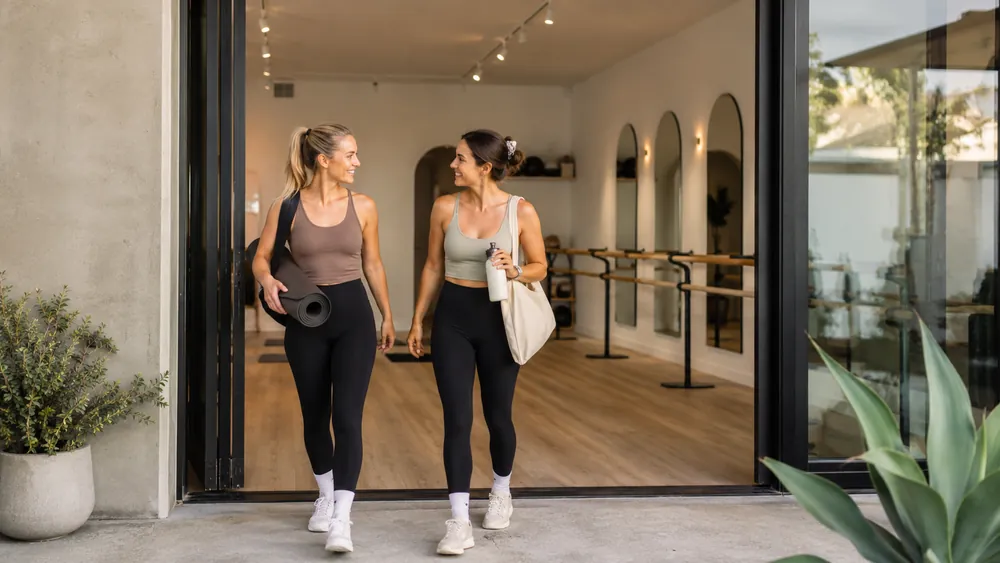
- Wear fitted activewear and bring grippy socks. Loose clothing catches on the carriage; bare feet slip on the foot bar.
- Expect slow, precise work, not fast reps. The difficulty lives in control and breath, not speed.
- 24 to 48 hours of deep-core soreness after your first class is normal and gets smaller by class four or five.
What a reformer is and how it works
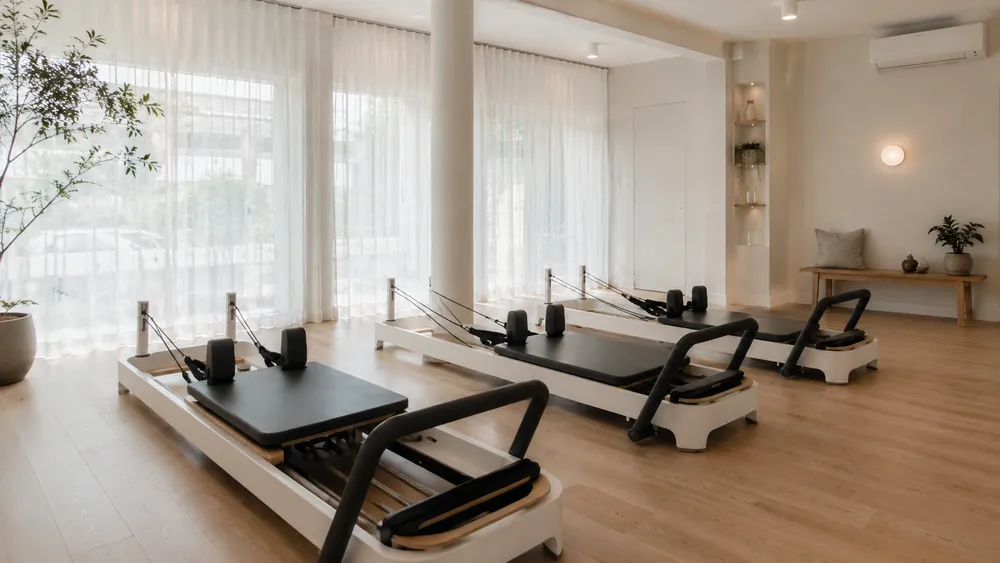
A reformer is a bed-sized piece of equipment with a sliding carriage on rails, springs at one end for resistance, a foot bar at the other, and long straps with handles attached at the spring end. You work lying, sitting, kneeling, or standing on the carriage. The springs assist your movement when they work with you and challenge it when they work against you. That's the whole system. Everything else is a variation on that single principle.
In a typical Australian studio the reformer has four or five springs, colour-coded by tension. Your instructor tells you which spring or springs to set for each exercise. You don't need to memorise this on day one. The teacher cues every change, and you'll start to recognise the pattern by your third or fourth class.
The typical structure of a first class
Most beginner reformer classes in Australia run 45 to 50 minutes and follow roughly this shape.
Minutes 0 to 5: setup and welcome. The instructor walks you to your reformer, introduces themselves, asks about injuries, and shows you how to set spring tension and where the headrest goes. If you arrived fifteen minutes early (which you should), this happens before the class starts so everyone else can begin on time.
Minutes 5 to 10: warm-up on the carriage. Usually breath work, pelvic tilts, and small mobility moves. The pace is slow and the cueing is detailed. If you've come from a fitness or HIIT background, your first reaction might be impatience. Resist it. The slow start is part of the design.
Minutes 10 to 20: footwork. You lie on your back, feet on the foot bar, and push the carriage out and back. The instructor runs you through four or five foot positions (parallel, V, heels, wide, single leg). This is the foundational reformer exercise and the one most beginners are surprised to find harder than it looks. The work is in the control, not the resistance.
Minutes 20 to 35: standing and seated work. Variations of leg circles, hundreds, planks, lunges, and short box exercises depending on the class. The instructor cues spring changes, position changes, and modifications throughout. If you're lost, they'll spot it and walk over.
Minutes 35 to 45: stretches and end. Long, supported stretches using the straps. This is where you understand why reformer Pilates has a reputation for being good for tight hips and hamstrings.
Minutes 45 to 50: pack down and leave. You wipe down the reformer, return the springs to a default position, and head out. The instructor usually checks in with new students: "How did you go?" Take the chance to ask anything.
- 0 to 5 minSetup and welcome. The instructor walks you to your reformer, asks about injuries, and shows you how to set spring tension and where the headrest goes.
- 5 to 10 minWarm-up on the carriage: breath work, pelvic tilts, and small mobility moves. The pace is slow by design.
- 10 to 20 minFootwork. Lying on your back, feet on the foot bar, pushing the carriage out and back through four or five foot positions. The work is in the control, not the resistance.
- 20 to 35 minStanding and seated work: leg circles, hundreds, planks, lunges, and short box exercises, with the instructor cueing spring and position changes.
- 35 to 45 minLong, supported stretches using the straps, good for tight hips and hamstrings.
- 45 to 50 minPack down and leave. You wipe down the reformer, return the springs to a default position, and the instructor usually checks in with new students.
What you'll feel during the class
Most of what you feel in a first reformer class isn't what the Instagram clips suggest.
The first surprise is deep core engagement you didn't know you had. The first cue most beginner instructors hammer is the transverse abdominis, the deep abdominal muscle that stabilises your pelvis. You'll be cued to "draw your navel to your spine" or "engage your low belly." For most people this muscle has been on holiday for years, and activating it deliberately for 45 minutes is harder than it sounds. It's also responsible for most of the next-day soreness.
The pace surprises people too. Reformer is not high-rep: a full footwork set might be eight to ten reps each side. The work lives in the control, the precision of the spring loading and unloading, the breath sequencing, and the alignment cues. If you find yourself rushing, the instructor will tell you to slow down.
And the work turns up in places you didn't know existed. Glute medius (side of the hip), serratus anterior (under the armpit), pelvic floor, the small spinal stabilisers, the deep hip rotators. The reformer reaches these in a way mat work and gym work usually don't, which is why a "low intensity" 50-minute class can leave you genuinely sore for two days.
What to wear and what to bring
Five things that make a first class easier.
- Fitted activewear, top and bottom. Loose t-shirts ride up when you're inverted, legs in the straps. Loose shorts are worse. Fitted gear can feel exposing if it's not your usual look, but on a moving carriage it's the practical choice.
- Grippy socks. Mandatory at most Australian boutique studios for hygiene and traction on the carriage. Forgot yours? Most front desks sell a pair for $15 to $25, and some studios include them in the intro offer.
- Hair tied back if it's long. You'll be lying down for half the class and loose hair ends up in your face.
- Water bottle. You won't sweat as much as in a HIIT class, but you'll want water. Studios usually have refill stations.
- Phone in the locker. Most studios expect this. The instructor will appreciate it.
Leave at home: heavy jewellery (it catches on the carriage and straps), makeup if you can manage it (you'll be lying on a shared headrest), and any expectations built from Instagram.
Checklist
- Fitted activewear, top and bottom; loose clothing rides up on a moving carriage.
- Grippy socks; mandatory at most Australian boutique studios. Front desks sell a pair for $15 to $25 if you forget.
- Tie long hair back; you'll be lying down for half the class.
- Water bottle; studios usually have refill stations.
- Phone in the locker.
- Leave heavy jewellery at home; it catches on the carriage and straps.
Is reformer Pilates really worth $40 a class?
Short answer: for the specific work it does, most regulars think so, but it's a real cost and worth a straight breakdown.
Casual reformer classes in Australia run $35 to $60 per class. Sydney CBD and Melbourne inner-city studios sit at the top of that range; suburban studios sit at the bottom. The larger chain studios tend to be at the more affordable end, especially with class packs, though pricing moves around and you should check the specific studio rather than trust a band.
Why does it cost more than a yoga or gym class? A few operational reasons. Reformer rooms hold fewer people: a boutique studio caps at 8 to 12 reformers, against 20-plus for a typical yoga class or far more for gym group fitness. The equipment is expensive; commercial reformers in Australia generally run from a couple of thousand dollars to well over ten thousand depending on brand and build, per supplier listings like Pilates World's commercial reformer range, and they need maintenance. And comprehensively trained Pilates instructors tend to be paid more per hour than fitness-style instructors because the qualification is longer and the labour pool is tighter.
Is it worth it? For the postural, stability, and core-control work the reformer is built for, the price reflects what you're paying for. Healthdirect, the Australian government health service, notes that Pilates can help people with conditions such as lower back pain and may support recovery after an injury by improving posture and strengthening muscles, and reformer is often used in physiotherapist-led settings for exactly this reason. If you're going purely for general fitness, a gym membership is cheaper. If you're going for what the reformer specifically does, the cost makes more sense.
The cheaper way in: intro offers. Most Australian reformer studios run 2-week unlimited intros for $45 to $80. You could stack a few at different studios over six weeks and try a couple of dozen classes before committing anywhere. After that, class packs usually save around 15 to 25 percent per class versus casual rates, and beat memberships unless you're going three-plus times a week.
| Option | Typical Australian price | Notes |
|---|---|---|
| Casual class | $35 to $60 per class | Sydney CBD and Melbourne inner-city at the top; suburban and larger chains at the bottom. |
| 2-week unlimited intro | $45 to $80 | The cheapest way in; you could stack a few at different studios over six weeks. |
| Class pack | Around 15 to 25 percent off casual | Beats memberships unless you're going three-plus times a week. |
Pricing moves around, so check the specific studio rather than trust a band.
Etiquette beginners get wrong
A few habits won't get you in trouble but will instantly mark you as a first-timer.
Don't move the reformer. Once it's set where it is, leave it. Studios space them deliberately for sight lines and instructor flow. Beginners sometimes try to drag one closer to the front.
Don't change your spring settings without the cue. The instructor calls spring changes for everyone at once. Going off-script means you're at a different load to the rest of the class, and the instructor has to track you separately.
Wipe down at the end. Spray and cloths sit at the front of most rooms. Thirty seconds on the carriage, foot bar, and straps. The next person will appreciate it.
What to do after class
A few habits make the work stick.
Drink water and eat some protein within the hour. Reformer is muscle work and recovery starts immediately; a meal with protein beats no food.
Expect 24 to 48 hours of soreness in the deep abs, glutes, lats, and possibly the inner thighs. That's delayed onset muscle soreness, and it eases by class four or five. If something feels sharp or wrong rather than dull and tired, flag it to the instructor before your next class. The Pilates Association Australia publishes scope-of-practice guidance that good studios follow on when to refer out to a physio rather than keep teaching.
Then book your second class while the first one is still fresh. The habit forms in the first month, and if you wait until you feel like going back, you often won't.
When to skip a class or modify
A few situations where a beginner shouldn't push through.
- New, sharp, undiagnosed pain (especially lower back, knees, shoulders, or wrists). Get it looked at first.
- Acute illness, fever, or a cold. Reformer classes are close-quarters; nobody wants your germs on the headrest.
- Pregnancy, unless you're in a prenatal-specific class with a prenatal-trained instructor. Regular classes aren't suitable: the positions and abdominal cueing need adjustments a generalist instructor can't reliably provide. Talk to your obstetrician or midwife first.
- A hangover. Not a moral judgment, a practical one. Dehydration plus precision work plus deep core engagement makes for a rough class.
The rule of thumb: if your body is sending a clear signal to rest, rest. The class will be there next week, and forcing a session through illness or injury usually sets you back further than the missed class would have.
For nervous first-timers, the first-class nerves guide covers the walking-in part. If you're comparing formats, the reformer Pilates guide and the mat Pilates guide go deeper, and the first yoga class guide and first barre class guide cover the siblings.
Ready to find your first class? Search for a reformer studio near you on Studio Finder.
First Reformer Pilates Class: common questions
- How is reformer different from mat Pilates?
Mat Pilates uses your body weight against gravity. Reformer adds spring resistance and a moving carriage, which lets you load and assist movements in ways mat alone can't. Mat is cheaper and home-friendly; reformer is studio-only but progresses faster for most people. The reformer Pilates guide has the deeper comparison.
- Will my first class be too easy or too hard?
Both, often within the same minute. The footwork feels manageable. The deep core engagement feels impossibly hard. The end stretches feel like the easiest thing you've ever done, right up until the instructor asks you to draw your navel to your spine while doing them. Normal.
- Can I come to a regular class first, or do I have to do a Beginner Series?
It depends on the studio. Some mandate a 2 to 3 class Beginner Series before you join the regular timetable, which is the safer option if you've never touched a reformer. Some let you drop into a regular class with a fifteen-minute pre-class introduction. Email the studio before booking to ask which they offer.
- I'm not very flexible. Should I do mat Pilates first?
No. Reformer is more accessible for inflexible beginners than mat, because the springs and straps support you through ranges of motion you can't reach unassisted. Tight hamstrings, hips, and shoulders all tend to do better on a reformer for the first couple of months than on a mat.
- Can I do reformer if I'm pregnant?
In a prenatal-specific class with a prenatal-trained instructor, generally yes; in a regular class, no. The contraindicated positions (long supine, deep twists, full inversions) and the abdominal cueing both need adjustment a generalist instructor can't reliably provide. Look for studios that explicitly offer prenatal Pilates, and confirm the instructor's training before booking. Talk to your obstetrician or midwife first.
- What if I can't keep up?
Take the modification when offered. The instructor expects beginners to scale and will offer alternatives. If you're more than a couple of beats behind repeatedly, slow down and breathe rather than rushing to catch up. The work is in the control, and rushing is the fastest way to lose form.
Ready to find a studio?
Compare pilates studios across Australia. Filter by location, read real reviews, and enquire direct.