Key points
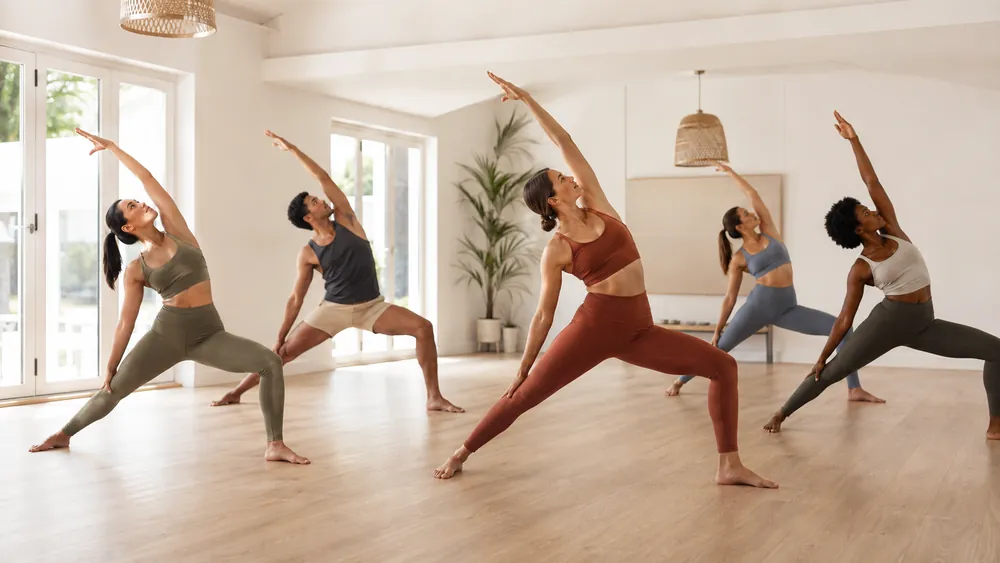
- Fitted activewear you can move in. Loose tops ride up in inversions and catch on reformer straps.
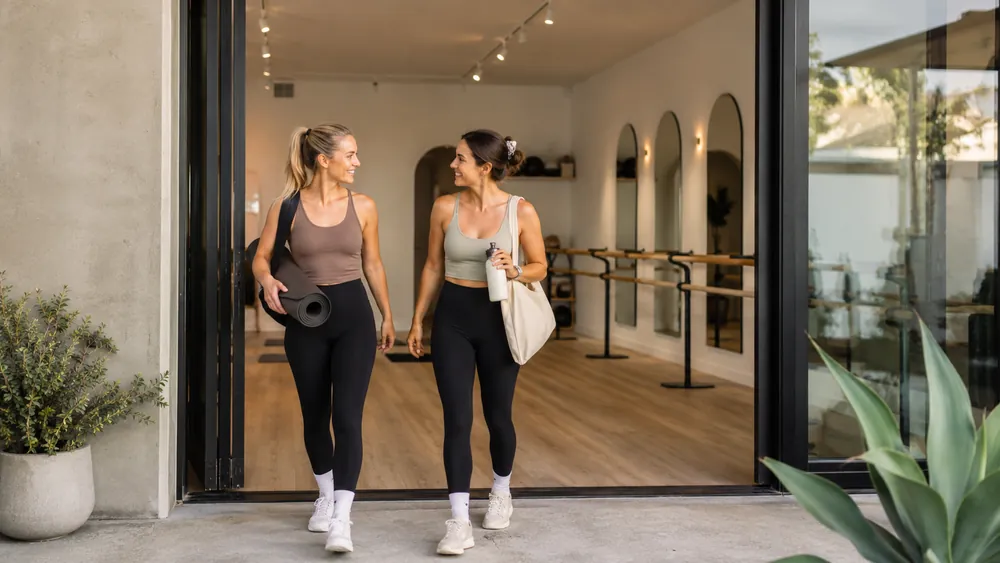
- Grippy socks for Pilates and barre. Bare feet for yoga. One pair of grip socks covers two of the three.
- No need to buy anything new. Fitted leggings or shorts and a snug top you already own are fine for a first class.
- Skip dangly jewellery, hard waistbands, and heavy fragrance. They catch, dig in, or carry in a small studio room.
What should you wear to Pilates, yoga or barre?
Fitted, stretchy activewear that moves with you. healthdirect, Australia's national health service, gives the baseline: "wear clothing that allows you to move freely," and check whether your studio requires clean, slip-resistant socks. Beyond that, the specifics shift a little between the three disciplines, mostly around footwear.
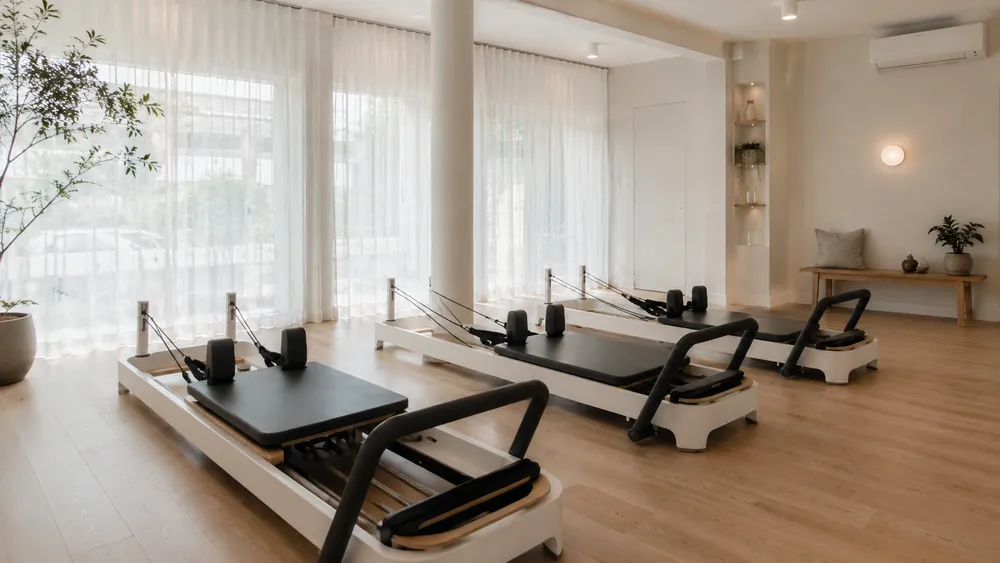
The reason fitted beats loose isn't fashion. In Pilates you spend time lying back, kneeling, and inverting on equipment, and a loose top falls over your face or snags on the reformer's straps and carriage. In yoga, the same top rides up the moment you fold forward or go upside down. Barre involves a lot of bending and leg work where you (and the instructor) need to see your alignment. Tight clothing solves all three, even if it's not your usual look.
Grippy socks: what they are and when you need them
Grippy socks, sometimes called non-slip or grip socks, have rubberised dots on the sole that stop your feet sliding on a reformer carriage or a studio floor. Most boutique Pilates and barre studios require them, both for hygiene and so you don't slip mid-movement. They're worth owning a pair before your first class.
healthdirect's equipment guidance flags that some studios may require clean, slip-resistant socks, so the safest move is to check the studio's website or call ahead. If you turn up without them, most studios sell a pair at the front desk, often in the region of $15 to $25, though that varies by studio and city. Not the cheapest way to buy socks, but it'll get you into the class.
Barefoot vs socks: the rule by discipline
Footwear is the one thing that genuinely differs across the three.
Yoga: Barefoot, almost always. Bare feet grip the mat and let you feel your foundation in standing poses, which is part of the practice. Some studios offer yoga-specific grip socks if you'd rather not be fully barefoot, but you won't need ordinary socks and you definitely won't wear shoes.
Pilates: Grippy socks, in most studios. On a reformer the carriage moves, so bare feet can slip and ordinary socks slide right off the footbar. The rubberised sole is the point. A few mat-Pilates classes allow bare feet, but reformer studios almost universally want grip socks.
Barre: Grippy socks, nearly always. Barre borrows the non-slip-sock convention from Pilates for the same reason: lots of small, balance-dependent movements on a smooth floor. Check the specific studio, but assume grip socks unless told otherwise.
When in doubt, grip socks cover you for Pilates and barre, and you go barefoot for yoga. One pair of grip socks in your bag handles two of the three.
| Discipline | Footwear | Why |
|---|---|---|
| Yoga | Barefoot, almost always | Bare feet grip the mat and let you feel your foundation in standing poses. No shoes, no ordinary socks. |
| Pilates | Grippy socks, in most studios | The reformer carriage moves, so bare feet slip and ordinary socks slide off the footbar. A few mat classes allow bare feet. |
| Barre | Grippy socks, nearly always | Lots of small, balance-dependent movements on a smooth floor. Check the specific studio, but assume grip socks. |
When in doubt, grip socks cover you for Pilates and barre, and you go barefoot for yoga. One pair of grip socks handles two of the three.
What to avoid wearing
A few things make a first class harder than it needs to be, and they're easy to skip.
- Loose, baggy tops. They ride up or fall over your face in any inverted or forward-folding position. Fitted or semi-fitted is the fix.
- Anything with zips, buttons, or hard waistbands. These dig in when you're lying on a mat or carriage. Soft, flat seams are more comfortable.
- Dangly jewellery. healthdirect advises avoiding jewellery that dangles, such as bracelets, earrings, necklaces or anklets, because it catches, swings, and gets in the way. Leave it at home or in your locker.
- Heavy fabrics that don't breathe. Reformer and heated yoga can both leave you genuinely warm. Light, stretchy, breathable fabric keeps you comfortable.
- Brand-new shoes to the door. Almost every Australian boutique studio is shoes-off inside. Wear something easy to slip off, and look for the shoe rack on the way in.
Worth saying plainly: you do not need to buy a head-to-toe activewear outfit before your first class. A pair of leggings or fitted shorts and a snug top you already own will do. Add grip socks for Pilates or barre and you're set.
What else to bring
Clothing's the main event, but a couple of extras smooth out a first class. Bring a water bottle. healthdirect recommends one to keep yourself hydrated through the session, and reformer and heated classes can leave you thirstier than you'd expect. A small towel is handy for sweat, especially in warmer classes.
Most studios provide mats and equipment, so you rarely need to bring your own to a class. healthdirect notes that for yoga or mat Pilates you may need an exercise mat and might want a small towel, and some classes use props like blocks, balls, or bands, so it's worth checking what your studio supplies. Leave your phone in a locker; most studios have them, and the room is better without it.
If your studio runs a heated class, dress lighter than you would for a standard one. For a reformer class, fitted is non-negotiable because of the straps and moving carriage, which is also covered in the reformer Pilates guide and the first class guide.
The one-bag checklist
Pack once and you're sorted for any of the three. Fitted top, leggings or shorts you can move in, grip socks (for Pilates or barre), a water bottle, and a small towel. Five items, one small bag. Everything else the studio usually provides or you genuinely don't need.
If you're not sure what your specific studio expects, a thirty-second look at its website or a quick call clears it up, and most studios are happy to tell a first-timer exactly what to bring. To find one with a beginners' series, browse Pilates studios, yoga studios, and barre studios near you, or search by location to compare options.
What to Wear to Pilates, Yoga and Barre: common questions
- Can I wear normal gym clothes to Pilates or yoga?
Mostly yes, as long as they're fitted enough to move in. healthdirect's rule is clothing that lets you move freely. Avoid baggy tops that ride up and anything with hard waistbands or zips. Add grip socks for Pilates and barre.
- Do I have to wear grippy socks to Pilates?
Most boutique Pilates and barre studios require non-slip socks, both for hygiene and to stop you slipping on the reformer. healthdirect notes some studios require slip-resistant socks, so check ahead. Many studios sell a pair at the desk, often around $15 to $25, if you forget.
- Is yoga done barefoot?
Yes, almost always. Bare feet grip the mat and help you feel stable in standing poses. Some studios offer yoga-specific grip socks if you prefer, but you won't wear shoes or ordinary socks.
- What should I not wear to a class?
Skip loose baggy tops, hard waistbands and zips, dangly jewellery (healthdirect advises against it because it catches and gets in the way), and heavy non-breathable fabrics. Wear shoes you can slip off easily, as studios are shoes-off inside.
- Do I need to buy special clothes before my first class?
No. Fitted leggings or shorts and a snug top you already own are fine. The only discipline-specific item worth buying is a pair of grip socks for Pilates or barre, and even those are usually available at the studio.
Ready to find a studio?
Compare pilates studios across Australia. Filter by location, read real reviews, and enquire direct.