Key points
- Power yoga is not one fixed system: it's a family of athletic flows that came out of ashtanga in the 1990s.
- It's one of the harder, more physical kinds of flow yoga.
- Not ideal for complete beginners, as the pace assumes you can already move through a sun salutation.
- Pattabhi Jois, who taught the ashtanga it grew out of, called early power yoga "ignorant bodybuilding", and the two really did part ways.
What is power yoga?
Power yoga is a vigorous, fitness-oriented style of flowing yoga. The Wikipedia overview of power yoga defines it as "any of several forms of energetic vinyasa-style yoga as exercise developed in the United States in the 1990s", including forms derived from ashtanga yoga and forms derived from Bikram yoga.
That phrase "any of several forms" matters. Power yoga was never a single system with one sequence. Beryl Bender Birch created what Yoga Journal calls "the original power yoga" in 1995, Bryan Kest (who studied ashtanga under K. Pattabhi Jois) developed his own version, and Baron Baptiste, coming from a Bikram background, branded another. None of these are identical, and none is synonymous with ashtanga. So when a studio lists "power yoga", you are looking at that teacher's interpretation of a broad, athletic flow, not a standardised class.
The through-line across all of them is intensity. Power yoga keeps the breath-linked, continuous movement of ashtanga and the athleticism, but drops the locked sequence, the Sanskrit counting, and most of the ceremony. What is left is a strong physical practice that feels designed for a Western gym-goer, which is exactly what it was.
Power yoga vs vinyasa and ashtanga
Both power yoga and vinyasa are flowing, breath-led styles with a changing sequence. The difference is emphasis, not mechanics. Vinyasa is the broad umbrella for any flow class, and it spans the full range from gentle slow-flow to genuinely tough. Power yoga sits firmly at the harder end of that range, with a consistent focus on strength, stamina, and a pace that keeps your heart rate up. A vinyasa class might be a wind-down. A power class almost never is.
In practice, a lot of studios use the labels loosely, and a "power vinyasa" class is the same thing wearing both names. The reliable signal is not the word but the description: look for "strong", "athletic", "level 2", or references to building heat and strength, and you are in power-yoga territory regardless of what it is called.
Against ashtanga, the relationship is clearer. Power yoga descended directly from ashtanga but deliberately loosened it. Where ashtanga repeats one fixed sequence forever, power yoga changes the class and skips the ritual. Pattabhi Jois, who taught the ashtanga that power yoga grew out of, was openly unhappy about the offshoot. In a 1995 letter to Yoga Journal he called power yoga "ignorant bodybuilding".
If you want to see how all the flow styles line up, the which yoga style guide puts them next to each other.
| Style | Sequence | Intensity | Ritual / Sanskrit | Best for |
|---|---|---|---|---|
| Power yoga | Changes each class; athletic emphasis | High: cardio and strength | Minimal | Gym-goers, fitness focus, no-frills workout |
| Vinyasa | Changes each class; wide range of intensity | Moderate to high (varies) | Varies by teacher | Variety, creativity, range of experience levels |
| Ashtanga | Fixed: same every time | High: continuous, breath-driven | Strong: Sanskrit counting, ritual structure | Discipline, measurable progress, devotional practice |
What a power yoga class actually feels like
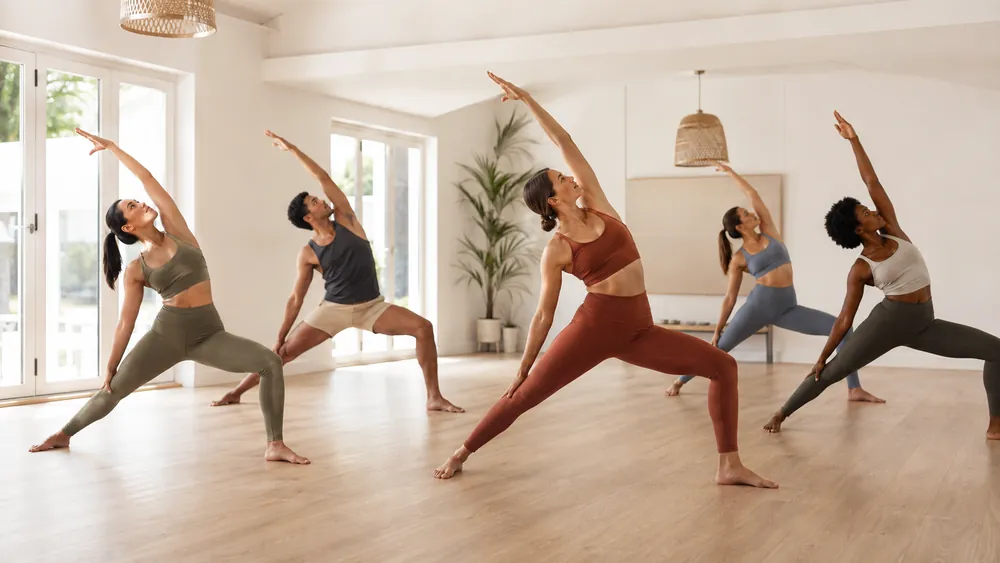
Expect to work. Classes usually run 60 minutes and move at a brisk, continuous pace, with a warm-up flowing into sun salutations, a standing sequence heavy on strength and balance, often a peak pose, and a cool-down into a final rest. The defining feeling is effort. You sweat, your arms and core get genuinely tired, and there is not much standing around for alignment talk.
Compared with a gentler flow, power yoga spends more time in the demanding shapes: planks, chaturanga, lunges held a beat longer, balance poses that tax the legs. Some studios run it warm, which pushes it closer to a hot yoga experience, though the heat is incidental to the style rather than the point of it.
The mental texture is different from a traditional class too. There is usually little to no chanting, philosophy, or Sanskrit. The cueing is plain and the focus is physical. For people who find the spiritual framing of some yoga off-putting, that strips-back approach is a feature. For people who came to yoga for exactly that framing, it can feel like the soul has been left out, which is a fair criticism and worth knowing before you book.
Who power yoga suits
If you already train, run, lift, or play sport and you want yoga that complements that rather than slowing right down, this is the style built for you.
It suits people who want measurable physical output from a class. You will build strength, especially through the shoulders, core, and legs, and you will get a cardiovascular hit from the pace. healthdirect notes that yoga generally strengthens muscles, improves balance and flexibility, and can contribute to cardiovascular function, per its overview of yoga and Pilates. Power yoga is the style that leans into that physical side hardest.
Who it suits less: genuine beginners and anyone wanting a calm, restorative experience. The pace assumes you can already hold a plank and move through a sun salutation without instruction. If you are brand new to yoga, start with a foundations or level 1 class and work up, or try a gentler style first and switch into power once your body knows the basic shapes. Anyone after rest and recovery should look at restorative or yin instead, which are close to the opposite of this.
What to expect your first time
Power yoga rewards a little homework before your first class.
Check the class level before you book. Because "power yoga" is not standardised, the intensity varies a lot between studios. A quick scan of the timetable description, or a call to the studio, tells you whether this particular class assumes experience. If it says level 2 or level 3, it does.
Come fed and hydrated, but not full. The pace is demanding and a heavy meal beforehand will sit badly. Bring a towel, because you will sweat more than in a slow class, and more if the room is warm.
Take the modifications offered, and rest when you need to. Child's pose is always available, and a good teacher will say so. Pushing through fatigue in fast, repeated strength poses is how people tweak a shoulder or wrist. There are no prizes for skipping the rest.
If turning up to a busy class for the first time is the part you are dreading, the first yoga class guide covers the practical side.
Cost and intro offers in Australia
Power yoga is priced like the other unheated flow styles, which in 2026 puts a casual drop-in around $20 to $35, though studios that run it warm or position it as a fitness class sometimes charge closer to heated-yoga rates. Treat those as typical national ranges, not fixed prices, and check the specific studio, since city and studio move the numbers.
The tier advice is a little different for power than for most styles. Because intensity varies so much between studios, an intro offer matters more here: a two-week unlimited deal lets you sample several classes and teachers before you commit to a pack at a studio whose version of "power" turns out not to be yours. For the full breakdown of casual rates, packs, memberships and intro offers, see the yoga cost guide. To compare studios near you, browse Studio Finder's yoga listings or search by suburb.
A few things worth flagging to your teacher
Power yoga is demanding, so a quick word before class is sensible in a few cases.
- Any current or recent injury, especially wrists, shoulders, and lower back. The repeated weight-bearing poses (planks, chaturanga, downward dog) load exactly those areas. Get it assessed first.
- Pregnancy. healthdirect notes yoga is generally safe in pregnancy but that some positions may need changing, per its yoga and Pilates overview. Tell the teacher so they can adjust the stronger poses.
- Cardiovascular conditions or anything affected by sustained high-intensity exertion, particularly if the class is run warm.
If you want a marketing-free read on what yoga does and does not do for your health, the Australian government service healthdirect is the place to look. Questions about your own body belong with your GP or an Australian-registered physiotherapist, not a class description. And if you want to check a teacher's credentials, Yoga Australia maintains the national register.
Power Yoga: common questions
- Is power yoga the same as vinyasa?
Not quite. Both are flowing, breath-led styles with a changing sequence, so the mechanics overlap. The difference is intensity: power yoga sits at the strong, athletic end of the flow range, while vinyasa spans everything from gentle to tough. A lot of studios use "power vinyasa" for the same class.
- Is power yoga good for weight loss or fitness?
It is a genuinely physical practice that builds strength and gets your heart rate up. healthdirect notes yoga strengthens muscles and supports cardiovascular function, per its yoga and Pilates overview. Fitness and weight changes come from consistent practice combined with other movement and nutrition, not from one class type alone.
- Can beginners do power yoga?
It is not the ideal starting point. The pace assumes you can already move through a sun salutation and hold basic strength poses. Beginners are better off in a foundations or level 1 class, or a gentler style first, then switching into power once the basic shapes are familiar.
- Where did power yoga come from?
It developed in the United States in the 1990s out of ashtanga, with Beryl Bender Birch creating what Yoga Journal calls "the original power yoga" in 1995, and Bryan Kest and Baron Baptiste developing their own branded versions.
- What is the difference between power yoga and ashtanga?
Ashtanga follows one fixed sequence every class with set ritual and breath counting. Power yoga grew out of it but dropped the locked sequence and most of the ceremony, keeping the athletic intensity. Pattabhi Jois, ashtanga's founder, was openly critical of the offshoot.
Ready to find a studio?
Compare yoga studios across Australia. Filter by location, read real reviews, and enquire direct.