Key points
- Ashtanga uses one fixed sequence: same poses, same order, every class, every time.
- Mysore-style is the traditional format: self-paced, from memory, with individual adjustments from the teacher.
- It's demanding and repetitive, and suits people who like structure and measurable progression.
- The "ashtanga" style and the eight limbs (Patanjali's Yoga Sutras) share a name but are different things.
What is ashtanga yoga?
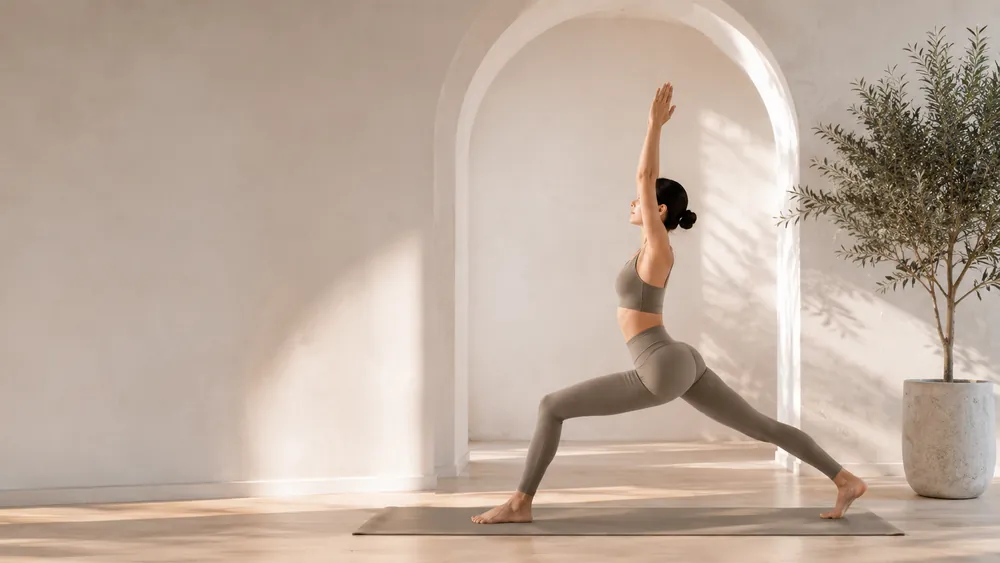
Ashtanga yoga is a vigorous, set-sequence style where you move through the same series of postures in a fixed order, synchronising breath with movement. The individual poses are linked by flowing transitions called vinyasas. It was popularised by K. Pattabhi Jois during the twentieth century, who established his Ashtanga Yoga Research Institute in 1948 and claimed to have learnt the system from his teacher Tirumalai Krishnamacharya; the Wikipedia overview of ashtanga vinyasa yoga covers that history in detail.
A practice typically opens with five rounds of Surya Namaskara (sun salutation) A and B, then a standing sequence, then one of six set series of postures, and finishes with a standard closing sequence. The first of those is the primary series, called Yoga Chikitsa, which translates as yoga for health or yoga therapy. Most people who practise ashtanga for years are still working on the primary series. The intermediate and advanced series are a long way down the road.
One naming point worth clearing up. This "ashtanga" is a style of physical practice and is not the same thing as the eight limbs (asht-anga) of Patanjali's Yoga Sutras, even though they share a name. If a studio implies the two are identical, treat that as marketing.
How ashtanga compares to other yoga styles
Ashtanga vs vinyasa. This is the comparison that matters most, because vinyasa borrowed its breath-linked flow from ashtanga, then dropped the fixed sequence. In vinyasa, the teacher designs a fresh class each time and no two are the same. In ashtanga, the sequence is locked. You do the same poses in the same order whether it is your first month or your tenth year. If you like novelty, vinyasa wins. If you want to measure progress against an unchanging benchmark, ashtanga does.
Ashtanga vs power yoga. Power yoga came directly out of ashtanga in the 1990s, when Western teachers loosened the sequence and the ritual to make it more gym-friendly. Pattabhi Jois was not a fan. In a 1995 letter to Yoga Journal he called the new power yoga "ignorant bodybuilding". So they look similar from the outside, but ashtanga keeps the discipline that power yoga deliberately relaxed.
Ashtanga vs hatha. A hatha class is slow and static, holding postures for several breaths with alignment talked through in detail. Ashtanga is fast, continuous, and gives very little alignment instruction once you know the sequence. Hatha teaches you poses one at a time. Ashtanga assumes you will learn them by repetition.
Ashtanga vs hot yoga. Different again. Hot yoga is defined by the heated room. Ashtanga is defined by the sequence and is usually run at normal room temperature, though the pace generates plenty of internal heat on its own.
If you are still deciding between any of these, the which yoga style guide lays the options side by side.
| Style | Sequence | Pace | Heat | Best for |
|---|---|---|---|---|
| Ashtanga | Fixed, same every time | Continuous, breath-led | Internal from pace | Structure, measurable progression, discipline |
| Vinyasa | Changes each class | Varies by teacher | Moderate to high | Variety, creativity, range of intensities |
| Power yoga | Changes; athletic emphasis | Brisk and continuous | High | Fitness, strength, gym-style intensity |
| Hatha | Varies; hold-based | Slow and deliberate | Low | Alignment, beginners, calmer practice |
| Hot yoga | Varies by style | Varies | External (heated room) | Intensity and stretch in warm environment |
What an ashtanga class actually feels like
There are two ways studios teach this, and they feel completely different.
A led class is what most beginners start with. The teacher calls the sequence out loud, often counting the breaths in Sanskrit, and the whole room moves together. You follow along. It is structured, communal, and a reasonable way to learn the order of poses without having memorised them yet.
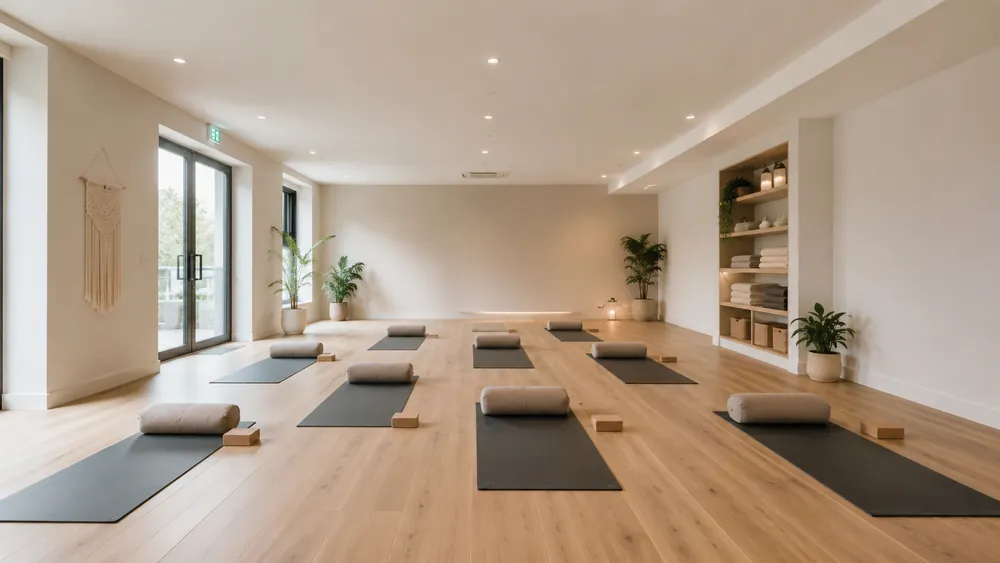
A Mysore-style class is the traditional format, named after the city in India where Jois taught. Here the room is full of people all doing the sequence at their own pace, from memory, with no group instruction. The teacher moves around giving individual adjustments and adding new poses to your sequence only when you are ready. It looks chaotic and silent at once. The trade-off is real: you get genuinely personal attention, but you have to be comfortable practising largely on your own.
Whichever format, the rhythm is steady and breath-driven. Jois recommended remaining in each posture for around five to eight breaths, with even, audible breathing throughout. The method's "tristhana" is its three points of attention: the breath, the posture, and the drishti or fixed gaze point. You are not just moving. You are holding all three at once, which is part of why it absorbs the mind so completely.
Expect to sweat. Expect to repeat poses you cannot do yet. And expect the first several classes to feel like learning choreography, because that is essentially what the early weeks are.
Who ashtanga yoga suits
Ashtanga rewards a particular temperament. People who like routine and measurable progress tend to love it, because the unchanging sequence turns your own body into the only variable. You can feel, week to week, a bind getting closer or a balance getting steadier. That feedback is addictive for the right person.
It suits people who already have some fitness and want a strong, physical practice. The stated purpose of the asanas is to build strength and flexibility, and the continuous pace makes it genuinely taxing. It also suits anyone who wants a practice they can eventually do anywhere, alone, because once the sequence is in your body you do not need a class to follow.
Who it suits less: if you get bored doing the same thing repeatedly, this is the wrong style, and vinyasa or a varied flow will keep you happier. It is also worth a flag on injury. A 2008 survey of ashtanga practitioners by Mikkonen, Pederson and McCarthy, published in the International Journal of Yoga Therapy, found that 62 percent of respondents reported at least one injury that lasted longer than a month, though the survey had no control group, which limits what you can read into it. The honest read is that any demanding, repetitive physical practice carries some injury risk, so ease in and do not let an adjustment force you past your range. More on that below.
What to expect your first time
A few things make a first ashtanga class easier.
Pick a led class or a beginners' Mysore session, not a general Mysore room where everyone is already deep into the series. You want someone calling the sequence or starting you slowly, not a silent room you are expected to keep up with.
You will not finish the full primary series, and that is normal. Traditionally the teacher adds postures to your sequence only as you show you have steadied the ones before, so beginners practise a short version and grow it over months. Nobody expects you to know it on day one.
Learn the difference between effort and strain early. Ashtanga is meant to be hard work, so a degree of muscular effort and breathlessness is the point. Sharp, joint-level pain is not. If a teacher offers a hands-on adjustment and it hurts, say so. The style has a documented history of forceful adjustments under Jois himself: The Economist's obituary of Jois reported that a good number of his students seemed constantly to be limping around with injured knees or backs after receiving his "adjustments". A good modern teacher will back off the moment you flag pain.
If walking into a busy, unfamiliar studio is the part you are dreading, the first yoga class guide covers the practical side of turning up.
Cost and intro offers in Australia
Casual yoga drop-ins in Australia typically run $20 to $35 per class, and ashtanga sits in that band alongside other unheated styles. Class packs of five or ten usually save somewhere around 15 to 25 percent per class compared with paying casually, which adds up fast given how often ashtanga rewards turning up.
Intro offers are common: two-week unlimited deals in the $45 to $80 range let you try a run of classes back to back, which suits ashtanga well because the sequence only starts to click with repetition. Memberships run roughly $180 to $280 a month, and unlike most styles, a regular ashtanga practitioner can genuinely use an unlimited pass, since the traditional recommendation is to practise six days a week. These are typical 2026 ranges that vary by studio and city, so check the studio's own pricing before you book.
For the full breakdown of how packs, memberships and intro offers compare, see the yoga cost guide. To compare studios near you, browse Studio Finder's yoga listings or search by suburb.
A few things worth flagging to your teacher
Ashtanga is demanding and repetitive, so a quiet word before class is sensible in a few situations.
- Any recent or recurring injury, particularly knees, lower back, shoulders, and hips. The same poses come around every session, so a problem area gets loaded repeatedly. Get it assessed first.
- Pregnancy. healthdirect notes it is generally safe to practise yoga while pregnant but that some positions may need changing, per its overview of yoga and Pilates. A trained teacher can substitute or skip poses.
- High blood pressure or anything affected by inversions and intense exertion. The pace and the headstands in the closing sequence are worth raising.
For the general health benefits of yoga, the Australian government service healthdirect is a neutral, non-marketing source: it notes yoga can improve flexibility, posture and balance, and that its breathing and mindfulness elements may help you feel calmer and more relaxed. For anything specific to your body, an Australian-registered physiotherapist or your GP is the right call. You can find a registered teacher through Yoga Australia, the peak national body for teacher registration.
Ashtanga Yoga: common questions
- Is ashtanga yoga good for beginners?
It can be, with the right class. Start in a led class or a beginners' Mysore session so someone is guiding the sequence. You will practise a shortened version of the primary series and build it over time, so you are not expected to know the whole thing on day one. The steady repetition actually suits beginners who like structure.
- What is the difference between ashtanga and vinyasa yoga?
Ashtanga follows a fixed sequence of postures in the same order every class. Vinyasa borrows the breath-linked flow but changes the sequence each time, with the teacher designing a fresh class. Same DNA, opposite approach to repetition.
- What is Mysore style?
Mysore style is the traditional way ashtanga is taught, named after the Indian city where Pattabhi Jois taught. Everyone in the room practises the memorised sequence at their own pace while the teacher gives individual adjustments. It is self-paced, not group-led.
- How often should I practise ashtanga?
Traditionally the practice is done six days a week, which is why committed practitioners often get good value from an unlimited membership. If that is unrealistic, two or three consistent sessions a week still let the sequence sink in. Build up rather than starting at six.
- Does ashtanga yoga build strength?
Yes. The stated aim of the postures is to increase strength and flexibility, and the continuous, weight-bearing flow makes it physically demanding. healthdirect also notes yoga generally strengthens muscles and improves balance, per its yoga and Pilates overview.
Ready to find a studio?
Compare yoga studios across Australia. Filter by location, read real reviews, and enquire direct.