Key points
- If you plan to teach in your own studio, you need a qualification. If you plan only to own and employ instructors, the qualification sits with whoever runs the classes. PAA studio registration ($185/yr, voluntary) requires qualified instructors on the floor.
- An ABN is free through the Australian Business Register. You must register for GST once turnover hits $75,000 in a rolling 12-month period (ATO). A studio with real class volume typically crosses that line in its first year.
- Insurance minimums: public liability and professional indemnity. Both are required for PAA studio registration and effectively required by commercial landlords before you get a lease.
- Commercial reformers are sold in the low-to-mid thousands per unit. There is no reliable published average startup total: anyone quoting one without seeing your lease and suburb is guessing. Get itemised quotes from at least two suppliers.
- Most studios run thin or at a loss in their early months. The studios that survive planned for a slow, under-booked first stretch. The ones that fail signed a lease and bought equipment against revenue they hadn't earned yet.
Do you need a qualification to open a Pilates studio?
If you plan to teach in your own studio, yes. If you plan to own it and employ teachers, the qualification requirement sits with whoever runs the classes. The Pilates Association Australia (PAA), the country's Pilates-specific industry body, ties its studio registration to having qualified instructors on the floor, not to the owner's business credentials.
There are two teaching qualification routes, and they lead to different studios. A nationally accredited Certificate IV (the entry-level vocational qualification, listed on the national register at training.gov.au) covers mat and reformer group instruction. Comprehensive training adds the full apparatus repertoire and clinical populations. The full breakdown sits in our guide on becoming a Pilates instructor in Australia. Course codes change as accreditations lapse and renew, so check the current recognised list on the PAA education page before you enrol or hire, rather than trusting a course's marketing.
You can legally open a fitness business in Australia without being a PAA member. PAA studio registration is voluntary. But it carries weight with clients who look for it, and it sets a clear floor for staffing and equipment, which is useful even if you never join.
What does it take to register the business itself?
Three things, and they're quick and mostly free. You need an Australian Business Number (ABN), you choose a business structure, and you may need to register a business name and for GST.
Here's a summary of the key registrations and their costs: An ABN is a free, 11-digit identifier you apply for through the Australian Business Register. Your structure (sole trader, partnership, or company) shapes your tax and your personal liability; a company is registered with ASIC and costs more to set up and run, but separates your personal assets from the business. This is the one area where a couple of hours with an accountant pays for itself, because the structure you pick is hard to unwind later.
On tax: you must register for GST once your turnover hits, or is expected to hit, $75,000 in a rolling 12-month period, per the Australian Taxation Office. A studio with any real class volume crosses that line, so most operators register from the start. You can do the ABN, business name, and tax registrations together through the government's single Business Registration Service.
| Registration | Where | Cost | Notes |
|---|---|---|---|
| ABN (Australian Business Number) | Australian Business Register | Free | 11-digit identifier; needed to operate and invoice |
| Business name | ASIC via Business Registration Service | ASIC fee applies (check current rate) | Required if trading under a name other than your own |
| Company registration (if using company structure) | ASIC | ASIC fee applies (higher than sole trader); ongoing compliance costs | Separates personal assets from business; more setup and admin than sole trader |
| GST registration | ATO | Free | Mandatory once turnover hits $75,000 in a rolling 12-month period. A studio with real class volume crosses this quickly. |
| PAA studio registration (voluntary) | Pilates Association Australia | $185/year including GST | Voluntary. Requires qualified instructors, minimum equipment (Cadillac, reformer, chair, barrels), public liability + professional indemnity insurance. |
Sources: Australian Business Register (https://business.gov.au/registrations/register-for-an-australian-business-number-abn), ASIC via Business Registration Service (https://www.asic.gov.au/for-business-and-companies/companies/register-a-company/), ATO (https://www.ato.gov.au/businesses-and-organisations/gst-excise-and-indirect-taxes/gst/registering-for-gst), Pilates Association Australia (https://www.pilates.org.au/studio-registration/)
What insurance do you need?
At a minimum, public liability and professional indemnity. Public liability covers injury or damage to clients and visitors on your premises; professional indemnity covers claims arising from the instruction itself. Neither is automatically mandated by a single national law for a fitness business, but you'll find them effectively unavoidable in practice: a commercial landlord will usually require public liability before they hand over a lease, and the PAA makes both a condition of its studio registration.
The PAA's studio registration guidelines require current public liability and professional indemnity cover for the workplace, instructors, admin staff, clients, visitors, and any student instructors, per the PAA studio registration page. If you employ staff, you also carry workers' compensation obligations, which vary by state and territory. Get a broker who knows the fitness sector to scope the cover; the right limits depend on your headcount, your space, and your class types, and that's a conversation, not a number off a website.
Equipment: the big capital line, and why we won't quote you a total
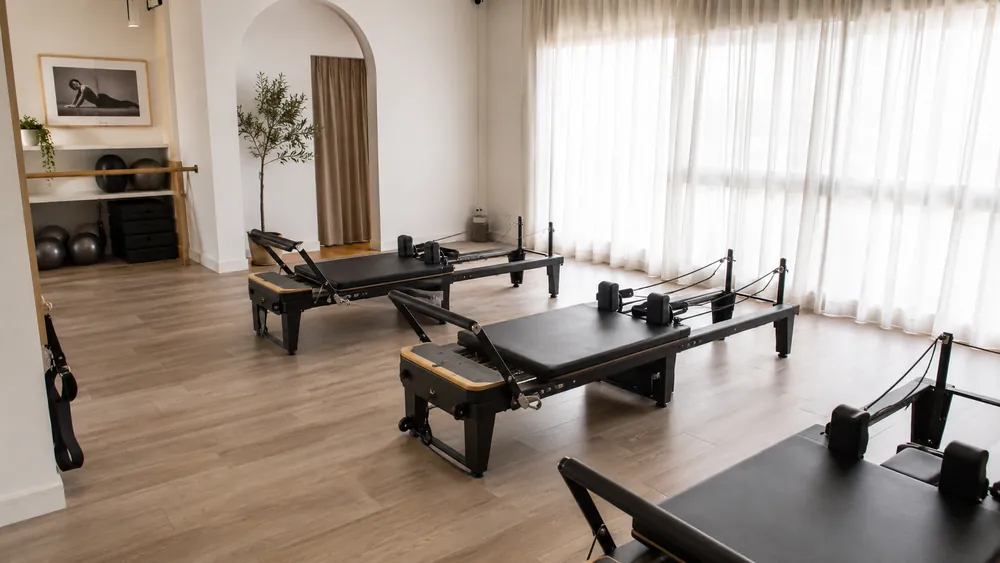
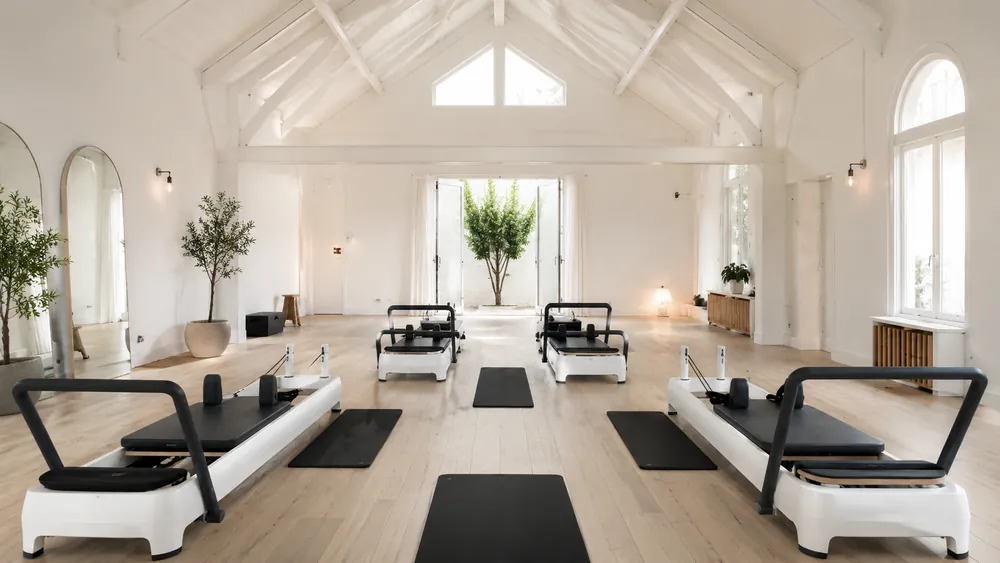
Equipment and fit-out are where the money goes, and both vary too widely to put a single figure on. A reformer-led studio's largest single cost is its bank of reformers. A classical or clinical studio also needs Cadillacs, chairs, and barrels. The apparatus itself is explained in our companion guide on Pilates equipment; here the point is the spend.
Commercial-grade reformers (built for heavy daily studio use, not the lighter home models) are sold by Australian distributors at prices that typically run into the low-to-mid thousands per unit, with premium imported lines higher again. Distributors such as The Core Collab and Pilates Reformers Australia publish their commercial ranges; check current pricing directly with each supplier rather than working from a quoted figure. A room of eight to twelve reformers, plus the larger apparatus, plus boxes, straps, mats, and the things that wear out, is a major capital commitment. Get itemised quotes from at least two suppliers before you model anything.
The fit-out (flooring, mirrors, sound, reception, change rooms, signage, the lease bond) is the other half, and it's entirely a function of the space you take and its condition. A turnkey unit costs less to fit out than a bare shell. Get a quote from a commercial fit-out contractor for the actual premises you're considering, because a number from a different suburb or a different shell tells you nothing.
If the capital is the blocker, two things buy time. Some operators start with mat and a smaller reformer count and add apparatus as the schedule fills. Others lease or finance equipment rather than buying outright. Both trade lower upfront cost for ongoing repayments, so they help cash flow, not total cost.
Where should the studio be?
Location decides your rent, your client catchment, and your competition all at once, and it's the second-hardest commitment to reverse after the lease term itself. The instinct is a high-foot-traffic strip. The trade-off is that those rents are the highest, and a Pilates studio is a destination people book and travel to, not an impulse walk-in, so premium frontage you're paying for may be doing less than you think.
What actually matters: parking or transport for a class that runs on tight time slots, ceiling height and floor area for the apparatus you're installing, and how saturated the immediate area already is. Check who's nearby on the directory before you commit; you can scan the field on the Studio Finder Pilates listings and search by suburb to see how dense your target area is. A market with three established reformer studios in a kilometre is a harder open than an underserved pocket, even if the foot traffic looks better.
Read the lease properly, with a solicitor. The lease term, the bond, the make-good clause at the end, and any rent-free fit-out period are where studios get caught. A long term protects you from being moved on once you've built a client base; it also locks you in if the location turns out wrong.
What's the honest financial picture?
There isn't a reliable published average for what an Australian Pilates studio costs to open or earns, and you should distrust anyone who states one with confidence. The inputs swing too far. A small reformer studio in a regional shell with secondhand equipment and a fitness studio in inner Sydney with a full classical apparatus set are not the same business by an order of magnitude.
What is reliably true is the shape of it. The cost is front-loaded: equipment and fit-out hit before you've earned anything, while revenue builds slowly as your schedule and reputation grow. Most studios run thin or at a loss through an early period while they fill classes. Pricing follows the market, and our reconciled Australian norms are a casual reformer class around $35 to $60 and an unlimited reformer membership commonly $200 to $350 a month (these vary by studio and city; see the reformer Pilates guide for the full picture). Your viable price is set by your suburb and your competition, not by your costs.
Build a model before you sign anything. Project your fixed monthly costs (rent, insurance, equipment finance, your own pay), then work out how many filled class-spots a week you need to cover them. If that number assumes most classes near capacity from month one, the model is fiction. The studios that survive tend to be the ones whose owners planned for a slow, under-booked first stretch and had the cash to ride it out. The ones that fail usually signed a lease and bought equipment against revenue they hadn't earned yet.
One more reality worth naming: many successful Australian studio owners taught at other people's studios for years first. They learned the operations, built a client following they could bring with them, and understood the unglamorous side (cleaning, scheduling, the 6am start, the no-shows) before they carried the risk themselves.
How to Open a Pilates Studio in Australia: common questions
- Do I need to be a qualified Pilates instructor to own a studio?
Not to own it, but someone teaching in it does. If you'll teach, you need a recognised qualification; check the current recognised courses on the PAA education page. If you'll only own and manage, your teaching staff carry the qualification requirement. PAA studio registration ties to having appropriately qualified instructors on the floor, per the PAA studio registration page.
- How much does it cost to open a Pilates studio in Australia?
There's no honest single figure, because equipment and fit-out (the two biggest costs) depend entirely on your scale, your city, and the condition of the space you lease. Commercial reformers from Australian suppliers start in the low-to-mid thousands per unit (The Core Collab), and a full studio needs many of them plus larger apparatus and a fit-out. Get itemised supplier and contractor quotes for your actual setup.
- Do I need PAA registration to run a Pilates studio?
No. PAA studio registration is voluntary and currently costs $185 a year including GST, per the PAA studio registration page. It signals qualified instructors and minimum equipment to clients who look for it, but you can legally operate a fitness business without it.
- What equipment does a registered Pilates studio need?
For PAA studio registration specifically, the guidelines list at least one of each of a Cadillac (trapeze table), reformer, Wunda chair, and barrels, plus accessibility and amenity requirements, per the PAA studio registration page. A reformer-only studio that doesn't seek registration can run on reformers alone, but the apparatus mix shapes what you can teach.
- When do I have to register for GST?
Once your turnover reaches, or you expect it to reach, $75,000 in a rolling 12-month period, per the Australian Taxation Office. A studio with real class volume crosses that quickly, so most register from the start.
Ready to find a studio?
Compare pilates studios across Australia. Filter by location, read real reviews, and enquire direct.