Key points
- The leg shake is the goal, not wrong form. That trembling is your deep stabiliser muscles working past their normal range.
- Barre is low-impact but high-rep. Expect it to burn faster than it looks like it should.
- Classical barre and boutique sculpt are different products. Check which one you're booking before you go.
- Grippy socks are required at most Australian barre studios. Pack them or buy a pair at the front desk.
What barre is (and isn't)
Barre is a strength and conditioning workout that uses ballet-inspired movements to target small stabiliser muscles through high-rep, small-range work. The "barre" itself is the wooden rail you hold for balance, borrowed from the ballet studio. The movements (pliés, relevés, leg lifts, arabesques) are borrowed from ballet vocabulary too, but they're used as resistance exercises, not as choreography.
The format traces back to Lotte Berk, a German-born dancer who developed her own exercise method in London in 1959 at the age of 46, drawing on her dance background to give non-dancers a dancer's body. Per the Oxford Dictionary of National Biography summary on Wikipedia, Berk had fled Germany with her husband in the 1930s with the rise of Nazism, and launched her program (originally called Rehabilitative Exercise) from a basement studio on Manchester Street. A back injury she sustained while teaching has often been cited as the origin of her method, but Wikipedia notes that injury actually occurred after the method already existed and was "used as a pretext" for it, so treat the popular back-injury origin story with caution. Modern barre classes are derivatives of her method.
Australian barre studios split roughly into two kinds (this is just a handy way to think about it, not an official split): a classical school (think Pure Barre, Bar Method, Physique 57) that stays closer to the slow, isometric Lotte Berk style, and a boutique sculpt school (Barre Body, KX, and similar) that adds more cardio, music, and athletic conditioning. Studios mix and match, so check a specific timetable rather than assuming.
You will not learn to dance. You will not need any prior ballet experience. The barre is for balance, not performance.
The typical structure of a first class
Most barre classes in Australia run 45 to 55 minutes and follow roughly this shape.
Minutes 0 to 10: warm-up and arm work. Standing in the centre of the room with light hand weights (often 0.5 to 2 kg). The instructor runs you through arm sequences (bicep curls, tricep extensions, lateral raises) usually paired with squats or pliés. The arm work is high-rep, and the muscles burn faster than you'd expect from small weights.
Minutes 10 to 25: thigh work at the barre. The section barre is famous for. You stand at the barre, hold for balance, and run through plié variations (wide-second, parallel, with a tuck, with a pulse). The movements are small, the reps are high, and by the back half of this block your thighs will be shaking. That's meant to happen; it's the deep stabiliser muscles working past their normal range, which is the whole point.
Minutes 25 to 40: seat work and abs. Glute work usually follows, often facing the barre with one leg extended back, pulsing in tiny ranges. Then a mat-based abs section. Some studios add a short cardio interval here.
Minutes 40 to 50: stretches and end. Long, supported stretches, often at the barre. Hamstrings, hip flexors, glutes, shoulders. The earlier shaking turns into a deep ache, and the stretches feel disproportionately good.
Minutes 50 to 55: pack down and leave. Mats and weights go back to the wall, you wipe down what you used, and you head out. The instructor usually checks in with first-timers briefly.
- 0 to 10 minWarm-up and arm work. Standing in the centre with light hand weights (often 0.5 to 2 kg) through bicep curls, tricep extensions, and lateral raises, usually paired with squats or pliés.
- 10 to 25 minThigh work at the barre. Holding for balance through plié variations. The reps are high and by the back half your thighs will be shaking; that's meant to happen.
- 25 to 40 minSeat work and abs. Glute work, often facing the barre with one leg extended back pulsing in tiny ranges, then a mat-based abs section. Some studios add a short cardio interval.
- 40 to 50 minLong, supported stretches, often at the barre: hamstrings, hip flexors, glutes, shoulders. The earlier shaking turns into a deep ache.
- 50 to 55 minPack down and leave. Mats and weights go back to the wall, you wipe down what you used, and the instructor usually checks in with first-timers briefly.
What you'll feel during the class
The thing that alarms beginners most is the shake. Partway into the thigh section your legs will start trembling. That's the deep stabiliser muscles (vastus medialis, gluteus medius, the small hip rotators) working harder than they're used to. Beginners often assume the shake means they're doing something wrong. They're not. The shake is the goal, and experienced practitioners look forward to it.
The burn arrives early too. Barre uses very small ranges of motion (sometimes called isometric or isolated work), which keeps the target muscle under continuous tension, so the burn shows up faster than in other formats. A pulse sequence will fatigue your inner thighs surprisingly quickly. That's a feature of the format, not a sign your fitness is poor.
What you may not get is the aerobic load you expected. A boutique sculpt-style class will get your heart rate up; a classical class will leave you sweating from muscle effort more than cardio.
Classical vs boutique sculpt: how to tell the difference
Studios blend the two, but here's roughly what tends to separate them. Neither is better. Try one of each before committing. If you grew up dancing or you want a focused, technique-heavy workout, classical will probably suit you. If you want a high-energy group fitness experience with the barre format, boutique sculpt will probably suit you better.
| Classical barre | Boutique sculpt | |
|---|---|---|
| Music | Minimal, often instrumental | High-energy playlists, often current pop |
| Pace and cardio | Slow isometric work, steady burn | Cardio bursts, pulse-to-the-beat, athletic intervals |
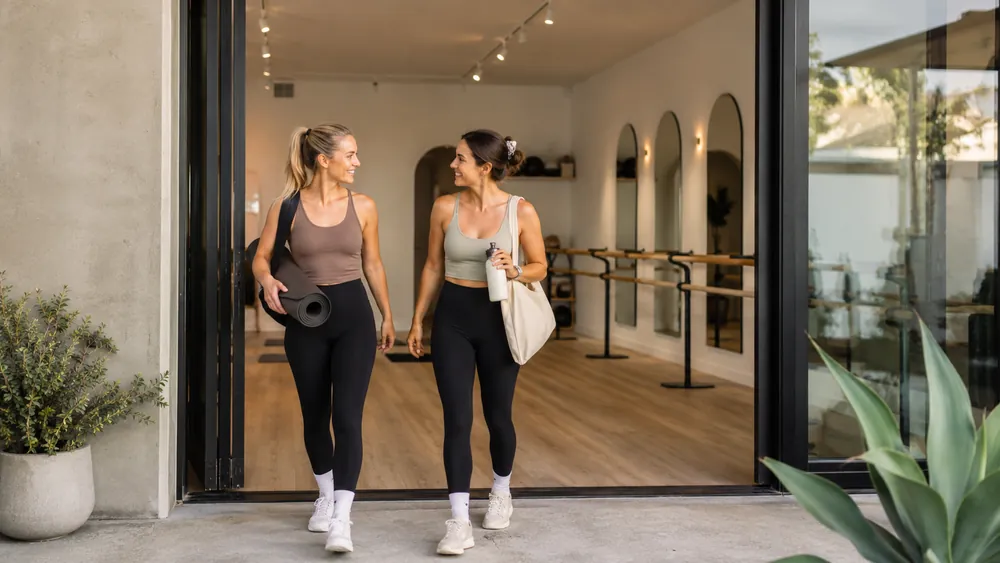
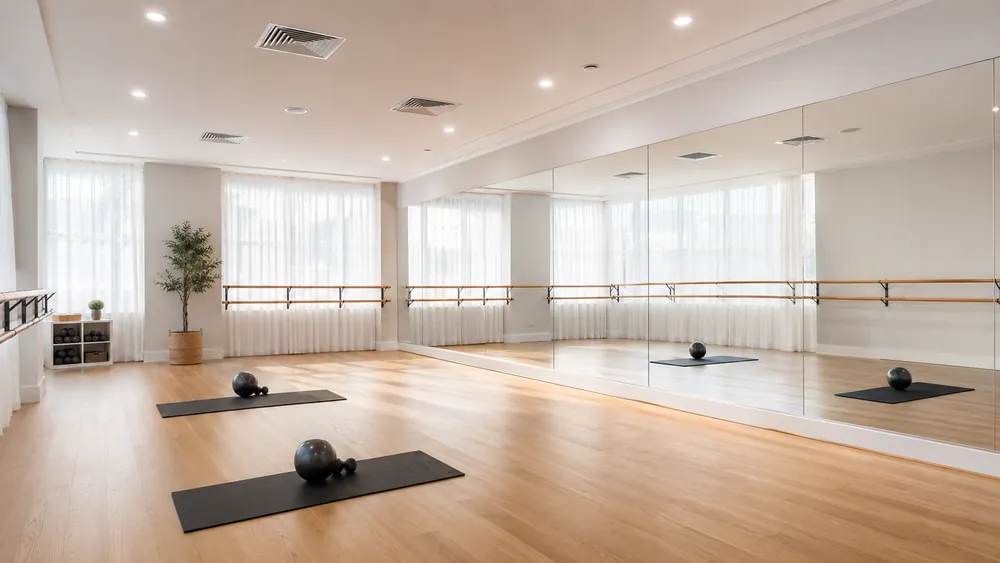
| Aesthetic | Ballet-studio feel: wooden floors, mirrors, barres | Boutique-gym feel: dimmed lights, high production value |
| Instructor cueing | Posture, alignment, deep muscle work | Motivational language, energy, pacing |
What to wear and what to bring
Barre needs less kit than most first-timers assume.
- Fitted activewear. Loose tops ride up during the inverted moves and the abs section. Loose bottoms hide what your form is doing, which makes it harder for the instructor to correct you.
- Grippy socks. Mandatory at most Australian barre studios. The studio will sell them at the front desk if you forget, usually around $15 to $25.
- Tie long hair back. Most of the work is in front of a mirror, and hair in your face will distract you.
- Water bottle. You'll sweat more in a sculpt-style class, but classical will still leave you wanting water.
- Phone in the locker. Standard etiquette.
Leave at home: the assumption that this will be like a yoga or Pilates class. The pace, the cueing, and the muscle-activation pattern differ from both, and bringing unmet expectations from a different practice is the fastest way to leave a first class disappointed.
Checklist
- Fitted activewear; loose tops ride up during inverted moves and the abs section.
- Grippy socks; mandatory at most Australian barre studios. Front desks sell a pair for around $15 to $25 if you forget.
- Tie long hair back; most of the work is in front of a mirror.
- Water bottle; you'll sweat more in a sculpt-style class, but classical still leaves you wanting water.
- Phone in the locker.
Cost and intro offers in Australia
Casual barre classes in Australia run $25 to $40 per class. Boutique studios sit at the top end; barre classes bundled into larger gym memberships sit at the bottom. Class packs of five or ten typically save around 15 to 25 percent per class.
Most barre studios run 2-week unlimited intro offers, often in the $45 to $80 range, similar to Pilates and yoga. That's the cleanest way to test a studio. Memberships run roughly $180 to $280 per month, competitive with yoga and cheaper than reformer Pilates, reflecting the lower equipment cost (no reformers to maintain).
If a studio doesn't publish pricing on its website, ask before booking.
Etiquette beginners get wrong
A few things regulars notice.
Don't claim a front-row spot as a first-timer. The front is usually held by regulars who know the routines. Take a position in the second or third row where you can see the instructor and the people in front of you (who'll know the moves). The instructor will quietly note you're new and check on you.
Tell the instructor you're new before class starts. Same advice as Pilates and yoga: arrive ten minutes early, find the instructor, mention it's your first time. The sixty-second conversation changes how the next hour cues you.
Don't push through the shake by holding tension elsewhere. Beginners sometimes lock their jaw, grip the barre too tight, or hold their breath through the burn. Consciously soften your face, loosen your grip, and breathe through it. The instructor will tell you this in the first class, but it's worth knowing in advance.
What to do after class
Hydrate and eat some protein within the hour. The high-rep work depletes muscle glycogen, and you'll recover better with a meal that has protein and carbs.
Expect 24 to 72 hours of soreness in the inner thighs, glutes, and seat. Barre soreness is famously specific: it lives in muscles you didn't know had names. If you've never worked your inner thighs to fatigue before, the second-day soreness will surprise you, and it tapers by class four or five. The Australian government health service healthdirect advises stopping if you feel any pain (as opposed to ordinary muscle fatigue) and asking your instructor for guidance.
When to skip a class or modify
Same rules as any movement practice.
- Sharp or undiagnosed pain (especially knees, hips, or lower back). Get it looked at first.
- Acute illness or fever.
- Pregnancy, unless your obstetrician or midwife has cleared you. Once cleared, book a prenatal-specific class with a prenatal-trained instructor rather than staying in regular classes past the first trimester.
- A new injury within the previous 48 hours that hasn't been assessed.
Barre is generally low-impact and friendly to most bodies, but the high-rep work and small-range pulses can aggravate certain knee and hip issues. Talk to the instructor before class if you have any joint history.
For nervous first-timers, the first-class nerves guide covers walking in. If you're weighing barre against the other formats, the first reformer class guide, the first yoga class guide, and the reformer Pilates guide cover the alternatives.
Ready to find your first class? Search for a barre studio near you on Studio Finder.
First Barre Class: common questions
- Do I need any dance background to do barre?
None. The class uses a few words borrowed from ballet vocabulary (plié, relevé, arabesque) but the instructor explains each one the first time it comes up. You won't dance, and you won't need to remember choreography.
- Is barre a good cardio workout?
A boutique sculpt-style class will get your heart rate up enough to count as moderate cardio. A classical class is closer to a strength-and-stability workout with minimal cardio. Neither replaces a dedicated running, cycling, or HIIT habit if cardio fitness is your goal.
- Will barre make my legs bigger?
Not in the way heavy lifting does. The high-rep, low-load work targets muscular endurance and the deep stabilisers rather than building large muscle. Most regular barre practitioners report a longer, leaner look over time rather than a bulkier one, though individual results vary.
- Is barre safe in pregnancy?
Talk to your obstetrician or midwife before starting any new exercise in pregnancy. If they clear you, look for a prenatal-specific barre class with a prenatal-trained instructor, and don't take regular classes past the first trimester. The contraindicated positions (long supine, deep abdominal work, certain twists) need adjustment by someone trained in prenatal modifications.
- Can I do barre with knee or hip pain?
Sometimes, but not without an assessment. The plié-heavy thigh work and the pulse sequences can aggravate certain knee-tracking issues and hip impingement patterns. Talk to a physiotherapist before starting if you have a known condition, and tell the instructor before class so they can offer modifications.
- How is barre different from Pilates?
Pilates uses controlled, full-range movements with a heavy emphasis on deep core engagement and (in reformer) spring resistance. Barre uses small, repetitive movements at end ranges with body weight or very light weights. Pilates is slower and more technical; barre is higher-rep and quicker to burn. Both improve strength and posture; the route differs. The reformer Pilates guide goes deeper on the Pilates side.
Ready to find a studio?
Compare barre studios across Australia. Filter by location, read real reviews, and enquire direct.