Key points
- Arrive 15 minutes early for a first class. You need time to check in, fill in a waiver, and have the teacher show you the basics.
- Shoes off at the door. Almost every boutique Pilates, yoga, and barre studio in Australia is shoes-off inside.
- Phone in your bag on silent before you walk in. A buzzing screen pulls everyone out of it.
- Tell the teacher you're new before class starts. That one sentence changes how the next hour cues you.
How early should you arrive?
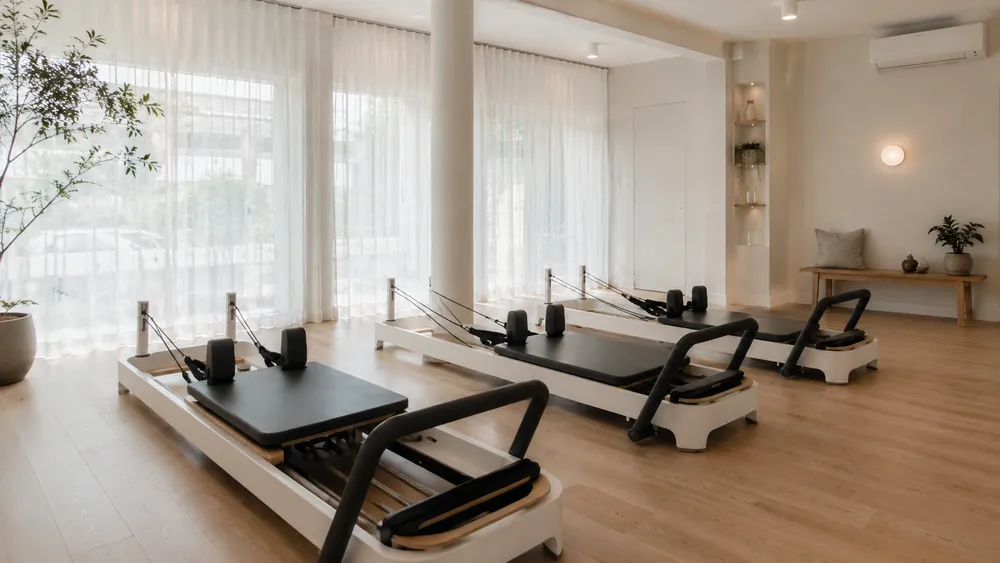
About 15 minutes early for a first class, and 5 to 10 minutes for a regular one. The extra time on your first visit lets you check in at the desk, fill in any waiver, find the bathroom and the equipment, and have a quick word with the teacher. For a reformer class especially, you need a few minutes for the teacher to show you spring settings and how to get on and off the carriage safely.
Arriving early isn't just about you. Walking in as class starts disrupts everyone who got there on time, and in a small studio there's nowhere to slip in unnoticed. Rolling up flustered with seconds to spare also means you start the session already behind, still finding your spot while everyone else is settled. Give yourself the buffer. It makes the whole first class easier.
If you genuinely can't get there early, ring ahead and say so. Most studios will tell you exactly when to arrive and what to do. They deal with first-timers constantly.
Shoes, socks and bare feet
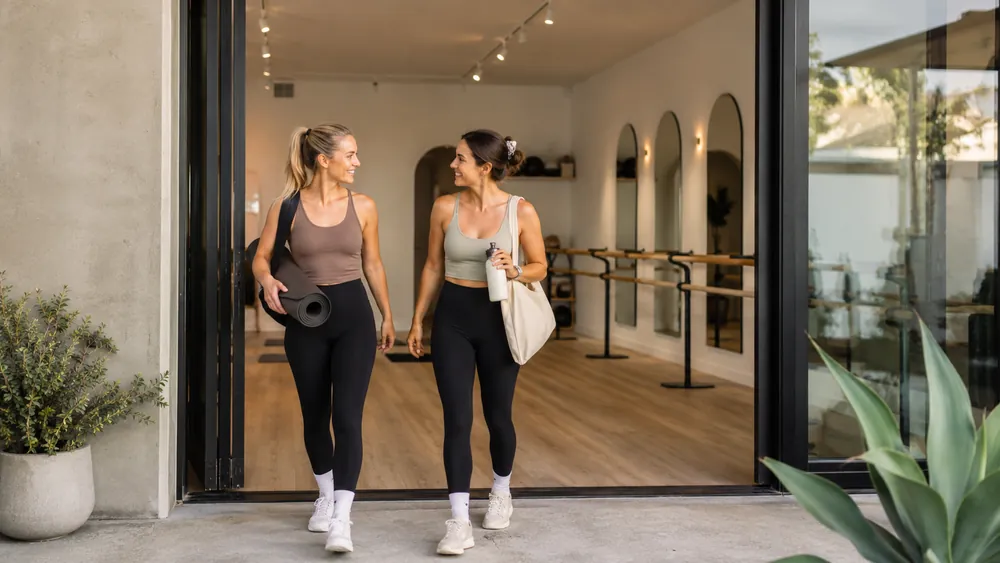
Shoes come off. Almost every Australian boutique Pilates, yoga, and barre studio is shoes-off inside, so look for a rack or cubby near the entrance and leave them there. Wear something easy to slip on and off.
What goes on your feet depends on the discipline. For Pilates and barre, most studios require grippy (non-slip) socks, both for hygiene and so you don't slide on the reformer carriage or a smooth floor. For yoga, you go barefoot almost always, because bare feet grip the mat and help you feel stable. healthdirect notes that some studios may require clean, slip-resistant socks, so the safest move is to check the studio's website or call ahead. If you forget yours, most Pilates and barre studios sell a pair at the front desk, often around $15 to $25 depending on the studio and city. Our guide on what to wear covers footwear by discipline in more detail.
Phones, talking and the vibe of the room
Phones go in your bag or a locker, on silent. A buzzing phone mid-class pulls everyone out of it, and in a quiet yoga or mat class even a screen lighting up is noticeable. If you're on call for a genuine reason (a sick kid, an on-call shift), tell the teacher before class and keep the phone somewhere you can step out quietly.
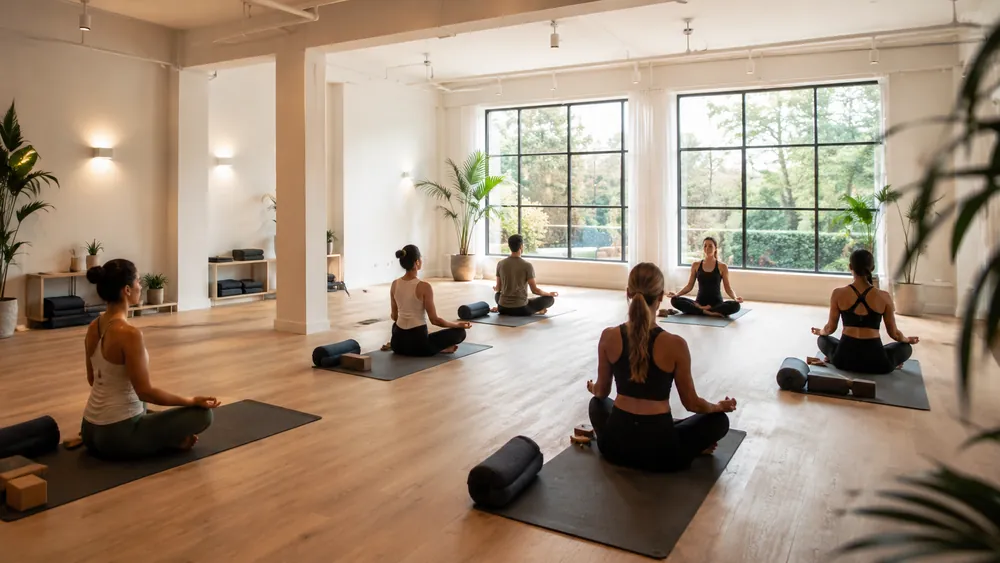
The volume of a room varies by discipline and studio. Yoga and mat classes tend to run quiet and focused, with little chat once you're on the mat. Reformer and barre can be a bit more upbeat, sometimes with music. Read the room: a bit of friendly chat before class is normal everywhere, but once the teacher starts, the talking stops. If you're not sure, follow what the regulars do.
Hygiene and shared equipment
Wipe down what you use. Reformers, mats, and props are shared, so most studios keep wipes or spray and a cloth near the equipment and expect you to clean your spot at the end. Do it without being asked and you're already a good studio citizen.
A few hygiene basics smooth things for everyone in a small, warm room. Come clean and skip heavy perfume or strong scent, because in a closed studio it carries and not everyone can tolerate it. If you sweat a lot, bring a small towel. And if you're properly unwell, especially with anything contagious, stay home and rebook. Nobody wants the person streaming with a cold two reformers away, and most studios would far rather you reschedule.
Late, cancellation and no-show policies
Most studios lock in once class starts. A common late policy is that the door is shut and latecomers aren't admitted, partly so the teacher isn't disrupted and partly for safety on equipment, where a missed setup briefing matters. Some give a few minutes' grace; many don't. Assume you need to be there before the start time, not at it.
Cancellation policies are where new clients most often get caught out. Most studios run a cancellation window (it varies by studio, so check when you book), after which you're charged or you lose the class off your pack. The window exists because spots are limited and a late cancel means an empty space someone on the waitlist could have taken. Set a reminder if you're prone to forgetting. A no-show (not turning up at all without cancelling) usually costs you the class or a fee, and repeat no-shows can affect your booking privileges at some studios.
None of this is meant to catch you out. Cancel inside the window and you're fine. The policies only bite when a spot goes to waste, and a quick cancel as soon as you know you can't make it is all that's asked.
What's normal, and what nobody expects of you
Plenty of first-timers worry about looking like they don't belong. Here's the reassuring reality: the teacher already knows who's new, because you told them (and if you didn't, tell them). healthdirect's own guidance is to let your instructor know you're a beginner so they can give you extra support during class, and to stop and ask for guidance if anything feels off. That's not awkward. It's exactly what they're there for.
You're not expected to know the moves, keep up with the room, touch your toes, or own a wardrobe of activewear. You're allowed to rest in a pose, take a modification, drink water, and have a session that feels clumsy. Everyone in the room had a first class. The regulars who look effortless were beginners not long ago, and not one of them is watching you.
The short version of good etiquette: turn up on time, be clean and considerate, look after the shared kit, keep your phone away, and tell the teacher what they need to know to keep you safe. Do that and you're a model first-timer. To find a studio with a beginner-friendly intro, browse Pilates studios, yoga studios, or search by your suburb.
Pilates and Yoga Studio Etiquette: common questions
- How early should I arrive for my first Pilates or yoga class?
About 15 minutes early for a first class, and 5 to 10 minutes for a regular one. The buffer lets you check in, fill in any waiver, find the equipment and bathroom, and have the teacher show you the basics, which matters most for reformer classes where you need a quick setup briefing.
- Do I have to wear socks to Pilates or yoga?
For Pilates and barre, most boutique studios require grippy non-slip socks, both for hygiene and to stop you slipping. For yoga, you go barefoot almost always. healthdirect notes some studios require clean, slip-resistant socks, so check ahead. Many studios sell a pair at the desk, often around $15 to $25, if you forget.
- What happens if I'm late to a class?
Most studios shut the door once class starts and don't admit latecomers, partly to avoid disrupting the room and partly because missing the equipment setup is a safety issue. Some allow a few minutes' grace; many don't. Plan to arrive before the start time, and ring ahead if you're running late.
- Can I cancel a class booking without being charged?
Usually yes, as long as you cancel inside the studio's window. The cancellation window varies by studio, so check it when you book and set a reminder. Cancel after the window and you're typically charged or lose the class off your pack.
- Is it rude to leave during a yoga or Pilates class?
No, but tell the teacher beforehand if you know you'll need to leave early, and slip out quietly between exercises rather than mid-flow. Stepping out for water, a bathroom break, or to rest is normal and expected. If you feel unwell or in pain, stop and let the teacher know rather than pushing through.
Ready to find a studio?
Compare pilates studios across Australia. Filter by location, read real reviews, and enquire direct.